For while we were still weak, at the right time Christ died for the ungodly. Indeed, rarely will anyone die for a righteous person– though perhaps for a good person someone might actually dare to die. But God proves his love for us in that while we still were sinners Christ died for us.
The Young Adults’ Bible Study, which meets here on Thursday nights, recently began studying First Corinthians. In our first week, we learned that First Corinthians, like many letters in the New Testament, was written by Paul in the first century. Paul was a former persecutor of Christians who became one of Christianity’s most significant preachers and evangelists. His letters – passed down to us through the Bible – contain a mix of personal history, community instruction, and theology.
Paul was not one of Jesus’ original disciples, but he had an experience of Jesus Christ speaking to him in a flash of light while in the middle of one of his Christian persecution campaigns. It left him literally blind, until God led him to a local church member named Ananias, who reluctantly, but faithfully, prayed that he would be healed in body and soul.
That series of encounters – first with Christ in the flash of light, then with faithful Ananias – changed the course of Paul’s life. Once Christianity’s biggest skeptic, he became its biggest advocate.
As I mentioned, many of the letters in the New Testament were written by Paul, including Romans, which we read from today. Often called epistles, these are real letters that Paul wrote to churches throughout the Greco-Roman world. This world, the world the church was born into, was chaotic. It was marked by extreme class hierarchy, religious oppression, and a head-spinning amount of dynastic drama.
Whether Paul is writing about conflict resolution or the nature of God, we know that he was crafting his message to encourage real people to rise to the challenge of their time and place. And over time, we have also understood that these messages still say something to us. After all, humans are gonna human and we are still subject to many of the same problems as those first century Christians.
Today in Romans, we find ourselves in the middle of one of Paul’s theological speeches. Paul has just made an argument that faith – not works, status, or heritage – is what makes someone eligible for inclusion in God’s promises. Scholar Andrew McGowan suggests that Paul’s use of “faith” in this context can be understood as “trust.”
So, Paul is explaining to the church in Rome what happens when we trust in God. He says that, though life is hard, we can trust that God will transform our suffering. Suffering will build endurance, endurance will build character, and character will lead to hope.
And, Paul says, this hope is not flimsy or aspirational – because it is built on what has already come to pass. Christ has already saved us and filled us with the Holy Spirit, And we are empowered to live, act, and love in his name. No matter what hardship we endure, we are reconciled with the God of the universe and we can trust that his power will be made known in our brokenness.
As Paul points out, we are, indeed, broken…
For while we were still weak, at the right time Christ died for the ungodly.
Christ didn’t float down from heaven on a cloud, invite the most beautiful, moral people to his cause, then die for them because they were so pure and sweet and holy. He started his ministry in a farm town, actively avoided befriending the righteous Pharisees, invited hated tax collectors into his friend group, and boldly welcomed a heretical woman (at the well) into the salvation of God.
Paul rightly points out that “rarely will anyone die for a righteous person.” And yet, even for us, Christ was willing to die. Jesus lived and died, and lived again, for a whole bunch of beat-down, bothered, and broken people. And that is more than reason enough to trust him to be with us even when things feel beyond repair.
What’s more, in Christ’s death, he invites us into the same self-sacrifice. In his dying, he showed us that reconciling with God requires being reconciled with all of humanity: ungodly and godly alike, “bad” guy and “good” guy alike. He showed us that empathy, forgiveness, and love are the tools of reconciliation – and they require us to let go of the idea that some people are more deserving of it than others.
This mindset is particularly apparent when we talk about death. And death has been all over the news this week.
In the past few days:
- I read about the girls’ elementary school that the U.S. bombed in Iran, killing at least 160 people – with at least 300 other civilians and leaders killed in other parts of the country.
- I read about six U.S. soldiers who died – we didn’t count the other country’s dead soldiers.
- And I looked at the faces of the four people who died in last Saturday’s mass shooting in Austin – the fourth death being the shooter.
In all of these stories, the public has made their best effort to sort the casualties into deserving and undeserving, innocent and perpetrator, ungodly and godly. We have tried to find justification, if not for the deaths themselves, then for a reason for our grief in some cases and our anger in others.
I dare not make a judgment call. And I dare not suggest to you that your own feelings are unjustified. We have reasons to weep and reasons to rage – and so often our weeping and our raging are just two sides of the same grief.
But Paul reminds us: while we were still weak, at the right time Christ died for the ungodly. Christ’s death collapsed the dichotomy – that the only sinless human would die for victim and perpetrator alike is scandalous to our way of thinking; that Christ would dare lump us into the same salvation as the “bad guys” is insulting.
And yet, Christ died. And yet, he invites us all into eternal life. And yet, he calls us to be reconciled, if not in our mortal lives, then in our eternal ones.
While we may not be able to “fix” the sin and death that has already occurred, our reconciling activity now – our empathy, forgiveness, and love – can transform the violence in our hearts into peace that may very well change the course of the future.
To do this, we must build trust with God and one another…
It is no coincidence that Paul, the man who speaks so eloquently about trusting Jesus, first encountered Christ through an act of “blind” trust. While totally vulnerable, he sought out a stranger for healing. And Ananias, equally blindsided, responded to God’s call.
Paul, a faithful Jew, would have been justified in wishing Ananias dead for distorting sacred religious teachings. Ananias, scared for his life, would have been justified in ignoring God’s call to heal Paul. Who was the “good guy” and who was the “bad guy” depended on your point of view.
But they each trusted Christ – and it led them to each other. And it is that trust that led Paul to the church, and his letters, and these words that still instruct us to lay down our pride and reconcile: with God, with one another, with the world.
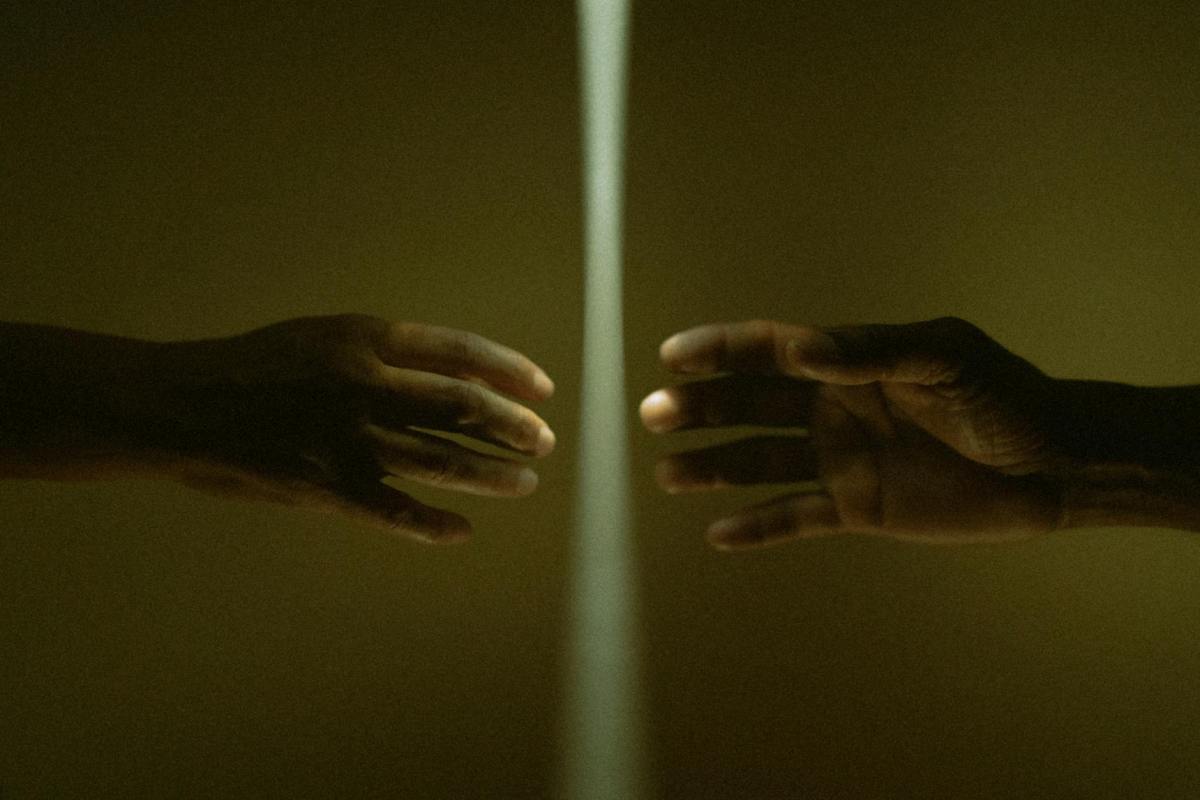
In the end, our only justification is in Christ. And in Christ, there are no good deaths. There are no true enemies. There is only fumbling humanity – weak and ungodly as we are – taking a step toward one another, and finding God there. Amen.
 Leah Wise