The Resurrection of the Body

Readings here

In keeping with our commemoration of All Souls’ Day, later on in the service we will recite the Apostle’s Creed instead of our usual Nicene Creed.

The reason we’re mixing it up is because the Apostle’s Creed is what appears in the Burial Rite of the church. In other words, it’s what we say at funerals. By using some of the funeral liturgy in our commemoration today, we allow the long tradition of the church to shape our understanding of death, “so that [we] may not grieve as others do, who have no hope,” as our First Thessalonians reading says.

But, why was the Apostle’s Creed chosen for the funeral service? Don’t the creeds basically say the same thing anyway? Before I answer those questions, I want to talk a little bit more about what a creed is. Creeds are “statements of belief” that were written by the early church to clarify Christian theology and help the church stay unified, as it spread throughout world.

Scholar James Merrick argues that it wasn’t just the statements, but the structure of the creeds that was important. He says:

“…in a predominantly illiterate society, memorization and recitation of creeds allowed teachings to be fixed in an oral rather than textual way. In preparation for baptism, catechumens would hear a series of lectures on a creed-like summary of the Christian faith and would then be required to recite the creed during the ceremony.”

So, a creed isn’t just a document you hide away in a drawer. It is a statement of belief that has been boiled down to the most important points so that it can be remembered.

(That reminds me of a time when I was visiting New York City with my sister, and we attended a non-denominational church that used the Book of Common prayer for its worship service. When it came time for the Creed, I said the whole thing without looking at the bulletin. She was amazed! “How did you know that?” she asked. Easy! After years of Episcopal church services, I had memorized it.)

But why is it important that creeds are meant to be memorized? Because they tell us what we believe and proclaim about God and Jesus. And, in that way, they remind us who we are.

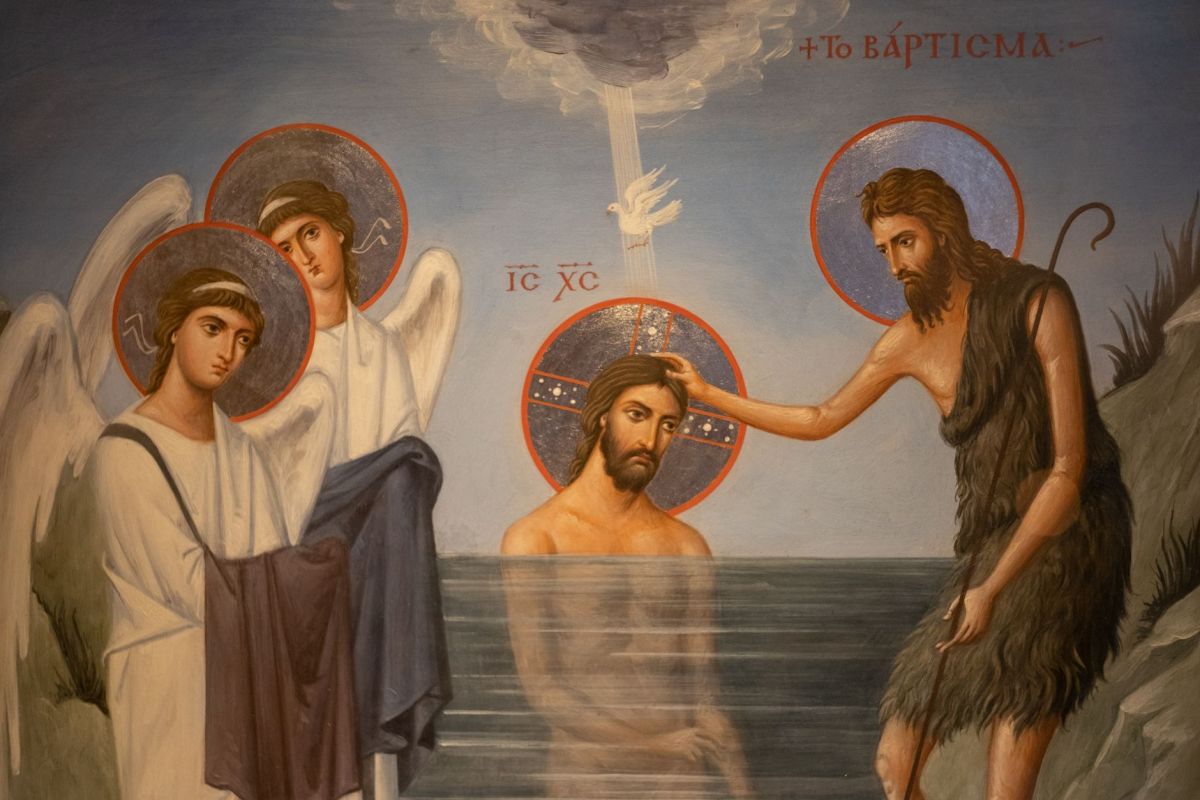
So, let’s get back to our first question: Why do we use the Apostle’s Creed in funerals? Well, we know that this creed was used in baptisms, and since baptism is the process of joining Jesus in his death and resurrection, it makes sense to refer back to it at someone’s funeral. At a funeral we say that, even though someone has died, they will live again, just like Jesus.

But, there’s also a specific point being made in the Apostle’s Creed that isn’t as obvious in the Nicene Creed, and it has everything to do with the theme of a funeral. I’m gonna read a part of the Apostle’s Creed and let you guess what it is:

“I believe in the Holy Spirit,
the holy Catholic Church,
the communion of saints,
the forgiveness of sins,
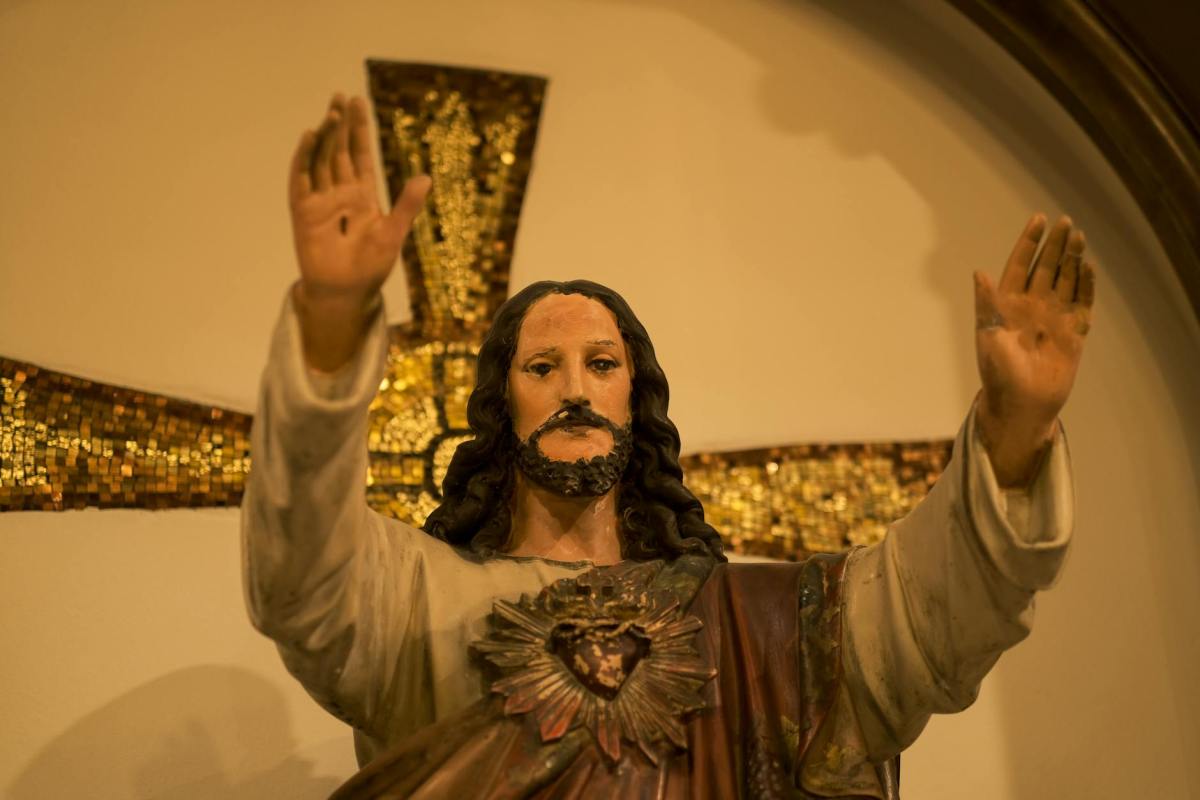
the resurrection of the body
and life everlasting.
Amen.”

…What I specifically want to focus on is that phrase, “the resurrection of the body.” Christians from the earliest days have proclaimed – in their baptism, during daily prayer, and at the time of death, – that they will be resurrected in their bodies.

Maybe this is obvious to you; but it’s not obvious in popular conceptions of the afterlife. Even those of us who grew up in the church tend to imagine our dead loved ones as disembodied souls who drifted up to heaven while their bodies remain buried in the ground.

At one level, it makes sense that we would think that. After all, when we read scripture that says “we will meet the Lord in the air” or sing hymns about “flying away,” logic would suggest that these are not bodies strapped to jetpacks, but rather weightless souls.

And this isn’t wrong, exactly. Our faith does teach that, when someone dies, their soul goes to heaven while their body remains on the earth. But the problem is that we’ve left off the end of the story. Our faith also teaches that, at Jesus’ second coming – when the whole world is redeemed and all of creation is made new – we will rejoin with our perfected bodies for all of eternity. Sure, it’s kind of weird, but a soul that floats up to heaven is also kind of weird.

I think that one reason we downplay the resurrection of the body because we don’t think our bodies deserve it. We can believe in Jesus’ bodily resurrection because he was the perfect human. But when it comes to our own bodies, we can’t imagine that there would be anything worth saving.

Since Jesus’ day, the western world has thought of bodies as bad. We think of them as the source of temptation and discomfort, And, of course, they are (literally) a sore reminder of our mortality. But it’s pretty hard to justify any of Jesus’ healing ministry if it’s true that bodies aren’t worth saving.

In the year 208, Tertullian wrote “On the resurrection of the flesh” to set the record straight. He argues that each one of us must, ultimately, be reunited with our bodies if we are to proclaim Christian hope at all.

He says that Jesus became a flesh-and-blood human, like us, in order to save us. And not just our souls, but our whole being. It was his own em-bodiment that made it possible for him draw us into the perfection of his own body. His body – dead and raised from the dead – became the bridge to our salvation, in body and soul.

But, Tertullian argues, the goodness of the body didn’t arrive with Jesus. It was present in the very beginning. When God created humanity, God breathed divine spirit into the bodies he had formed and called them “good.” Body and spirit combined to make humankind.

So, we proclaim the resurrection of the body, because God blessed bodies as good, saved us through Jesus’ incarnation, and calls the church to its mission as the “Body of Christ.” This isn’t mere theology. It has real-world consequences.

As N.T. Wright says in his book, “Surprised by Hope”:

‘Because the early Christians believed that resurrection had begun with Jesus and would be completed in the great final resurrection on the last day, they believed that God had called them to work with him, in the power of the Spirit, to implement the achievement of Jesus and thereby to anticipate the final resurrection, in personal and political life, in mission and holiness. It was not merely that God had inaugurated the “end”; if Jesus, the Messiah, was the End in person, God’s-future-arrived-in-the-present, then those who belonged to Jesus and followed him and were empowered by his Spirit were charged with transforming the present, as far as they were able, in the light of that future.’

The “resurrection of the body” means that what happens here on earth ripples into eternity. And fundamentally, that means that people matter – every part of them. Our first job as Christians is not to study the creeds, but to live them, in service of God’s good creation.

When we live this way, we begin to understand that the bodies that the world calls bad or inadequate are beloved by God. We become motivated to care for the bodily needs of humankind, making sure all are fed, clothed, sheltered, safe, and well. We become obligated to “keep awake” to the world’s suffering so that we can alleviate it. We affirm God’s first blessing – that creation is “good” and worthy of being cared for.

And we make God’s promise come true. We work today to build a future in which God’s good creation is restored, loved, and made whole, in body and soul. And we know that effects of our loving-action will not die, but ripple into eternity.

Amen.

Earth’s Crammed with Heaven | All Saints

Today is All Saints’ Day, a day that draws us into the mystery of Christ’s body and reminds us that we are eternally bound to all members of the church across time, space, and even death.

Today’s theme feels like a fitting day for poetry. So, I’d like to share some poetic verse with you, written by Elizabeth Barrett Browning in 1856:

“…Natural things
And spiritual,—who separates those two
In art, in morals, or the social drift,
Tears up the bond of nature and brings death,
Paints futile pictures, writes unreal verse,
Leads vulgar days, deals ignorantly with men,
Is wrong, in short, at all points…

Earth’s crammed with heaven,
And every common bush afire with God.
But only he who sees, takes off his shoes—
The rest sit round it and pluck blackberries,
And daub their natural faces unaware.”

We’ll talk more about the poem’s meaning later. But first, a bit about the poet…

Browning grew up in England and was baptized and raised in the Church of England, which is the tradition that we Episcopalians stem from. She was a scholar: she learned and translated Hebrew, and many of her writings were influenced by Christian writings like Dante’s Inferno.

She was also a lifelong activist. Though she came from a slave-holding family, Browning advocated for abolition, even when this put her at odds with her father. But, she is best known as a poet that rivaled her male colleagues in a time when it was hard for women-writers to break through.

Because of all this, you might think that Browning would show up in our commemoration calendar for the saints, but she doesn’t. Though she’s not formally acknowledged by the church, she is undoubtedly a spiritual ancestor to the many people who benefited from her faithfulness, moral courage, and artistry.

In fact, we’re benefiting from her today. Because, in the section of Aurora Leigh that I shared, Browning describes the theological core of All Saints’ Day. She starts out by saying that there is a common misunderstanding that the “spiritual” and “natural” are separate realities that don’t influence one another. We tend to operate as if God and the saints are up in heaven singing. And, meanwhile, we poor creatures are down below, struggling through life without any help.

In Browning’s day, this wasn’t simply a theological belief. It was used as a convenient excuse for unjust behavior. The industrial revolution suppressed wages for the poor. Slavery was still legal. And global expansion gave England political and economic safety, while the communities that they pillaged suffered.

People like Browning’s own father would have suggested that this was just the way the world works. God had nothing to say about it. And people had no reason to do anything about it. But, at least if you got right with God, you could go to heaven when you died.

But Browning disagreed with the entire premise. In her poem, she says that “earth’s crammed with heaven.” God is interrupting the status quo with the signs of his kingdom. And any suggestion that our “real lives” are somehow separate from the life of God is a lie.

She says, God is always acting on the world, turning ugliness into beauty and darkness into light. Our world is enchanted with the inbreaking of Heaven. We just have to notice it. And this is why we celebrate All Saints’ Day: because it makes us pay attention to the heaven-enchanted world we actually live in.

This is what we know to be true: The saints of God, in heaven and on earth, are united in the Body of Christ and participate in that same body, even across the boundary of death. Heaven is imposing itself on our mortal lives, calling us to the work and worship of the Kingdom of God. And we are never separate from the love and presence of God, who gives us the courage to hope for better amid so much brokenness.

Earth is full of signs of heaven. And our faith, even earth-side, draws us into heaven’s choir, where we join our voices in the eternal song of God. We are never alone, in this great jostling crowd of the faithful.

Lest you think I’m being metaphorical, I want to share a story with you about a time that the saints of God in heaven “crammed” themselves into my little, earthly life. Maybe you’ll think I’m crazy; maybe you’ll say, “me too.” In any case, I hope you’ll receive it with an open mind…

When I was in seminary, I did my internship at a little country church in Cheshire, Connecticut. By the time I started my internship, we were many months into the pandemic lockdown, and so we couldn’t worship inside the church building. The good news was that the church had already voted to renovate the sanctuary. And the pandemic gave them the perfect excuse to go ahead with construction while we worshiped in a field next to the parking lot.

For the first year or so of my internship, I only caught glimpses of the sanctuary when I went to the sacristy to prepare the symbolic elements of our “spiritual communion.” But in the winter of 2021, the lockdown was starting to lift, and sanctuary renovations were complete. When the time came to invite the congregation back into the sanctuary, a liturgy was carefully crafted to re-dedicate the space as a place of worship.

Now, Saint Peter’s was one of the oldest Episcopal churches in Connecticut. The original worshiping community started before the Revolutionary War, as evidenced by headstones in the cemetery that surrounded the church. Because of this, the congregation was pretty comfortable with the idea that the ancestors in the faith might still have some presence with us today.

On the day of the dedication service, I was sitting in the choir loft and my supervisor, the rector, was preaching. As she spoke about the centuries of faithful parishioners who had made that congregation their home, I felt a sudden heaviness in the air, almost like smoke, or a barometric pressure drop before a rainstorm. It was overwhelming and strange, and I couldn’t explain it. So I kept it to myself.

But, after the service, a widow who had been sitting near the front of the room told the rector that, during the sermon she had felt a hand softly rest on her shoulder, Without a second thought, she knew it was the invisible hand of her dead husband.

When the rector told me that, I fessed up and told her about the heaviness in the air. When we compared notes, we realized that both events had happened at the same time in the service… The time, coincidentally, that the rector’s cell phone had gone off, showing the caller ID of a parishioner who had just died.

Over the following days, others told similar stories of presence, of wonder, and a feeling that time had stood still as the rector regaled us with stories of those old saints. It seemed that all the saints of that place – both living and dead – were together again; and our prayers were rising and intermingling in the air, floating like smoke past the high vaulted ceilings of that little country church, as they had been for hundreds of years.

We were all Moses at the burning bush, on the mountain of God where time stands still. We all were singers in the heavenly choir, worshipping around the throne of God. That experience convinced me that our theology of All Saints is really real. That nothing is lost or forgotten, that our prayers leave a lasting impression on this earth, and that God – and the saints – will never leave us alone.

As Elizabeth Barrett Browning said, “Earth’s crammed with heaven.” And nowhere is that more apparent than when we join together in worship here, or at any altar of the church. In our worship and communion, the veil is thin between life and death; between heaven and earth; between the God who created us and God’s beloved creation; between Christ who was one of us, and us, who are part of him.

And our experience here compels us to believe that the love we share continues after we walk out these doors. And it continues across the boundary between life and death.

What if we really believed that? What if we lived our lives knowing that the millions who have gone before us are with us, that they are not just examples to us, but friends to us in our time of need? That even in death, they can sustain us in hope?

What if we really believed that we could be saints to others? What if we lived our lives as exemplars of prayer and worship, of kindness and mercy? And we let our actions, whether simple or grand, be a sign of heaven interrupting the sorrow and suffering of our mortal lives?

“Earth’s crammed with heaven.” Our lives are a testament to the Kingdom of God come near. This is a powerful call, and it is a great responsibility. Joined with all the saints in the Body of Christ, we can no longer live only for ourselves. We must live for the wellbeing of all of God’s children, knowing that the saints are always praying for us and guiding us along the path that leads to eternal life.

Amen.

Francis

Praised be You, my Lord, through Sister Mother Earth,
who sustains us and governs us and who produces
varied fruits with colored flowers and herbs.
Amen
.

Let’s play a guessing game…

I just read the lyrics to a song as my opening prayer. When do you think that song was written? (Someone shouts out “1960.”)

Ah, you fell right into my trap! This song, entitled “Canticle of the Sun,” was composed by St. Francis of Assisi in 1225.

I am always amused by St. Francis – and particularly this canticle – because it sounds an awful lot like the language of new age religion that developed in the 1960s and 70s. Growing up in a more fundamentalist church, my community may have accused St. Francis of being an “earth worshipper.” They would have been scandalized to know that such language could be reconciled with Christianity.

In reality, St. Francis’ commitment to a life of poverty and service reveals Christian discipleship taken to its most radical conclusion.

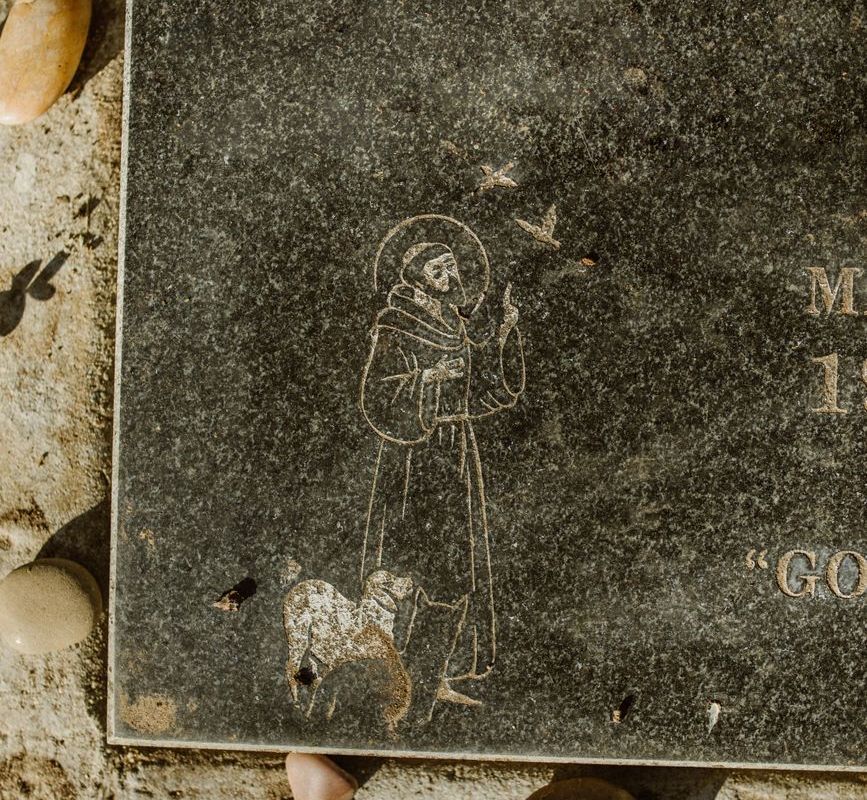
But, these days, St. Francis is most well-known for his connection to animals. He is said to have preached to birds, calling them his “little sisters” and reminding them to praise God for life’s blessings. Another time, people say, he tamed a wolf by blessing him, and then negotiating a meal plan that did not include humans. Because of this, over the years, his feast day has turned into an occasion for pet blessings.

Singing to mother earth. Blessing wolves. Calling birds his sisters. St. Francis was practically a Disney princess. But the social world surrounding St. Francis – and indeed, his own family – was not so welcoming of St. Francis’ lifestyle.

That’s because St. Francis wasn’t just an ordinary, outdoorsy kinda guy. His love for all living things caused him to pursue an alternative way of life that is hard for most of us to imagine.

To do this, he had to reject the life he was born into…

St. Francis was born rich. His dad was a silk merchant and his mom had a trust fund. As may be expected, as a result, Francis was a bit of a party boy in his youth. He spent lots of time with the beat poets of his day, called troubadors. And, according to the Catholic Encyclopedia, he was “handsome, witty, gallant and delighted in fine clothes.”

Francis was set up to lead a charmed life, with little hardship or concern. But, one day, he was running the family cloth business when a homeless man approached him asking for money. After finishing up with a customer, Francis ran after the man and gave him everything he had in his wallet. His friends and family mocked and scolded him. But this moment marked a turning point in his life, though he didn’t realize it at the time.

Francis spent the next few years serving in the military off and on. He became ill at one point. Then he had a mysterious vision that convinced him to stop partying with his friends. Instead, he lived among poor beggars in Rome.

During this period, he happened upon a chapel in ruins and heard an icon of Christ say, “Francis, Francis, go and repair my church which, as you can see, is falling into ruins.”

Anxious to do what Christ had commanded, he stole cloth from his father’s store to give money to the church, which got him in trouble with both the church and his dad. His dad beat him and locked him up in the family home until his mom secretly released him. Eventually, his father disowned him.

So, Francis left “high society” behind: the money, the clothes, the respect – he let go of all of it, just like he had given all his money to the homeless man all those years before.

Over many years, he began to repair fallen chapels by hand. Eventually, he took a vow of poverty and formed a religious community that lived by the rule: “to follow the teachings of our Lord Jesus Christ and to walk in his footsteps.”

He reasoned that, in his death on the cross, Jesus had given up all worldly possessions. To walk in his footsteps, then, meant that Francis should do the same.

The impact of Francis’ vow of poverty is still felt today, among the thousands who have made similar vows in the way of St. Francis. He has inspired global charity movements to care for the poor and marginalized, and advocacy movements among the poor and marginalized.

Francis is an interesting case study for a lot of reasons, but particularly during this stewardship season. Because, Francis takes today’s Gospel reading to its most extreme conclusion.

“Therefore I tell you, do not worry about your life, what you will eat or drink; or about your body, what you will wear…But seek first his kingdom and his righteousness, and all these things will be given to you as well. Therefore do not worry about tomorrow, for tomorrow will worry about itself.”

When those of us without much money read this passage, it is reassuring. We might not have enough food to eat or enough money to pay our bills, but we can trust that Jesus will provide what we need from the abundance of his Kingdom.

But, what is the good news in this passage for people who grew up like Francis?

I mean, think about it: Francis already had everything. He was a nepo baby. His dad owned a fashion brand and his mom was some kind of duchess. The life available to him was one of decadence, without want or worry.

Why would a man who already had everything give it all up in pursuit of merely having enough? Of course, I can’t get inside Francis’ mind. But the stories about his life reveal two things about his relationship with God.

First, Francis felt closest to God in proximity to the poor and marginalized, whether human or creature. When Francis encountered God in the homeless man at his textile stall, it made him aware that his sheltered lifestyle was obscuring God’s presence, emanating from all living things. As he sought out relationships with the poor, it opened him up to a new value system, one in which abundance is understood through God’s unconditional mercy and love – not through financial wealth.

Second, Francis trusted the nudges that he felt from God, and acted on them. Whether in visions, dreams, or experiences in nature, when God spoke to him, Francis listened. Even when it was hard. Even when it put him at odds with his friends and family.

He trusted that Christ would make good on his promises to take care of him, even when he couldn’t see a way forward.

Francis left everything behind so that he could gather up the only treasure that mattered: the love, beauty, and belonging of the Kingdom of God.

While I don’t think that all of us are called to make a vow of poverty, Francis makes me think about my own complicated relationship with money, which is really about my desire to know and control the future.

In the world we live in, we are told that the only way to ensure our future survival is to “store up for ourselves treasures here on earth.” We are celebrated for guarding our wealth like a dragon in a cave, a leprechaun at the end of a rainbow, or Gollum with his “one ring.” But, as we know from those fantasies, guarding our money doesn’t make us strong or brave – it doesn’t make us the heroes in the story. At worst, it makes us the villains. It dulls the Spirit of God in us. And it pulls us away from one another.

Francis learned early on that having “everything” wasn’t really living. He had to reject it all so that he could truly live. And, in rejecting wealth, he experienced the eternal abundance of Christ’s paradise. Ultimately, Francis’ rejection of wealth made him understand that money is a liar – because none of us, through accumulation, can avoid being human. We are all vulnerable in the end.

And thanks be to God! Because God’s love can’t be bought. We are part of God’s family because we were made to be God’s family. And that means what we are well-suited to take care of one another. And promised to be taken care of from now through eternity.

Whether we take a vow of poverty or not, we can commit to live like Francis today: to know that our human need is everyone’s responsibility; to understand that money is a tool for taking care of each other today, not controlling the future; to remember that we can’t take our money with us when we die; and to let that free us to give and receive generously from the deep well of God’s love.

This generosity of spirit is ultimately not about what money can do, but about what we can do through the power of Christ, when we are free from money’s power. That is the vision of the church, and of the world that the church is charged with building.

How will we live so that Francis’ vision becomes our own? “Francis, Francis, go and repair my church which, as you can see, is falling into ruins.”

Amen.

Owe nothing but love

“Owe no one anything, except to love one another; for the one who loves another has fulfilled the law.”

Readings here.

We are in the winding-down phase of Paul’s Letter to the Romans. In fact, it will show up in our Sunday readings for only one more week. It has been a long journey with Paul this summer. And maybe, like me, you’ve grown a bit weary of all of this Romans talk.

But, overall, I would say that this “sermon series” experiment has been a fruitful one. It has allowed us to follow Paul’s argument from beginning to end, giving us a fuller picture of the early church, and, hopefully, a clearer understanding of Christ’s love and our own salvation.

As I mentioned in the sermon I gave at the other campus last week: “At the start of chapter 12, Paul has just completed his rigorous theology of salvation that validates the equal claim of all people to the eternal promises of God.”

Now that his readers are clear about their own salvation, they are invited to respond by following the example of Jesus and living differently than they did before. And Paul doesn’t leave them hanging. He outlines the values and behaviors that exemplify Christ-likeness.

As a writer myself, I can’t help but nerd out over Paul’s elegant framing for this section, which goes from chapter 12 to the beginning of chapter 13.

“Let love be genuine…Owe no one anything, except to love one another.”

Biblical scholar Brendan Byrne refers to this frame of love as a “bracket.” He writes that the bracketing: “enfold[s] all obligations, from the sublime to the most mundane, within the one central response of love. No domain of Christian life stands apart from this core requirement” (Sacra Pagina: Romans, 393).

“Let love be genuine.” That first sentence of chapter 12 gets to the heart of what it means to follow Jesus. The rest of the chapter describes how “genuine love” is made evident through our behaviors: “Rejoice with those who rejoice, weep with those who weep. Live in harmony with one another; do not be haughty, but associate with the lowly; do not claim to be wiser than you are, and so on.”

As chapter 13 begins, Paul reemphasizes the point, this time through the lens of law and duty: “Owe no one anything, except to love one another; for the one who loves another has fulfilled the law.”

God’s laws matter, Paul says, but they matter because love matters. Paul seems to know that we humans have a tendency to hyper-focus on the list of restrictions instead of focusing on the intention behind them. The intention of God’s law is and ever will be: “love your neighbor as yourself.” If you are operating from a place of love, you will make choices that fulfill God’s ethical requirements.

Start from love, and right action will follow.

“Let love be genuine…Owe no one anything except to love one another.”

Paul has answered the question of: “How do we follow Jesus?” with a resounding call to “love.” But the question that remains for us today is: “How do we actually love like Jesus?” Not in the romantic or family sense. Not as a one-off, or simply a nice thing to do when it is convenient. But as a habit that transforms every interaction in our lives.

If you’ve driven on any Austin highways this weekend, you may have seen the latest safety message for Labor Day Weekend: “Drive safe as a labor of love.”

When I saw this message on 290, it surprised me – because it runs contrary to most public safety announcements that warn about personal consequences, like getting pulled over.

Yes, it’s clearly an attempt to make a timely safety message for “Labor” Day. But it also promotes a social ethic: Pay attention out there, because your actions impact others. It could just as easily say, “Drive safe, to love your neighbor as yourself.”

It seems like the public safety people have been reading Romans! In its simplicity, this silly roadside message drives home the cause-and-effect that Paul keeps emphasizing: Start from love – and right action will follow.

This concept came together for me when I read a section of Martin Buber’s I and Thou with friends last week.

Martin Buber, a Jewish philosopher writing at the beginning of the twentieth century, believed that relationships operate in two modes. The most common one – the mode that makes up most of our interactions and experiences throughout life – is called the “I-it” relationship. This is when we interact with one another from a well-meaning, but superficial place.

For example, you and I meet and I make a series of judgments about you based on how you look, where you grew up, your gender, age, and profession. Likewise, you judge me in the same way, painting a picture of me based on a set of identity markers and personality traits.

When we’re done interacting, we might know a whole lot about one another, but we still don’t really know one another. We have seen each other as categories of people, but we haven’t encountered the whole person underneath.

The other mode of relationships is what Buber calls the I-Thou or “I-You” relationship. In this interaction, there is a breakthrough that goes beyond the surface. It’s like our souls meet, and who we are in God’s eyes becomes clear to each of us. Buber would call this, becoming “real.”

The I-You encounter makes us so powerfully aware of God’s love that we are filled with love for all living things. Buber says that, in these flashes of knowing between two people, we are so full of divine love that it is as if we are Jesus on the cross, willing to die for the love of the world.*

We become aware, as Byrne puts it in connection to Romans: “To all – even the most difficult and unlovable – believers owe a debt of love flowing from the love with which God love[s] them…”

In this “I-You” interaction between two people, we become able to love all people without judgment or resentment.

Depending on who you are, Martin Buber’s philosophy is either an “aha” moment or a head-scratching moment. But I bet all of us can remember a time that we connected with someone in a way that made us aware of a presence beyond ourselves and a truth beyond our comprehension.

In fact, I have had those connections with many of you – in the smallest moments. And they give me a sense that anything is possible – and that the world can be better.

“How do we actually love like Jesus?” We pay attention to God-moments in our interactions with our neighbors: with unhoused people asking for money on the street, in the profound observations of children, in the peace of nature, with friends at a football game, or at the “passing of the peace” in church.

We stay attuned to divine love under the surface of all that is – and how it binds us together and makes us whole. Because, when we experience real and genuine love, it enables us to see the whole world through God’s eyes. And we won’t be able to help but give what we “owe” from the abundance of love we have already received.

We will become each other’s labor of love. And we will keep laboring: when we disagree, when our ego gets the best of us, when we’re tired of saying we’re sorry.

We’ll keep laboring in love. Because we know that Love is who we really are in Christ. And what could be better than being real?

Amen.

Let Love Be Genuine | Paul, The Cross, Dolly Parton

Watch the sermon recording here.
Scripture readings here.

Today’s readings from Matthew and Romans feel like they are meant to go together. Both provide actionable guidelines for living as a Christian. In other words, they teach us about “Christian discipleship”: how to be, act, and move through the world in a way that emulates the self-sacrificial and transforming love of Jesus.

In Matthew, Jesus boils down Christian discipleship into one difficult teaching: “Jesus told his disciples, “If any want to become my followers, let them deny themselves and take up their cross and follow me. For those who want to save their life will lose it, and those who lose their life for my sake will find it.”

That command – to “take up their cross” – is not a throwaway line on the way to some other point, but central to Christian identity. The image it evokes – of total self-sacrifice – is what differentiated the first Christians from the self-preservation and bravado of the surrounding culture. And it is what inspired the first Christian martyrs to endure persecution, knowing that what looked like death to outsiders was the way to everlasting life.

But death is not the only meaning of the cross. In fact, scholar Andrew McGowan says that Jesus’ call to “take up the cross” is not primarily about the death that comes at the journey’s end, but about the path leading up to it.

Crucifixion on a cross was reserved for those deemed least significant in Roman society: enslaved people, criminals, and traitors. Carrying your cross through the streets, moving slowly through the jeering crowds, was to be put to shame. It was to be told by everyone who mattered that you didn’t matter. McGowan says “the image of “taking up the cross” refers to that journey of shame.”

For those first disciples and for us, “taking up the cross” is not about death, but about life: both the life we dare to lead when we risk shame and misunderstanding to follow Jesus and the life that awaits us on the other side of death, in eternity with him.

Taking up the cross also invites us to enter the full story of Jesus, just as he entered ours in the incarnation. We are being invited to take a walk in Jesus’ shoes. To participate in his life, not just observe it with detached sympathy. And against common sense, to find that placing ourselves in circumstances of shame and suffering brings us closer to the beating heart of God.

And this is where Romans comes in. As you’ll recall from Rev. Mike’s sermon last week, Paul has just completed his rigorous theology of salvation that validates the equal claim of all people to the eternal promises of God. Paul will spend the final chapters of his letter sharing practical advice on Christian discipleship. In other words, he will connect the dots between what we believe and how that belief is lived.

The portion we read today works as a direct response to the question we might have after Jesus’ teaching in Matthew: What does it mean to take up our cross and follow Jesus? Put another way, what does it mean to practice Christian discipleship?

Paul boils it down to one, deceptively simple teaching: “Let love be genuine.” Everything that follows in this chapter describes the impact of genuine love.

Scholar Brendan Byrne says that, up until this point in Romans, when Paul mentions love, he is referring to God’s love (Romans, Sacra Pagina). But now, Paul says, “the ball is in your court.” God’s love and mercy have been poured out on us through the saving grace of Jesus Christ and we are empowered to share it.

This is what salvation means and does. It makes us, not just recipients of divine love, but participants in it. Genuine love compels us to respond to one another’s joys and sorrows as if they were our own. And when we turn toward others in this way, we are drawn closer to the beating heart of Jesus.

This is what it means to “take up our cross”: to love so well that, when people look at us, they see Jesus.

Who reveals Jesus to you? What can you learn from them?

Like many of you, I spent much of last week mourning the death of a modern-day saint, Dolly Parton. While I didn’t follow her career closely, I was always delighted to see clips of her interviews and guest appearances. As a singer myself, I have always admired her soprano voice that was both soaring and sweet, and the way she wore her heart on her sleeve, in her art and in her life.

This week, a group of us got to talking about what made her so universally beloved. Online eulogies crossed political, cultural, and generational lines. Even those who didn’t share her beliefs proclaimed their love for her. One atheist online commented that they were willing to believe in Heaven since that was the only place suitable for Dolly Parton.

Undoubtedly, Dolly Parton was human. As a public figure, there is much we will never know about her private life, but we can assume she had hard days just like the rest of us.

But, I think Parton had such an impact on people because the central ethic of her life was “genuine love.” She loved migrant workers and gay people and Republicans and Democrats. She loved poor Appalachians and rich, coastal elites, and everyone up, down, and in between.

When people got mad at her, she never retaliated. She simply apologized. And she didn’t entertain manufactured conflict. She was steady in her beliefs and her behavior. She lived her values. She carried her cross.

Which is to say, Dolly Parton loved so well that, when people looked at her, they seemed to see Jesus. They were able to love themselves and, in turn, love others, because she radiated so much resurrection light.

When we talk about Christian discipleship, it is easy for us to boil it down to a list of behaviors. Metrics by which we measure our progress in some kind of punishing Christian fitness program.

But Paul’s words are not a checklist. And carrying our cross is not about proving to anyone that we are worthy of salvation. Carrying our cross is an invitation to participate fully in the life of Jesus. To live and love as God intended, wearing our hearts on our sleeve.

Because it is here that we find abundant life: in laughter and weeping, in humility and vulnerability, in forgiving, in letting go. In admitting our faults so that we can love faulty people. In choosing each other when the world would try to make us enemies.

Living in love is risky. People will take advantage of us. People won’t understand. We might lose respect, or security, or friends. There will be times that we don’t want to keep trying. Where our patience wears thin and self-preservation wins over our good intentions.

There will be times that we resist it, because it feels like one more act of self-denial will make us lose ourselves. But, if Dolly Parton taught us anything, it’s that living in “genuine love” is not a process of disappearing for the sake of others, but of becoming more yourself. As Rev. Mike put it last week: “become what you already are.” Because, when we stop trying to fit in with everyone else and start trying to be like Jesus, we find that we are finally free. We have been loved into who we were meant to be.

Our cross is a weighty one. But, when we dare to take it up, we will find that it is not a burden, but more like a weighted blanket. Our cross is a holy paradox: signaling death and yet revealing resurrection.

The jeering crowds around us will tell us we’re walking toward our own grave. But we know better. We walk in love, and we’re more alive than we’ve ever been. Amen.

Call to Feed the Hungry Sunday Sermon

Readings here

The eyes of all wait upon you, O Lord,
and you give them their food in due season.

Today’s scriptures can be summarized by that prayer many of us learned as children: “Good food, good meat, good God, let’s eat!”

In our Isaiah passage, we join with the exiled people of Judah as they contemplate what it might look like to return to Jerusalem after war, destruction, and exile. In the face of so much suffering, there’s an implicit question that the book of Isaiah hopes to answer: “Will God keep his promises?”

In the brief section we red today, Isaiah speaks in the voice of God, leaving no doubt as to the answer: “Yes.” In fact, God will not just restore his people to their previous life, he will lead them to a place without want, where no one is thirsty, hungry, or forced to beg for what they need.

This is a place where anything you have – no matter how small – will buy whatever you need. Empty out your pockets and hand God the penny, the paperclip, the lint, the old receipt. And, in return, you will receive wine and milk and bread.

Now, we know that, despite Isaiah’s prophecy, peace in Jerusalem didn’t last forever (at least not on this side of the new heaven and the new earth). But that doesn’t make these words any less important. Because – regardless of the present circumstances – they tell us exactly what God’s ideal world looks like.

They tell us what God understands as perfection. And God’s perfect world is one in which no one is hungry. It is one in which having enough food to eat isn’t based on how much money you have in your pockets. And it is one in which our basic human needs are put front and center. God’s presence is first and best understood through his provision. We know God’s love when we are fed.

We are confronted with God’s ideal world again in Matthew’s telling of the Feeding of the 5,000.

At the beginning of this story, Jesus has just learned that his cousin, John the Baptist, was beheaded. In grief and fear, he retreats from his ministry to get some alone time, when he is confronted by a needy crowd. As day turns to evening, the people are starting to become restless with hunger. So, the disciples – undoubtedly exhausted themselves – invite Jesus to send the crowds away to buy their own food.

But Jesus knows something more is possible. The people are hungry. It’s the perfect time to show them what God’s ideal world looks like.

So, he takes five little loaves and two little fish and raises his hands and breaks the bread in an image that reminds us of Holy Communion. Then, he hands it to the disciples to pass around until everyone is full. And they all take home leftovers that night.

The scale of this feast is what makes it a miracle. But the basic premise of it – feeding the people in front of you – is just common sense for the Son of God. Because Jesus knows that God’s presence is first and best understood through his provision. We know God’s love when we are fed.

It is a rare Sunday when the bishop asks you to preach on a specific topic. It is rarer still when the bishop asks you to preach on a policy issue. But the Episcopal Diocese of Texas has designated this day as “Call to Feed the Hungry Sunday.”

Along with our interfaith partners, Episcopal churches across the state are sharing an urgent message today: No one should go hungry. And everyone deserves to be fed.

In Bishop Doyle’s own words:

“When Jesus fed the five thousand, he did not turn people away. On August 2, we are invited to do the same — to open our doors, gather our communities, and raise our voices for the millions of Texans who depend on SNAP to eat.”

SNAP, which stands for the Supplemental Nutrition Assistance Program, is a government program that ensures that low-income families can buy the basic food they need not to go hungry. While SNAP itself began in 2008, federal food assistance – often called “food stamps” – has been around since 1939.

But before all that, there were charities…

In fact, the first government aid programs came out of a political environment influenced by Christian charity, particularly the “Social Gospel” movement. This movement was rooted in a Christian social ethic of care for the poor. It was set up by churches to assist people flooding into cities during the late nineteenth and early twentieth centuries.

Of course, those “Social Gospel” Christians didn’t invent charity. They were following the example of their first-century Christian siblings.

We know from our scriptures and historical records that the first Christians were known to feed the hungry. In fact, their entire mode of worship was centered around a shared meal – called a “love feast” or “agape meal” – that included Holy Communion. In First Corinthians, the Apostle Paul reminds church members in Corinth to wait for everyone to arrive before they start eating, to make sure that the late-arriving, working poor have access to a hearty meal.

So, we see that, in their worship, the first Christians were enacting God’s ideal world by making sure that no one went hungry.

Following in their footsteps, when SNAP benefits were put on hold last fall, the church sprang into action. Here at our church, we donated hundreds of pounds of food to our local food pantry, launching a food drive in less than a week.

At the same time, our day school converted one of their “Little Free Libraries” into a “Little Free Food Pantry,” and we couldn’t keep food on the shelves. In fact, we still can’t keep food on the shelves. I restocked the pantry on Monday afternoon and by Tuesday morning, only 4 cans remained.

I don’t know if you know this, but many food pantries limit families to receiving food only once per month. The restriction is a practical one – there simply isn’t enough food to go around.

According to the Episcopal Health Foundation:

“Hunger affects 5.4 million Texans, including children, seniors, working families, and people in our own pews. Each month SNAP helps about 3.5 million of our neighbors put food on the table. Our churches and food ministries do extraordinary work, and they cannot meet this need alone. SNAP provides 90% of food assistance in Texas. Churches and charitable organizations provide the other 10%.”

Food ministry is perhaps the defining work of the church throughout the ages. It is central to our worship. It is what we are known for. It is who we are. And that is the reason why the church has a stake in the future of food programs in this country. After all, it was Christians who first advocated for and inspired these programs, knowing that the scale of need necessitated a response bigger than the church discretionary fund and more systematic than the local food pantry.

Programs like SNAP are not perfect – and certainly, there may be a better solution than what we have right now – but they can still help us in the work we are called to as Christians.

Today we are confronted with the same question that Christians throughout the centuries have been trying to answer: How does God invite us to respond to his love and provision?

Just like the disciples at the Feeding of the 5,000, God calls us to “take and eat,” and share, until everyone is fed. To this end, the Diocese of Texas is asking us to encourage our representatives to fully fund SNAP. They are asking us to sign on to their Call to Feed the Hungry.

Of course, we know that the fulfillment of our Gospel call will take more than a single program or policy. Above all, our faith invites us to respond, from a variety of gifts and a variety of places, to the fact of such great need, not out of obligation, but from our own gratitude.

Because we have experienced God’s love through his provision of “daily bread.” So, we give with open hands and receive without shame, knowing that God’s ideal world is one in which all are fed. Amen.

Learn more about the Episcopal Diocese of Texas’ Call to Feed the Hungry here.

Caught up in Christ: Romans, Sin, Baptism

Readings here

As you’ve probably heard, during the next few months, the clergy of this church will be preaching with a special focus on Paul’s Letter to the Romans. Our hope is that we’ll all get to the end of this season with a better understanding of the Apostle Paul, the first-century Church in Rome, and what this ancient letter has to say for us today.

You may recall that, over the last few chapters, Paul has been working out a theological position, which he describes as “justification by faith.” The church in Rome seems to be struggling to understand how to integrate Jews and Gentiles into shared life under a new identity which will come to be known as “Christianity,” At this time, following Jesus is simply called, “The Way.”

The congregation in Rome is asking: “What does it mean for a non-Jew to be brought into the promises of the God of Israel?” “How should these Gentiles behave?” “And which laws should they follow?”

Paul says that the only measure by which a Christ-follower is judged is “faith.” Rather than ethnically prescribed laws or rituals, this is the thing that will unify all people who follow in the Way of Jesus. So, to be “justified by faith” is to be brought into the promises of God – not by proving ourselves worthy – but by turning to God with the expectation that we will receive his grace – his “unearned favor.”

Today, we continue in Romans 6. At this point, Paul is offering a necessary point of clarification to “justification by faith.” Because, he realizes that, by telling people that they don’t have to follow God’s laws in order to receive his grace, he might have opened the door to a…well, moral free-for-all.

“Hold up!” he says. “Just because God doesn’t choose to save you based on how well you behave, it doesn’t mean that we should change the words of that folksy hymn to: ‘they will know we are Christians by our hedonism.’”

With that in mind, for the next couple of chapters, Paul decides to focus on the concept of sin.

But, what does Paul mean when he uses the word, sin? I think, for most of us, sin is thought of as a personal offense. Sin is about “me” making a mistake because of some shortcoming within myself – which means the entire responsibility is on me to fix it. (As a Type A, eldest daughter, Enneagram 1, I confess that I live a lot of my life as if this is true.)

But, for Paul, sin cannot be fully understood as a consequence of personal weakness. Scholar Brendan Byrne says that Paul understands sin as “a ‘power’ tyrannizing the human race” (Brendan Byrne, Sacra Pagina: Romans).

In other words, sin is, in some ways, external to “you” or “me.” It is like a parasite that can get ahold of you and make you act against your sincerely held values. It is temptation that takes innocent needs and desires, and twists them into something ugly, instead of life-giving. And it is systemic – in that, it can ensnare a community, a nation, and even the world in its distortions.

Sin can make people of goodwill act against the will of God. And Paul doesn’t think that it’s something any of us are meant to overcome on our own. Its power can only be diminished by a greater power. And for Paul, this is the power of Jesus.

Paul uses the example of Baptism to describe how Jesus em-powers us to overcome the forces of sin. Paul says that baptism is more than a symbol of good winning over evil. For him, baptism is the mechanism by which Jesus instills us with the power to resist sin, and follow in his Way.

It’s easier to understand this if you know that first-century baptism was “full-immersion” baptism. An attendant would have assisted you in stepping down into a baptismal pool, before dunking you in the water. Then you would have emerged, fully soaked, and walked up a different set of steps to leave the pool. In this movement down, and then up again, it was understood that you were spiritually entering your own grave, and then rising from the dead – following the same pattern as Jesus.

Even though we follow a different practice today, the meaning is still the same. In the act of baptism, we descend into our own – and Christ’s own – death, and ascend into the promise of resurrection life. We approach our baptism as wanderers and leave it as pilgrims in the Way of Jesus. And, from that point on, our lives are ordered by the sacrifice and glory of Jesus, enabling us to follow in his footsteps with the assurance that we already know the way.

The powerful mystery of all this is that Jesus is not just an example to us, but an eternal presence with us.

As Byrne puts it: “Christ does not lose his individual personal identity but, nonetheless, as risen Lord and “life-giving spirit,” he somehow “contains” within His person, in a communal sense, the messianic community destined for salvation.”

Caught up in Christ, we become not just a partner with him, but a part of him. We are knit into the tapestry, caught in the web, held in the arms, and adopted into the family of God. From this foundation of love, our lives are transformed. We are no longer pressed down by the power of sin and death, Because we have caught a glimpse of our own resurrection.

For Paul, we are justified, and we receive grace, through fragile, human faith. But the sign of that grace is our life transformed by power of Jesus, which helps us resist evil, choose good, and return to him in repentance.

Contrary to popular belief, Christianity is not about tracking who is right and who is wrong. It’s not about relentless guilt and punishment for our shortcomings and our sins. It is not a divine test that we are doomed to fail. Of course, we will still make mistakes. We will still get caught up in manipulation, half-truths, and self-serving tendencies. We will still let fear burden our decisions. We will still sin.

But, Christianity is about this: Sin doesn’t have power over us anymore. Sin is “dead to us.”

And we are alive! In the creative, abundant, beautiful life of Christ. As a part of his resurrected life, we counter the power of sin by trusting that joy, love, and forgiveness form the pattern of life in his kingdom.

Our daily task is to be present to Christ’s power that is already within us, so that we can follow in his Way more completely: trusting that his “grace is sufficient” to turn our lives around, to heal the things that are broken, and to restore us to his family.

The struggles and temptations of this life are not ours to manage alone. The power of Christ is in us. And, in Jesus, even death leads to new life.

Amen.

Jesus at Your Dinner Table

Readings here

When I was a teenager, I spent three summers on the road in a touring worship band called New Way. Auditions were held every fall at the state youth convention. Then, the following July, after a week of rehearsal bootcamp, the band – teenage singers, brass players, a drummer, guitarist, bassist, and keyboard player – packed into a charter bus – and the tour began.

For two or three weeks, our friendly bus driver hauled us over more than a thousand miles of Florida highway. One year, we even went all the way up to Nashville to participate in the national youth convention.

Our venues were churches. We played at little churches in the swampland of central Florida; big churches in West Palm Beach and Sarasota; old churches in Jacksonville and Tallahassee; and the school cafeterias and auditoriums of church plants in Tampa, rural Alabama, and beyond. The premise seems pretty glamourous for just a regular kid from Florida. But there were many cost-saving measures.

For one, kids were split into work committees: Some unloaded baggage, some were roadies, some ironed the concert uniforms, some organized the snacks, and still others were on a prayer team. One year I was the head of the ironing committee…and that’s why I don’t iron anymore!

But the most impactful thing we did on the road was rely on the “hospitality of strangers.” At each venue church, a group of parishioners prepared the welcome meal. Then, after the concert, we were split into small groups to be housed at the parishioners’ homes.

The number one rule of New Way was to accept hospitality without complaining. No matter if the food tasted like mothballs, or the bedding was scratchy. Whether the parishioner talked your ear off, smelled funny, woke you up too early, or made you your least favorite breakfast – the only acceptable response was, “thank you.”

We were at their mercy – and sometimes it felt like a sacrifice. But in the end, what I learned from all these peculiar people with their peculiar lives was that accepting hospitality is just as important as giving it. Because, in the act of accepting hospitality, you humble yourself for long enough to really honor the giver’s intention – their heart, their sacrifice, and their dignity.

“Thank you” says, “You have been a blessing to me.” Warts and all.

…

In today’s Gospel reading, Jesus invites Matthew, a tax collector, to join his new way. Unlike many of Jesus’ followers, Matthew is not poor or marginalized in the typical sense. As an employee of Rome, he has higher civic status than most of his Jewish community. And the nature of his job means that he can set his own fee when he collects taxes and that commission he collects likely makes him a rich man. But these two aspects of his job make his community distrust him.

As scholar Danny Zacharias points out:

“…tax collectors were viewed as traitors within Jewish society. Working for Rome, they were associated with economic oppression, often collecting excessive taxes to benefit the empire and themselves. Matthew’s presence at a tax booth signifies his active role in this system—yet Jesus sees him, calls him, and invites him into his circle” (Working Preacher).

As Christians, we talk a lot about welcoming everyone and caring for everyone. But, oftentimes, I think the “everyone” in our mental image is someone who looks nothing like Matthew. When we think about who needs to be cared for, we often think of the sick, the poor, and the homeless.

But Jesus makes clear in his calling of Matthew that “all are welcome, no exceptions.” In other words, you don’t have to have the right identity or credentials in order for Jesus to seek you out. He will always seek you out – the way the world sees and judges you doesn’t change his mind.

Matthew’s identity as a tax collector is already a remarkable part of this story. But it doesn’t stop there…

As soon as Matthew drops everything to follow Jesus, the narrative jumps ahead to a shared dinner at someone’s house. While the text isn’t super clear on exactly whose house it is, most scholars believe that Matthew isn’t dining at Jesus’ house. Jesus is actually dining at Matthew’s house.

It would have been scandalous enough for Jesus to simply hang around Matthew. But receiving food and drink from Matthew is a bridge too far for their community.

As scholar Andrew McGowan puts it:

“…in dining with prosperous sinners, Jesus takes the more vulnerable position of guest. Scrupulous, observant Jewish diners would have been concerned about receiving food or drink from those liable to be impure, because their own ritual status would be at risk. It was not problematic in the same way to share one’s own (pure) food” (Andrew’s Version).

Because Matthew was involved in a lifestyle seen as impure by his community, they thought this impurity would basically “rub off on” others. In choosing to go to Matthew’s house anyway – and in choosing to accept his peculiar hospitality – Jesus is not just saying, “I tolerate you” or even “I accept you.”

He is looking at this lonely rich man and saying something no one ever says to a tax collector: “Thank you. You are a blessing to me.”

Can you imagine the sheer relief Matthew must have felt in Jesus’ acceptance of his dinner invitation? That this holy man would dare to have something of Matthew “rub off on” him? That Jesus would look past the gossip and the dirty glances, risking his own reputation, to be at the mercy of a lonely tax collector?

I imagine that Matthew’s initial acceptance of Jesus’ invitation to “follow him” was a self-conscious one. What if those who witnessed his faithful response thought he was doing it just for show? What if they dismissed him the way we sometimes dismiss people as “not a real Christian” – because his life was so different from their own?

When Jesus “deigns to be his guest” – as the Easter hymn says – he frees Matthew from self-consciousness, by taking him seriously. He becomes a part of Matthew’s household. And, in this, he recognizes his God-given dignity.

And this is what Jesus still does for us.

…Where do you see yourself in this story?

Are you like Matthew, beaten down by others’ judgment, but still working up the courage to say “yes” to his call? Are you like his community, trying to protect a God who doesn’t need protection, by determining who is in and who is out? Are you like Jesus, ready to humble yourself to accept love and care from someone who is different from you?

Do you trust that God will make you family anyway?

The beauty of God’s family is that everyone is invited to the table. Rich and poor, young and old – no matter your gender, your appearance, your profession, your identity, or your language. Jesus sees your heart, open in hospitality, and he wants to come to the potluck.

He wants to join you. He wants bless you, so that you may be a blessing. Don’t let anyone tell you otherwise. Amen.

That the Lord would put his Spirit on them | Pentecost

Readings here

“Would that all the Lord’s people were prophets, and that the Lord would put his spirit on them!”

Today’s readings, taken together, give us a sense of the character of the Spirit of God, who is always on the move.

In Numbers, she rests gently, like a butterfly, on the heads of elders surrounding Moses, as God prepares the tired and hungry Israelites to receive a feast in the wilderness. In the Psalm, she is sent out, like a dove, to create new life, adding to the number of varied and marvelous creatures of the earth. In John, she flows out, like water, from the hearts of Jesus’ followers, providing refreshment to those without hope. In Acts, she erupts – like gale-force winds and rampaging wildfire – causing the disciples to tumble out of the isolation of their gathering place.

And, of course, she speaks – in dead languages and living ones – uniting the people in Jerusalem, not in a common language, but in common understanding. Flowing and flying and rushing and disrupting – the Spirit is not the gentle presence we might imagine. To paraphrase theologian Will Willimon: where the Spirit is, something is coming to life (Acts: Interpretation, 30).

(Just so you know, I am using feminine pronouns for the Holy Spirit today because the Hebrew word is in a feminine form. That doesn’t mean that the Spirit is a woman – it just means that the Spirit is not an “it.”)

Our scriptures make clear that the Spirit of God has been present since the beginning of time: The Spirit is where God is. But until this day in the Book of Acts – which we call Pentecost – the Spirit was thought to be something that might land on you for a little while, and then depart. And, if the Spirit of God was “on you,” you would almost certainly begin to prophesy.

We see it in our Numbers reading: “Then the Lord came down in the cloud and spoke to him, and took some of the spirit that was on him and put it on the seventy elders; and when the spirit rested upon them, they prophesied.”

But what does it mean to prophesy?

First, let’s define some terms. To prophesy is to proclaim a message from God. The person who prophesies is called a prophet. And what the prophet proclaims is called a prophecy.

Rabbi Abraham Heschel says that:

“The prophet is no hireling who performs his duty in the employ of the Lord…The fundamental experience of the prophet is a fellowship with the feelings of God, a sympathy with divine pathos, a communion with the divine consciousness which comes about through the prophet’s reflection of, or participation in, divine pathos” (The Prophets, 31).

What he means by this is that the prophet is so close to God that it is as if they share the mind and heart of God. They become more than a messenger or mouthpiece for God – because the Spirit resting on them connects them to God’s reality.

In other words, the Spirit enables them to look at the world with the vision of God – and this new vision reveals the smallness of their human point-of-view: the pride, competition, and needless division that leads to conflict on the ground.

This new vision forces the prophet to “tell it like it is” with divine clarity. It compels them to tell the truth. And from this truth-telling, an opening is made for something new.

…

When the Spirit of God arrives like a storm at Pentecost, she lands on the disciples – not as a butterfly – but as fire. Hot, burning, and wild – the disciples move like sparks, tumbling out into the street where they start to speak at least 15 languages. They surprise themselves before shocking the crowds.

It is the Jewish Festival of Weeks in Jerusalem, and a jumble of people from many places are in the street to celebrate God’s gift of the law to Moses.

When the disciples speak, the chaos of their outburst has the surprising effect of unifying the crowd. Because, suddenly, everyone can understand what the disciples are saying. In fact, the disciples are even speaking dead languages – almost as if the Spirit is calling all of history to attention.

And then, from the chatter, one clear voice rings out. It is Peter! Jesus’ friend who put on a brave face when Jesus was with him, but denied him three times as soon as he was alone. This man Willimon calls “cowardly” is now speaking boldly in the public square – the Spirit has gotten ahold of him!

He uses the words of the prophet Joel to frame this event as evidence of the old prophecies coming true. “Don’t you see?” He says: “In the last days it will be, God declares, that I will pour out my Spirit upon all flesh.”

He also uses Joel to proclaim that the Kingdom of God has come near, through the person of Jesus Christ: and “all who call on his name will be saved.”

The Spirit of God is on the move once again – connecting humanity to the heart of God. And now, she is available to all, without reservation or limitation, and without an expiration date.

As Willimon puts it: “…in Jesus the Christ, there is a power loose in the world which is power for them.” (36).

This miracle of many languages proves Peter’s proclamation. The people in the crowd are from different places, have different concerns, and speak different languages. But all of them understand God calling to them, because the Spirit uses the language of their hearts to bring them into the very heart of God.

And there, they are brought into the unity of the Body of Christ.

…

We are blessed beyond measure to be a congregation that relives the miracle of Pentecost every time we get together.

On any given Sunday, we worship together in two or three languages: English, ASL, and even Spanish. With the help of our human interpreters – and the Spirit of God – we are able to participate, together, in the life and love of God.

And because of this, we know that barriers don’t have to be burdens. We know that the Spirit doesn’t privilege some languages, people, and cultures over others: She will always speak in a way we understand – even when her call is beyond words.

We know that Jesus made a Way for us to join in the hard and joyful work of his kingdom. And we know that, in our own ways, we are called to prophesy.

Drawn into the heart and vision of God, we are called to tell the truth about what we have seen in this place, even and especially when it defies the world’s tired old stories. So that an opening is made for new life to grow amid the world’s decay.

…

No matter what brought you here today, know that you are unconditionally and endlessly loved by the God who existed before the world began, and you are held by the Spirit who rushed in like the wind to get to you.

And no matter what anyone says, you are called to participate in God’s own life. You are called to give water to those who thirst, in body and soul. And to follow the Spirit, who is always on the move.

But you are not called alone. Above all, you are called to participate the Body of Christ – which is to say, the church. Here in the church, we are delighted to discover surprising unity in our differences, and reassurances that these differences are not insurmountable.

Our differences are a gift of the Spirit. By softening the barriers between us, they make us brave like Peter. They allow us to speak in the multi-lingual voice of God, which transcends the smallness of our individual points-of-view, a nd beckons us back to the heart of God: to the source of Love that will be our salvation.

Amen.

You are his body

Rubens painting of Teresa of Avila, public domain

“And after you have suffered for a little while, the God of all grace, who has called you to his eternal glory in Christ, will himself restore, support, strengthen, and establish you. To him be the power forever and ever. Amen.”

Today in the church year, we find ourselves living, again, in the absence of Jesus. As our Acts passage describes, after his resurrection and his appearance to the disciples, Jesus leaves earth and goes up to heaven. We call this event “The Ascension.” It is commemorated with a feast day that takes place 40 days after Easter Sunday – if you’re doing the math, that was last Thursday.

If you remember the events of Good Friday and Easter, you’ll recognize the pattern in this story…

When Jesus departs – first by death and then by ascension – the disciples are initially thrown into confusion. Strange messengers appear to remind them that Jesus will be back. The disciples – both men and women – regroup in the upper room of a house. They pray and wonder about all that has occurred. In the absence of clarity about the future, all they can do now is wait for something to happen…

In the first case, the risen Lord appears to them less than 48 hours after he died. The women run with joy from the tomb and Thomas touches the wounds on Jesus’ hands and side.

In the second case, the Holy Spirit descends on them. According to my rough calculation, the day of Pentecost arrives about a week after Christ’s ascension. This time, Jesus doesn’t show up in human form. But through the Spirit, God becomes present in the hearts, minds, and bodies – in the humanity – of his followers and friends.

But let’s not get ahead of ourselves…We haven’t gotten to that part of the story yet – and we won’t for another week. So, let’s wait here with the disciples for awhile.

Since we are living well after the arrival of the Holy Spirit, our faith teaches us that the Spirit lives in us today. In that sense, our wait is over. But, honestly, it can be hard to know what that even means. What comfort is it to us to know that some wispy “vibe” of God lives in us when we know that Jesus once walked alongside his disciples? What comfort is it to know that Thomas touched his scars, but we cannot?

It’d be so much easier to endure the suffering of this life if Jesus was here, in the flesh, grabbing our hand and pulling us in the right direction. In the absence of Christ’s body, it can feel like we’re living in the absence of God. Or, if not exactly absence, maybe something like benign negligence.

Sure, maybe the emptiness of Good Friday is behind us. And maybe we trust that Christ is alive, and seeking us out, and advocating for us. But life can be demoralizing. It’s not always easy to keep the faith when a loved one dies or a family member gets shipped off to war. When the diagnosis rolls in. When the bills pile up. When things don’t go the way we planned.

It’s not easy to keep the faith when we are faced with an unknowable future – and Jesus’ own response to our concern is “because I said so.” Or rather, as he says in Acts: “It is not for you to know the times or periods that the Father has set by his own authority.”

We may not always feel that our lives are filled with the glory of Pentecost: all flame and wind and possibility. There are seasons of life that feel like this week in our liturgical year, when Christ has gone up and the Spirit has not yet come down. There are Sundays when we huddle together in this room and pray – not because we know what’s coming, but because we don’t.

What I’m saying is: it’d be nice to see Jesus every once in awhile.

In John, Jesus prays to God the Father, describing his absence in this way:

“All mine are yours, and yours are mine; and I have been glorified in them. And now I am no longer in the world, but they are in the world, and I am coming to you. Holy Father, protect them in your name that you have given me, so that they may be one, as we are one.”

This is a remarkable claim for Jesus to make. He is saying that his glory – which is the very power of God – has now been passed on to his followers.

“It’s ok,” he says, because even though Jesus is no longer in the world, his God-(em)powered people are in the world.

And after that remarkable claim, he prays that our lives will reflect the full glory made evident in the inseparable relationship between God the Father and God the Son – that we will be folded into that relationship “as one.” In other words, even though we are still earthbound, he is inviting us into the identity and relationship of the Triune God.

Which means God is here, because YOU are here. Even when it feels like God is absent, our beating hearts, discerning minds, and moving bodies ever proclaim his presence. His presence is not a feeling or “vibe,” it’s simply reality.

One of my favorite descriptions of this reality comes from a sixteenth century poem by Spanish nun, Teresa of Avila:

Christ has no body but yours,
No hands, no feet on earth but yours,
Yours are the eyes with which he looks [with]
Compassion on this world,
Yours are the feet with which he walks to do good,
Yours are the hands, with which he blesses all the world.
Yours are the hands, yours are the feet,
Yours are the eyes, you are his body.

You are his body.

To be Christ’s body is different from working on behalf of Christ.

Jesus doesn’t say that you’re a paid employee of the Kingdom of God, who got the job despite your lack of qualifications. It’s not your job to make a list of “Christian obligations” and then strain to check all of them off. It’s not your job to ignore the hard parts of life. It’s not your job to keep it together when your world is falling apart. It’s not your job to try to convince yourself that you can make it work.

It’s ok if it feels like Jesus is absent, and the Holy Spirit doesn’t feel like enough. You are Christ’s body anyway.

And to be Christ’s body is to let God root around and take root in you. To know that the light is already lit. And to take a deep breath in and remember that the Spirit of God is ruah – it is the air you breathe.

To be Christ’s body is simply to trust that Christ lives and moves in you. You don’t have to grin and bear it. You only have to pray “Thy Kingdom Come” and respond to the Spirit that is already working in you.

Yes, in some ways, we are still waiting. We are waiting for the second coming of Christ. We are waiting for the perfect paradise of God. We are waiting for answers to our questions. We are waiting to hold onto Christ’s hand. But we are not waiting for Christ to be known to us, here, in the flesh. Because we are his body. It is not a job we take on. It is who we are.

So, we gather in this room and we pray that what is closed in us will open. We pray that light will break through, and peace will fill our hearts. We pray that we will inhale God and exhale love. That Our eyes will be full of compassion. Our hands will be open in blessing. And our feet will take us in the Way that leads to the Kingdom of God.

Amen.

I highly recommend the Teresa of Avila quote set to music, particularly this version

Lucky to be Blessed

This sermon was given in a trilingual (English, Spanish, American Sign Language) service of Holy Baptism.

Readings here

O God, whose blessed Son made himself known to his disciples in the breaking of bread: Open the eyes of our faith, that we may behold him in all his redeeming work. Amen.

When I read today’s scripture readings, my first thought was: “Oh my gosh! We are so lucky to have a story about Baptism and a story about Communion on the same day! Especially on a day when people are getting baptized at the Hill!”

But I couldn’t even finish the thought before the internal voice that channels my mother kicked in and corrected “lucky” to “blessed.” Growing up, my mom always reminded me that, as Christians, we don’t believe in luck, because luck is attributed to chance or fate.

“When something good happens,” she said, “we should understand it as a blessing.” In other words, good things are evidence of the grace of God, who is actively participating in our lives and invested in our wellbeing.

I think my mom is probably right. It is a blessing – a divine gift – to revisit these wonderful Bible stories on the very day that two of our own will be baptized. Because the actions that take place in these stories directly connect our current faith practices to Jesus Christ and to the very first people who were called Christians. And beyond showing us where we came from, these stories open our eyes to the fact of Christ’s ongoing presence in our practices.

So, let’s get into it…

In Acts, Peter – who just moments ago was hiding in a locked room – has encountered the living Christ and has taken to the streets to spread the good news. He says: “Let the entire house of Israel know with certainty that God has made him both Lord and Messiah, this Jesus whom you crucified.”

The crowd is so moved by his proclamation that they ask him, “What should we do? How do we join up with this Jesus you speak of?” And Peter replies: “Repent and be baptized.” “Vuélvanse a Dios y bautícese.” Acts tells us that “about three thousand people” were baptized that day!…(Can you even imagine how long that took!?)

Jesus wasn’t there in the flesh that day, but the Holy Spirit showed up in full force.

In Luke, we go back in time a little bit, to the first day of the resurrection when two disciples join up with an apparent stranger on the road. Even though these disciples know who Jesus is, they do not recognize that this man is Jesus, until he eats with them.

The Gospel tells us that he blesses and breaks the bread. It’s an action that reflects the Last Supper; the special way he breaks the bread can only mean one thing: they are in the presence of Jesus Christ!

Just as they recognize him, Jesus disappears. And then, one of them says: “Were not our hearts burning within us while he was talking to us on the road, while he was opening the scriptures to us?” “¿No es verdad que el corazón nos ardía en el pecho?”

Jesus wasn’t there in the flesh anymore, but they recognized him in the broken bread.

When I first read today’s scriptures, I was swept up in the wonder in these stories. The confident conviction of Peter, who had, up until this point, been afraid to admit that he knew Jesus at all. The enthusiasm of the crowd, and the enormous number of baptisms. The confusion turned to delight, of those disciples who met Jesus on the road.

And the common theme of both: that Jesus is present and doing good and gracious things even when we can’t see him.

It is interesting that these moments of baptism and breaking bread are not so uncommon: we all wash ourselves, we all eat. But they are somehow made holy and blessed when Jesus enters the picture. In other words, they are made “sacraments.”

And this is why we still practice these sacraments today – because we believe Jesus shows up in them.

The sacraments are, as our prayer book puts it,

“…outward and visible signs of inward and spiritual grace, given by Christ as sure and certain means by which we receive that grace.”

In some churches, there are said to be seven sacraments. In the Episcopal Church, we generally say we have two: Baptism and Holy Eucharist, our prayer and participation in Communion.

While there are many ways that Christ shows us grace throughout our lives – whether through relationships, experiences, or something else – we believe that these two particular actions are places where Christ’s grace is always and immediately apparent.

That means that these actions, these sacraments, are more than a symbol of transformation. And they are more than a memorial to something that happened a long time ago. When we cleanse ourselves in the waters of baptism, and when we eat the bread and wine at communion, we are – through a divine mystery – encountering the living presence of Jesus Christ. Here at the font, and here at the table, we are brought into the eternal blessing of God. And something essential about us is changed by our participation in them. Even though we don’t see Jesus – the eyes of our faith are opened to life and hope beyond the here and now.

And, to get even more mystical, whenever we participate in the sacraments, we are also in the presence of the “great cloud of witnesses.” These are the ancestors of our faith, living and dead, who are part of the eternal family of God. The 3,000 people who were baptized that day in the book of Acts rejoice as two more join their ranks today. The disciples whose hearts were warmed in Christ’s presence will dine with us at the Eucharistic feast.

Even if we can’t see Jesus, the Body of Christ is here. And we pray that he will continually open the eyes of our faith so that our hearts will recognize his presence.

We’re so lucky that luck isn’t the thing that determines goodness in our lives. We are blessed, instead, by these sacraments, And we can be “sure and certain” that Christ’s grace is freely given to all who wish to receive it. We are blessed to witness to the new life in Christ of these dear ones being baptized, who will also join with us and the great cloud of witnesses at the shared table of Christ today. Amen.

A Locked Door & a Word of Peace

‘When it was evening on that day, the first day of the week, and the doors of the house where the disciples had met were locked for fear of the Jews, Jesus came and stood among them and said, “Peace be with you.”’

In today’s Gospel reading, we get an inside look at the disciples’ doubt, joy, and faith as the resurrected Jesus greets them with a word of peace. One Anglican priest sharing online noted that Jesus’ introduction here – rooted in the Jewish greeting of “shalom” – is essentially the same as our tradition of “passing the peace.” (Which, of course, we got from Jesus.)

Jesus basically says, “The peace of the Lord be always with you.” But instead of mumbling a dutiful, “And also with you,” the disciples are completely transformed by this greeting. They are in the presence of the Prince of Peace, and so peace has become more than a greeting – it is real. Heartened by this new reality, they are about to change the world.

Jesus knew that this would happen. In fact, he promised it only a few days before.

In John 14-17, in what some call his “farewell discourse,” Jesus says:

“Peace I leave with you; my peace I give to you. I do not give to you as the world gives. Do not let your hearts be troubled, and do not let them be afraid.” – John 14:27

And later in that passage, he says it more bluntly:

“I have said this to you, so that in me you may have peace. In the world you face persecution. But take courage; I have conquered the world.” – John 16:33

Still, the disciples had reason to doubt. In the space between his farewell discourse and his greeting in the locked room, a lot has happened. In fact, we re-lived most of it last week during our Holy Week services:

Jesus is arrested while praying, ridiculed by his own people, and charged with heresy against God and treason against the Roman emperor. He is assaulted by soldiers, spat on by passersby and finally, killed in a public execution.

His body is prepared for burial. And he lies dead in a tomb. And then, a couple of disciples come weeping to the tomb and find it empty. Finally, Mary Magdalene rushes to the house where the rest of the disciples are staying and announces, “I have seen the Lord.”

In the time after Jesus’ promise of peace, his followers, friends, and family have experienced everything but peace. Fear, yes. Horror, yes. Grief, of course. Existential despair, everywhere.

In the felt absence of Jesus Christ, life has been, well, Hell. In the chaos of those days, I wouldn’t be surprised if not one disciple remembered Jesus’ promise of peace. Their nervous systems were short-circuiting. They were afraid of being arrested as accomplices by the local authorities.

But maybe even worse, their lives had lost a sense of purpose. After all, they had hitched their wagon to a grand cause: the salvation and transformation of the world. They had abandoned fishing boats, families, social norms, and even common sense – and now their leader had died in shame. And they were hiding behind a locked door.

Though Mary Magdalene insisted she had seen the risen Lord, the disciples weren’t sure what to think or do. And can we blame them?

But that evening, Jesus showed up again. We don’t know if he walked through a wall or poofed into the room. But there he was, standing among them, with visible wounds in his hands and his side where the nails and spear had punctured his skin.

It’s probably for the best that he showed up like this, as weird as it was. The terrified disciples probably wouldn’t have let him in if he had knocked on the door, afraid that it was some kind of terrible trick.

And the first thing he says is “Peace.” And as he utters the word of peace, his disciples let out the breath they have been holding since he died and they breathe in the Holy Spirit. And they rejoice, because they know that Jesus kept his promise.

Peace is Jesus’ calling card. It was made real in the upper room by the presence of the living, breathing Jesus Christ. And it is made real today by the Holy Spirit that lives in us. It is the thing that enlivens us to pursue the path of life, and the way of Christ.

But what does Jesus mean when he says he gives us peace?

The scriptures reveal that Christ’s peace is not merely the absence of conflict. It is a transforming presence that calms fear, steadies the nerves, and makes people courageous beyond their own potential. It is an active force that propels trembling and tired people out of their locked rooms and into the light of day. It is stable ground that – like a loving parent – motivates us to go out into the world seeking better things for ourselves and our neighbors.

In drawing people to look toward the living Christ, this peace puts our disagreements into perspective. It leads us to recognize that resentment, conflict, and violence are distractions that keep us from living lives of purpose and transformation.

Importantly, Christ’s peace is not the same as “keeping the peace.”

This is obvious in Jesus’ own life. In every act of love – in every shared meal, invitation, and miraculous healing – the family of God got bigger and his enemies grew more numerous. Though he rejected violence, he became a target for violence. He proclaimed peace, and got killed for it.

And this is evident in the disciples’ lives. As soon as they encountered Jesus in that room, they threw caution to the wind, ran outside, and told everyone the good news. Christ’s peace had emboldened them, and many around them would dismiss them as crazy.

This is the paradox of the peace Jesus gives: It doesn’t make all our problems go away; in fact, by emboldening us, it might put us in situations of increasing conflict. But, Christ’s peace also puts our problems in their proper place, which is in view of the risen Lord, whose path leads to abundant and beautiful life.

Throughout our lives, we may find ourselves hiding behind locked doors. For many of us, this time contains real threats to our lives, livelihoods, and wellbeing. And there are real costs to insisting on peace in a world corrupted by war and conflict. Who wouldn’t be afraid?

But, even in the isolation of our hiding places, Jesus will find us. He will poof into the room or walk through walls if he has to. And the first thing he will offer is real “Peace.”

So, when we greet one another with “peace” today, I think we should really take it seriously. Because “the peace of the Lord” isn’t just a cute little thing we say to one another on Sunday morning. It is a sign that Jesus is really here with us. Jesus Christ, through the Holy Spirit, is really living in each of us. And even in our fear, we can become each other’s cause for joy.

This peace we offer one another is the stuff that will embolden us to lead lives of purpose. Because we know and feel and rejoice – that Jesus lives.

Amen.

The Strife is O’er | Easter Sermon

The Lord is my strength and my song,
and he has become my salvation.

One of the best things about being a priest is something you might not expect…If I want to, I get to pick the music. And every Easter, I make one particular request: we have to sing “The Strife is O’er.”

The hymn uses an old 16th century tune called “Victory,” written by Palestrina for use in a sung mass. Victory is a fitting title for a song that uses the imagery of war to describe Christ’s victory over the last enemy, which is death itself. The words were translated from Latin by Francis Potts, a priest and hymnwriter who wrote many hymns before and after becoming deaf in his 50s. The “Alleluia” refrains were added later.

Like many of our Easter hymns, the words of the song are joyful and emphatic:

The strife is o’er, the battle done;
the victory of life is won;
the song of triumph has begun.
Alleluia!

But what makes this hymn so distinctive is the proclamation that it makes in the first line of the first verse: not “Christ is risen” or “Welcome happy morning,” or something to the effect of “Come on, get happy” – But, “The strife is over.” It recognizes from the very start that we poor humans have indeed endured great “strife” and that sometimes we need someone to tell us – in explicit terms – that “the strife is over” before we can even entertain good news.

The hymn unfolds the story so that we can come to joy on our own terms, in our own time. Each verse builds on the last, taking the singer from the battlefield, with its legions of deathly, dark forces, to the grief of Christ’s violent death. Then, down to Hell itself – where Christ frees the lost from their chains. And to Heaven, where all are restored to the paradise of God.

Finally, the hymn invites us to understand that our very participation in the song is evidence of the resurrection, which has freed us to live in the hope of our own new life in Christ…

Lord, by the stripes which wounded thee,
from death’s dread sting thy servants free,
that we may live and sing to thee.
Alleluia!

And then, at the very end of the hymn – having crossed the threshold of the tomb – we find ourselves in the bright presence of the risen Lord. And we can’t help but declare Alleluia to close out the song. (Alleluia means “Sing praise to the Lord.”)

Where the opening Alleluias seem to have been tacked onto the song as an afterthought, the closing ones feel more honest. They give us permission to try out joy for ourselves. We thought death was the end of the story, but it was only the beginning of a new story, one that is freed from the finality of death.

In the unfolding story of resurrection, our whispered alleluias are set loose to become loud shouts. If we let Alleluia into our weary hearts, we will feel it reverberating there, doing its work to untangle the knots of despair. If we let ourselves embody the buoyant freedom that Christ has made real, we won’t be able to stop proclaiming good news with reckless abandon.

If even death has been defeated, nothing can hold us back. Nothing can keep us from writing more verses to our Easter song. The worst has already come to pass. The strife is now over. And no enemy, obstacle, intrusion, or limitation stands between us and abounding, sustaining, ever-expanding possibility.

For 2,000 years, Christians have been proclaiming that a man who was God died and rose again.

This is an absurdity by some people’s reckoning. It seems to them an act of grace to deny the existence of living, breathing hope in the face of life’s suffering.

But Jesus’ resurrection “is a truth universally acknowledged” by those first disciples whose testimony lives on in the writings of the New Testament. The women who visited the tomb in the hour between darkness and dawn found an angel and an empty grave, while the empire’s watchmen quaked in their boots. Then, they ran into Jesus himself and grabbed ahold of his feet, bowing in reverence and holding onto the one they never thought they would hold again. And the men who crouched in hiding in the upper room touched the death-scarred hands of a living Savior.

But that’s not how the story ended. The Gospel of John tells us that: “…there are also many other things that Jesus did; if every one of them were written down, I suppose that the world itself could not contain the books that would be written.”

There are many other things that Jesus did, and he hasn’t stopped yet…

Through two thousand years of war and calamity – drought, flood, fire, and plague – as empires rise and fall, the people of God keep encountering the living Christ, just as alive as he was that first Easter morning:

  • Responding to our prayers,
  • Appearing in our dreams,
  • Comforting the dying,
  • Soothing the suffering,
  • Nourishing us at the table,
  • When all hope is lost – a light that shows a way forward.

The world itself cannot contain the books that the people of God could write about the living Christ – showing up in our well-worn stories of death.

Christ is alive – two thousand years of testimony attest to it. And if Christ is alive, though death may be the story of our day, we can turn the page.

And we will find, in the end, that “the strife is over.”

And we are free…Free to live in defiance of the predominant story – which is that death is the end of our story. Free to live like Easter people. Which is to say, to live like Christ, who knows the stench of death and moves toward life anyway.

We are free to add new verses to the song of Christ’s victory over death and the grave. We are free to live, not merely in the memory of those old testimonies, but in our own resurrection stories.

The strife is over. The tomb is empty. And the risen Lord is waiting to meet us on the road.

Alleluia! Amen.

In the Dusk of Another Dark Day

Yesterday morning, I woke up earlier than usual to a mysterious sound. In my half-asleep stupor, I listened carefully without taking out my earplugs. I deciphered that the static I was hearing was rain. When I took out my earplugs, I could hear the rain falling hard and fast. It was drowning out the noise of rush hour traffic on the highway and quieting the morning tune of songbirds.

I stayed in bed for a while. And at first, I was relieved by the arrival of needed rain after months of drought. But then, I remembered the last time morning had brought this kind of rain. And I began to cry.

On July 4th last year, the rain was just like this – except it lasted longer. And in the Hill Country, it rained much harder.

That morning, I expected to wake up to last-minute planning for the neighborhood Independence Day party, But instead, I woke up and invited people to a prayer vigil.

About six of us sat together, right here, huddled in a circle, constantly checking our phones for news. By the end of the day, it seemed like all of us knew someone who had died. The blessing of rain had become a curse. And the people of this congregation were suddenly on-call to an unfolding nightmare.

Not a week goes by that we don’t talk about the floods: in clergy meetings, conversations with parishioners, or whispered updates between friends. It has changed the way the clergy preach and pastor. It has changed the way we as a congregation grieve. It was, perhaps, our church community’s darkest day.

Today, we are living in Christianity’s darkest day. We are living in the shadow place – the day that God-incarnate died.

And I’m tempted to say, like so many have said before, that the brutality of Christ’s death is hard to stomach. But, in fact, it’s the easiest day for people like us to understand.

No matter our circumstances, we have all been battered by loss and grief. None of us can avoid it. And all of us, if we let ourselves, can draw out the pain we still carry in our hearts as the result of some great loss.

And so, it is easy for us to place ourselves in the story of Jesus and his friends, during those hours before his death: through the waiting and the hoping, the worry and the fear, and the sinking feeling in our gut, when we realize the worst has come true.

Good Friday is one of God’s greatest gifts to us. It is the day where we are given gratuitous permission to wake up to rain, and cry. A day where we are given free rein to sit in sackcloth and ashes and to mourn the death of hope itself.

It is also the day that the disciples become mourners with us – at the foot of the cross. And all the grief in every heart, and throughout all generations, is still held right here at the cross, the sorrow so deep it once caused darkness to cover the earth.

That darkness is God’s own grief. And God is still found in the darkness. At the cross, God swallowed us up into his gravitational pull, stretched out his arms, held us close, and said, “I am right here with you.”

Held in the arms of God, we find one another, a family bonded by great loss, but also great love. Here at the cross, in the dusk of another dark day, we find a safe place to lay our burdens down.

And soon enough, when our eyes close in sleep, we will cast off the memory of rain, and perhaps dream about the rising sun(son).