You are his body

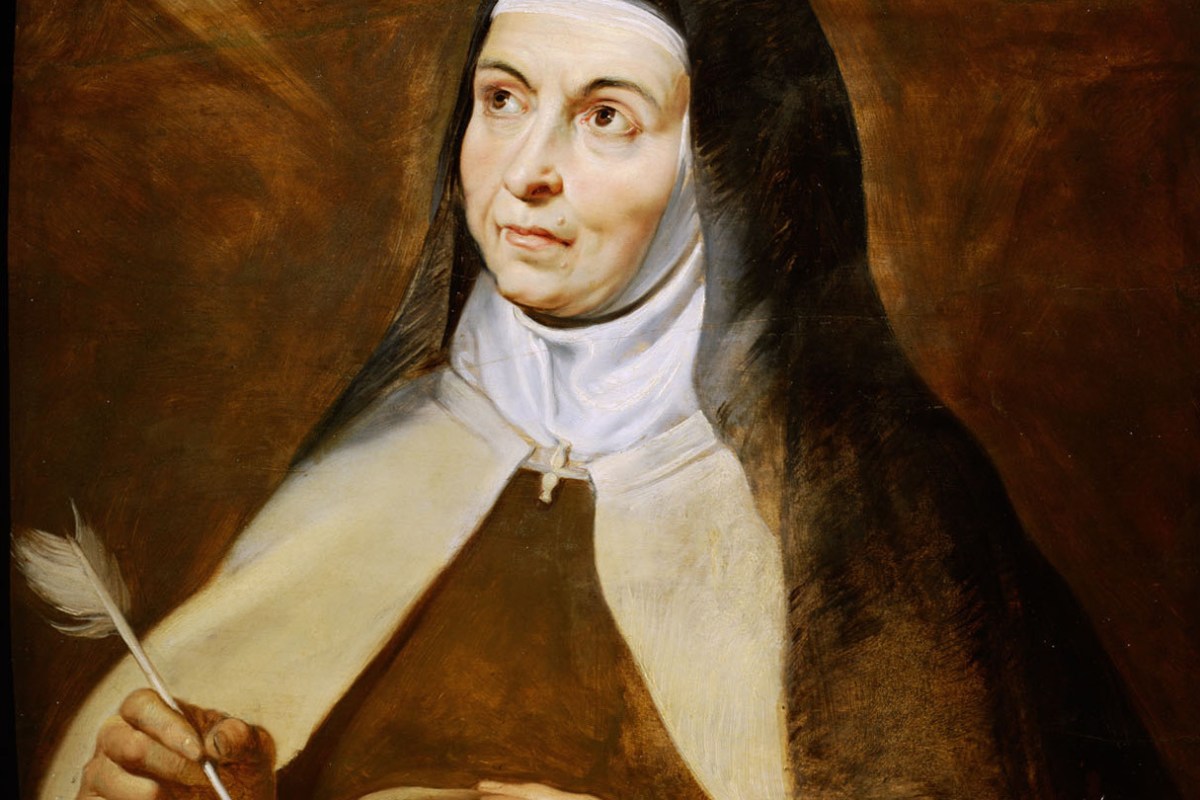
Rubens painting of Teresa of Avila, public domain

“And after you have suffered for a little while, the God of all grace, who has called you to his eternal glory in Christ, will himself restore, support, strengthen, and establish you. To him be the power forever and ever. Amen.”

Today in the church year, we find ourselves living, again, in the absence of Jesus. As our Acts passage describes, after his resurrection and his appearance to the disciples, Jesus leaves earth and goes up to heaven. We call this event “The Ascension.” It is commemorated with a feast day that takes place 40 days after Easter Sunday – if you’re doing the math, that was last Thursday.

If you remember the events of Good Friday and Easter, you’ll recognize the pattern in this story…

When Jesus departs – first by death and then by ascension – the disciples are initially thrown into confusion. Strange messengers appear to remind them that Jesus will be back. The disciples – both men and women – regroup in the upper room of a house. They pray and wonder about all that has occurred. In the absence of clarity about the future, all they can do now is wait for something to happen…

In the first case, the risen Lord appears to them less than 48 hours after he died. The women run with joy from the tomb and Thomas touches the wounds on Jesus’ hands and side.

In the second case, the Holy Spirit descends on them. According to my rough calculation, the day of Pentecost arrives about a week after Christ’s ascension. This time, Jesus doesn’t show up in human form. But through the Spirit, God becomes present in the hearts, minds, and bodies – in the humanity – of his followers and friends.

But let’s not get ahead of ourselves…We haven’t gotten to that part of the story yet – and we won’t for another week. So, let’s wait here with the disciples for awhile.

Since we are living well after the arrival of the Holy Spirit, our faith teaches us that the Spirit lives in us today. In that sense, our wait is over. But, honestly, it can be hard to know what that even means. What comfort is it to us to know that some wispy “vibe” of God lives in us when we know that Jesus once walked alongside his disciples? What comfort is it to know that Thomas touched his scars, but we cannot?

It’d be so much easier to endure the suffering of this life if Jesus was here, in the flesh, grabbing our hand and pulling us in the right direction. In the absence of Christ’s body, it can feel like we’re living in the absence of God. Or, if not exactly absence, maybe something like benign negligence.

Sure, maybe the emptiness of Good Friday is behind us. And maybe we trust that Christ is alive, and seeking us out, and advocating for us. But life can be demoralizing. It’s not always easy to keep the faith when a loved one dies or a family member gets shipped off to war. When the diagnosis rolls in. When the bills pile up. When things don’t go the way we planned.

It’s not easy to keep the faith when we are faced with an unknowable future – and Jesus’ own response to our concern is “because I said so.” Or rather, as he says in Acts: “It is not for you to know the times or periods that the Father has set by his own authority.”

We may not always feel that our lives are filled with the glory of Pentecost: all flame and wind and possibility. There are seasons of life that feel like this week in our liturgical year, when Christ has gone up and the Spirit has not yet come down. There are Sundays when we huddle together in this room and pray – not because we know what’s coming, but because we don’t.

What I’m saying is: it’d be nice to see Jesus every once in awhile.

In John, Jesus prays to God the Father, describing his absence in this way:

“All mine are yours, and yours are mine; and I have been glorified in them. And now I am no longer in the world, but they are in the world, and I am coming to you. Holy Father, protect them in your name that you have given me, so that they may be one, as we are one.”

This is a remarkable claim for Jesus to make. He is saying that his glory – which is the very power of God – has now been passed on to his followers.

“It’s ok,” he says, because even though Jesus is no longer in the world, his God-(em)powered people are in the world.

And after that remarkable claim, he prays that our lives will reflect the full glory made evident in the inseparable relationship between God the Father and God the Son – that we will be folded into that relationship “as one.” In other words, even though we are still earthbound, he is inviting us into the identity and relationship of the Triune God.

Which means God is here, because YOU are here. Even when it feels like God is absent, our beating hearts, discerning minds, and moving bodies ever proclaim his presence. His presence is not a feeling or “vibe,” it’s simply reality.

One of my favorite descriptions of this reality comes from a sixteenth century poem by Spanish nun, Teresa of Avila:

Christ has no body but yours,
No hands, no feet on earth but yours,
Yours are the eyes with which he looks [with]
Compassion on this world,
Yours are the feet with which he walks to do good,
Yours are the hands, with which he blesses all the world.
Yours are the hands, yours are the feet,
Yours are the eyes, you are his body.

You are his body.

To be Christ’s body is different from working on behalf of Christ.

Jesus doesn’t say that you’re a paid employee of the Kingdom of God, who got the job despite your lack of qualifications. It’s not your job to make a list of “Christian obligations” and then strain to check all of them off. It’s not your job to ignore the hard parts of life. It’s not your job to keep it together when your world is falling apart. It’s not your job to try to convince yourself that you can make it work.

It’s ok if it feels like Jesus is absent, and the Holy Spirit doesn’t feel like enough. You are Christ’s body anyway.

And to be Christ’s body is to let God root around and take root in you. To know that the light is already lit. And to take a deep breath in and remember that the Spirit of God is ruah – it is the air you breathe.

To be Christ’s body is simply to trust that Christ lives and moves in you. You don’t have to grin and bear it. You only have to pray “Thy Kingdom Come” and respond to the Spirit that is already working in you.

Yes, in some ways, we are still waiting. We are waiting for the second coming of Christ. We are waiting for the perfect paradise of God. We are waiting for answers to our questions. We are waiting to hold onto Christ’s hand. But we are not waiting for Christ to be known to us, here, in the flesh. Because we are his body. It is not a job we take on. It is who we are.

So, we gather in this room and we pray that what is closed in us will open. We pray that light will break through, and peace will fill our hearts. We pray that we will inhale God and exhale love. That Our eyes will be full of compassion. Our hands will be open in blessing. And our feet will take us in the Way that leads to the Kingdom of God.

Amen.

I highly recommend the Teresa of Avila quote set to music, particularly this version
Lucky to be Blessed

This sermon was given in a trilingual (English, Spanish, American Sign Language) service of Holy Baptism.

Readings here

O God, whose blessed Son made himself known to his disciples in the breaking of bread: Open the eyes of our faith, that we may behold him in all his redeeming work. Amen.

When I read today’s scripture readings, my first thought was: “Oh my gosh! We are so lucky to have a story about Baptism and a story about Communion on the same day! Especially on a day when people are getting baptized at the Hill!”

But I couldn’t even finish the thought before the internal voice that channels my mother kicked in and corrected “lucky” to “blessed.” Growing up, my mom always reminded me that, as Christians, we don’t believe in luck, because luck is attributed to chance or fate.

“When something good happens,” she said, “we should understand it as a blessing.” In other words, good things are evidence of the grace of God, who is actively participating in our lives and invested in our wellbeing.

I think my mom is probably right. It is a blessing – a divine gift – to revisit these wonderful Bible stories on the very day that two of our own will be baptized. Because the actions that take place in these stories directly connect our current faith practices to Jesus Christ and to the very first people who were called Christians. And beyond showing us where we came from, these stories open our eyes to the fact of Christ’s ongoing presence in our practices.

So, let’s get into it…

In Acts, Peter – who just moments ago was hiding in a locked room – has encountered the living Christ and has taken to the streets to spread the good news. He says: “Let the entire house of Israel know with certainty that God has made him both Lord and Messiah, this Jesus whom you crucified.”

The crowd is so moved by his proclamation that they ask him, “What should we do? How do we join up with this Jesus you speak of?” And Peter replies: “Repent and be baptized.” “Vuélvanse a Dios y bautícese.” Acts tells us that “about three thousand people” were baptized that day!…(Can you even imagine how long that took!?)

Jesus wasn’t there in the flesh that day, but the Holy Spirit showed up in full force.

In Luke, we go back in time a little bit, to the first day of the resurrection when two disciples join up with an apparent stranger on the road. Even though these disciples know who Jesus is, they do not recognize that this man is Jesus, until he eats with them.

The Gospel tells us that he blesses and breaks the bread. It’s an action that reflects the Last Supper; the special way he breaks the bread can only mean one thing: they are in the presence of Jesus Christ!

Just as they recognize him, Jesus disappears. And then, one of them says: “Were not our hearts burning within us while he was talking to us on the road, while he was opening the scriptures to us?” “¿No es verdad que el corazón nos ardía en el pecho?”

Jesus wasn’t there in the flesh anymore, but they recognized him in the broken bread.

When I first read today’s scriptures, I was swept up in the wonder in these stories. The confident conviction of Peter, who had, up until this point, been afraid to admit that he knew Jesus at all. The enthusiasm of the crowd, and the enormous number of baptisms. The confusion turned to delight, of those disciples who met Jesus on the road.

And the common theme of both: that Jesus is present and doing good and gracious things even when we can’t see him.

It is interesting that these moments of baptism and breaking bread are not so uncommon: we all wash ourselves, we all eat. But they are somehow made holy and blessed when Jesus enters the picture. In other words, they are made “sacraments.”

And this is why we still practice these sacraments today – because we believe Jesus shows up in them.

The sacraments are, as our prayer book puts it,

“…outward and visible signs of inward and spiritual grace, given by Christ as sure and certain means by which we receive that grace.”

In some churches, there are said to be seven sacraments. In the Episcopal Church, we generally say we have two: Baptism and Holy Eucharist, our prayer and participation in Communion.

While there are many ways that Christ shows us grace throughout our lives – whether through relationships, experiences, or something else – we believe that these two particular actions are places where Christ’s grace is always and immediately apparent.

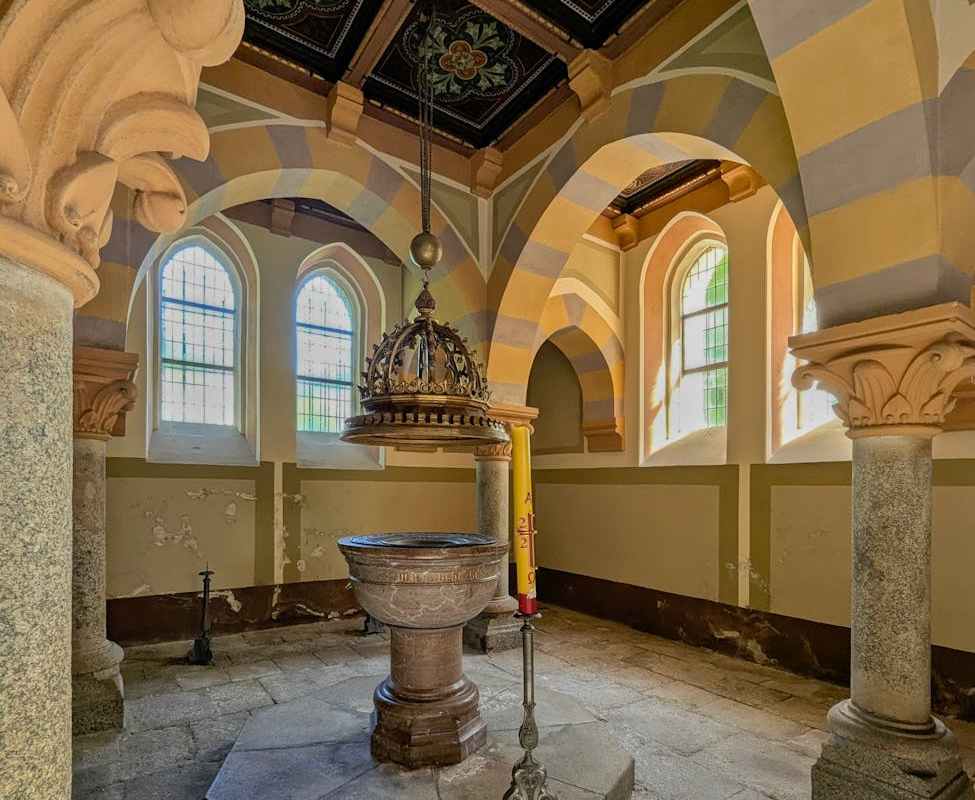
That means that these actions, these sacraments, are more than a symbol of transformation. And they are more than a memorial to something that happened a long time ago. When we cleanse ourselves in the waters of baptism, and when we eat the bread and wine at communion, we are – through a divine mystery – encountering the living presence of Jesus Christ. Here at the font, and here at the table, we are brought into the eternal blessing of God. And something essential about us is changed by our participation in them. Even though we don’t see Jesus – the eyes of our faith are opened to life and hope beyond the here and now.

And, to get even more mystical, whenever we participate in the sacraments, we are also in the presence of the “great cloud of witnesses.” These are the ancestors of our faith, living and dead, who are part of the eternal family of God. The 3,000 people who were baptized that day in the book of Acts rejoice as two more join their ranks today. The disciples whose hearts were warmed in Christ’s presence will dine with us at the Eucharistic feast.

Even if we can’t see Jesus, the Body of Christ is here. And we pray that he will continually open the eyes of our faith so that our hearts will recognize his presence.

We’re so lucky that luck isn’t the thing that determines goodness in our lives. We are blessed, instead, by these sacraments, And we can be “sure and certain” that Christ’s grace is freely given to all who wish to receive it. We are blessed to witness to the new life in Christ of these dear ones being baptized, who will also join with us and the great cloud of witnesses at the shared table of Christ today. Amen.

Jesus’ Program

Did you know that any service of the Episcopal Church that includes communion is required to have a sermon? The church reformers wanted to make sure that scriptures were not only read in church, but understood among the people of a congregation. 

The preacher’s job was, and is, to “make plain” the words of our scripture texts so that, when we are invited to share in Holy Communion with Christ and one another, we feel fully a part of the Body of Christ, and united in his purpose. 

This call to preach the Gospel has persisted in our tradition for nearly 500 years. But it finds its origin in the very earliest practices of the church, informed by Jewish tradition. Today, in fact, we encounter Jesus delivering his first sermon.  

Couched between his 40-day fast in the wilderness and an attempt by the congregation to throw him off a cliff, this scene is the calm in the middle of “many dangers, toils, and snares” throughout Jesus’ ministry. 

In the story, Jesus reads a bit of scripture, then sits back down, before preaching nine, carefully chosen words: “Today this scripture has been fulfilled in your hearing.” 

In one small scripture text and just nine words, Jesus articulates a comprehensive vision for his ministry. I’ve heard people describe it in various ways: as Jesus’ manifesto, his statement of purpose, his strategic plan, and maybe most apt, his Inaugural Address. 

Biblical scholar Luke Timothy Johnson calls it a “programmatic prophecy.”  Which is to say, here, we get a preview of Jesus’ priorities, the ones that will guide his ministry and inform his tactics going forward. Here, we learn what kind of leader Jesus will be.

It’s important to remember that, in Jesus’ day, many people awaited a Messiah, a person anointed by God to carry out his will for transformation. But most imagined a politician, a king, or a war hero.  And many wanted a rabble rouser who would ignite a political takeover. 

This is why, even at nine words, Jesus’ sermon is provocative. In the same breath, Jesus identifies himself as the Messiah hoped for and outlines a surprising set of tactics for his reign. Instead of building an army to defeat the Roman emperor, Jesus turns his gaze to the downtrodden. 

During his reign, he will bring good news to the marginalized, impoverished, and forgotten ones, proclaim release to those trapped by prisons or circumstances, recognize the dignity of the Disabled, liberate and empower the oppressed, and declare the goodness of God for all time. 

He will reveal his power paradoxically, by ignoring and forsaking the world’s power networks, walking out of the spotlight, and sitting down in the crowd, among the people he has come to save. 

Jesus only needs nine words, because the real sermon isn’t what he says – it’s who he is. The real sermon is his own body. 

Jesus will use his heart and mind, his hands and feet – his very life – as the tools of transformation. He will use his own blood, not poured out on the battlefield, but shared at tables with friends and strangers, offered as sustenance for the world. 

Jesus’ program is not a strategic plan for domination, but a painstakingly personal, relational effort to care for each person according to their need. It is a blatant refusal of common sense, a waste of resources, and a brutally inefficient system. But that is the way of Jesus: Not a pitch, a campaign, or a policy, but a body, putting itself on the line for the salvation, redemption, and liberation of the world. 

Early Christians, understanding themselves as the Body of Christ, took this sermon very literally. 

In the earliest years of the Jesus movement, Christ-followers became known for their intensely, egregiously gracious community values: 

  • Wealthy elites worshipped with enslaved people.  
  • Jews worshipped with Gentiles.  
  • Women and men alike served as community leaders (Ludlow, 17). 
  • Widows were so highly regarded that they became their own order of clergy (Ludlow, 19). 
  • Babies abandoned due to disability or poverty were adopted and raised by church members (Holland, “Charity”). 
  • Landowners sold all their property and gave it to the church (Acts 4:37).  
  • Congregations took up collections for the poor in faraway places, and built housing for them in their hometowns (Pauline epistles, Holland). 

And here’s a really wild one:  Some, according to first-century bishop Clement, even sold themselves into slavery to provide for the destitute (Ludlow, 19). 

In the 4th century, Emperor Julian shared his annoyance with Christians, which he calls Galileans, in a letter to the pagan priest of Galatia: “How apparent to everyone it is and how shameful that our people lack support from us when no Jew ever has to beg and the impious Galileans [Christians] support not only their own poor, but ours as well” (22). 

Early Roman persecutions of Christians are thought to have occurred, in part, because Christians were so bent on ignoring the social order. They were refusing to live according to the “way things had always been done.” They didn’t seem to care about hierarchies, cultural boundaries, and political mandates. They were using their bodies and their lives as tools of transformation, pouring themselves out for the sustenance of the world. 

Many of them died as martyrs, unwilling to forsake the call of Christ. And yet, their communities were characterized by joy. 

How can this be? While early Christians struggled with the same theological disagreements, life circumstances, and wills to power as everyone else, there was a clear goal: Everyone has a place at the table, and everyone is fed. 

Of course they were joyful! The early church was like an open-invite dinner party. 

And how can you be downtrodden at a dinner party? How can you worry when another course is on its way? How can you fear when everyone you love is here with you, with scars and struggles and stories to tell? How can you grieve when each face around you is shining in the glow of candlelight, lit like the glory of Christ? 

How can you be burdened by the risk involved in Christ’s program when you know that this program, his own body, is what got you here? Christ and his followers endured “many dangers, toils, and snares,” putting their bodies on the line for the sustenance of the world. 

And the most incomprehensible part of all of this is that he did it, and they did it, for you. You and I are here today because the early Christians took Jesus literally. And because they took him literally, they weren’t willing to give up on the poor, the oppressed, the marginalized, the disabled, the lost and forgotten ones. 

Because they took him literally, we, “who were lost, are found.” Together, we are one body with many members, trying to figure out how to be Christ’s body for the world. 

In a nine-word sermon shared while seated, Jesus calls to us, not from the stage but among the crowd, to become one body and one blood, poured out for the sustenance of the world. 

So, here’s my own attempt at a nine-word sermon: This is what it means to participate in Communion. 

References:
Luke Timothy Johnson, Sacra Pagina Commentary Series: Luke
Morwenna Ludlow, The Early Church
Tom Holland, Dominion
“Crowd” language courtesy of Willie James Jennings (particularly After Whiteness)