This sermon was given in a trilingual (English, Spanish, American Sign Language) service of Holy Baptism.
O God, whose blessed Son made himself known to his disciples in the breaking of bread: Open the eyes of our faith, that we may behold him in all his redeeming work. Amen.
When I read today’s scripture readings, my first thought was: “Oh my gosh! We are so lucky to have a story about Baptism and a story about Communion on the same day! Especially on a day when people are getting baptized at the Hill!”
But I couldn’t even finish the thought before the internal voice that channels my mother kicked in and corrected “lucky” to “blessed.” Growing up, my mom always reminded me that, as Christians, we don’t believe in luck, because luck is attributed to chance or fate.
“When something good happens,” she said, “we should understand it as a blessing.” In other words, good things are evidence of the grace of God, who is actively participating in our lives and invested in our wellbeing.
I think my mom is probably right. It is a blessing – a divine gift – to revisit these wonderful Bible stories on the very day that two of our own will be baptized. Because the actions that take place in these stories directly connect our current faith practices to Jesus Christ and to the very first people who were called Christians. And beyond showing us where we came from, these stories open our eyes to the fact of Christ’s ongoing presence in our practices.
So, let’s get into it…
In Acts, Peter – who just moments ago was hiding in a locked room – has encountered the living Christ and has taken to the streets to spread the good news. He says: “Let the entire house of Israel know with certainty that God has made him both Lord and Messiah, this Jesus whom you crucified.”
The crowd is so moved by his proclamation that they ask him, “What should we do? How do we join up with this Jesus you speak of?” And Peter replies: “Repent and be baptized.” “Vuélvanse a Dios y bautícese.” Acts tells us that “about three thousand people” were baptized that day!…(Can you even imagine how long that took!?)
Jesus wasn’t there in the flesh that day, but the Holy Spirit showed up in full force.
In Luke, we go back in time a little bit, to the first day of the resurrection when two disciples join up with an apparent stranger on the road. Even though these disciples know who Jesus is, they do not recognize that this man is Jesus, until he eats with them.
The Gospel tells us that he blesses and breaks the bread. It’s an action that reflects the Last Supper; the special way he breaks the bread can only mean one thing: they are in the presence of Jesus Christ!
Just as they recognize him, Jesus disappears. And then, one of them says: “Were not our hearts burning within us while he was talking to us on the road, while he was opening the scriptures to us?” “¿No es verdad que el corazón nos ardía en el pecho?”
Jesus wasn’t there in the flesh anymore, but they recognized him in the broken bread.
When I first read today’s scriptures, I was swept up in the wonder in these stories. The confident conviction of Peter, who had, up until this point, been afraid to admit that he knew Jesus at all. The enthusiasm of the crowd, and the enormous number of baptisms. The confusion turned to delight, of those disciples who met Jesus on the road.
And the common theme of both: that Jesus is present and doing good and gracious things even when we can’t see him.
It is interesting that these moments of baptism and breaking bread are not so uncommon: we all wash ourselves, we all eat. But they are somehow made holy and blessed when Jesus enters the picture. In other words, they are made “sacraments.”
And this is why we still practice these sacraments today – because we believe Jesus shows up in them.
The sacraments are, as our prayer book puts it,
“…outward and visible signs of inward and spiritual grace, given by Christ as sure and certain means by which we receive that grace.”
In some churches, there are said to be seven sacraments. In the Episcopal Church, we generally say we have two: Baptism and Holy Eucharist, our prayer and participation in Communion.
While there are many ways that Christ shows us grace throughout our lives – whether through relationships, experiences, or something else – we believe that these two particular actions are places where Christ’s grace is always and immediately apparent.
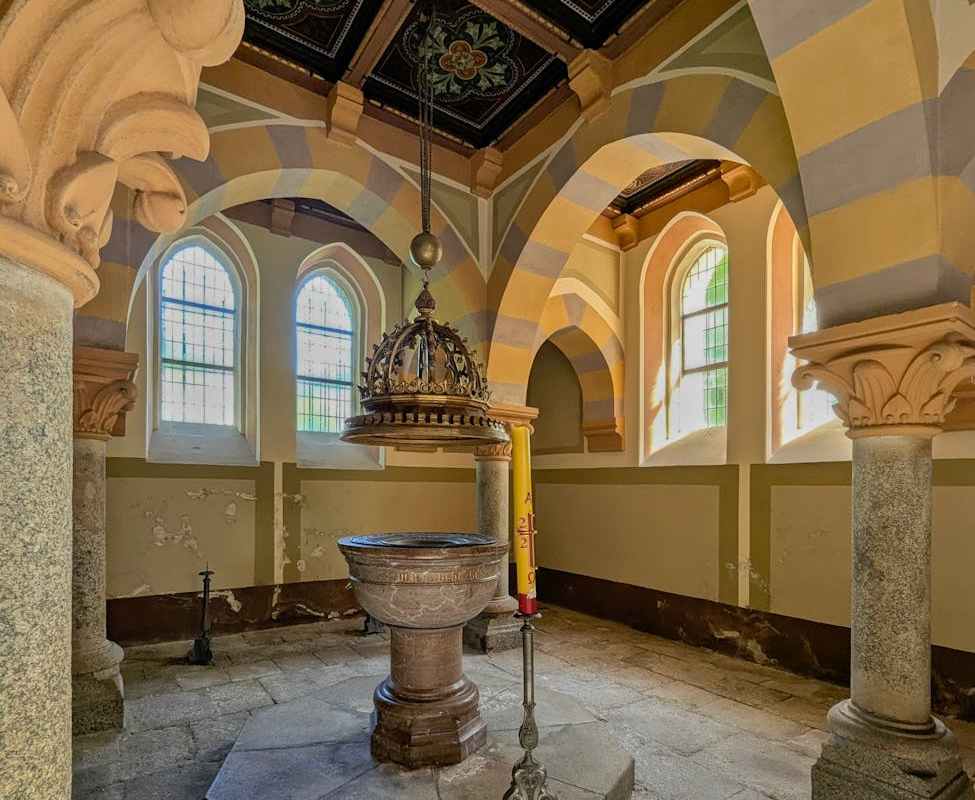
That means that these actions, these sacraments, are more than a symbol of transformation. And they are more than a memorial to something that happened a long time ago. When we cleanse ourselves in the waters of baptism, and when we eat the bread and wine at communion, we are – through a divine mystery – encountering the living presence of Jesus Christ. Here at the font, and here at the table, we are brought into the eternal blessing of God. And something essential about us is changed by our participation in them. Even though we don’t see Jesus – the eyes of our faith are opened to life and hope beyond the here and now.
And, to get even more mystical, whenever we participate in the sacraments, we are also in the presence of the “great cloud of witnesses.” These are the ancestors of our faith, living and dead, who are part of the eternal family of God. The 3,000 people who were baptized that day in the book of Acts rejoice as two more join their ranks today. The disciples whose hearts were warmed in Christ’s presence will dine with us at the Eucharistic feast.
Even if we can’t see Jesus, the Body of Christ is here. And we pray that he will continually open the eyes of our faith so that our hearts will recognize his presence.
We’re so lucky that luck isn’t the thing that determines goodness in our lives. We are blessed, instead, by these sacraments, And we can be “sure and certain” that Christ’s grace is freely given to all who wish to receive it. We are blessed to witness to the new life in Christ of these dear ones being baptized, who will also join with us and the great cloud of witnesses at the shared table of Christ today. Amen.


You and Jenny are blessed to have your Mom and I am blessed to have her as a wife.
Daddy