Wear These Ashes Well | Ash Wednesday

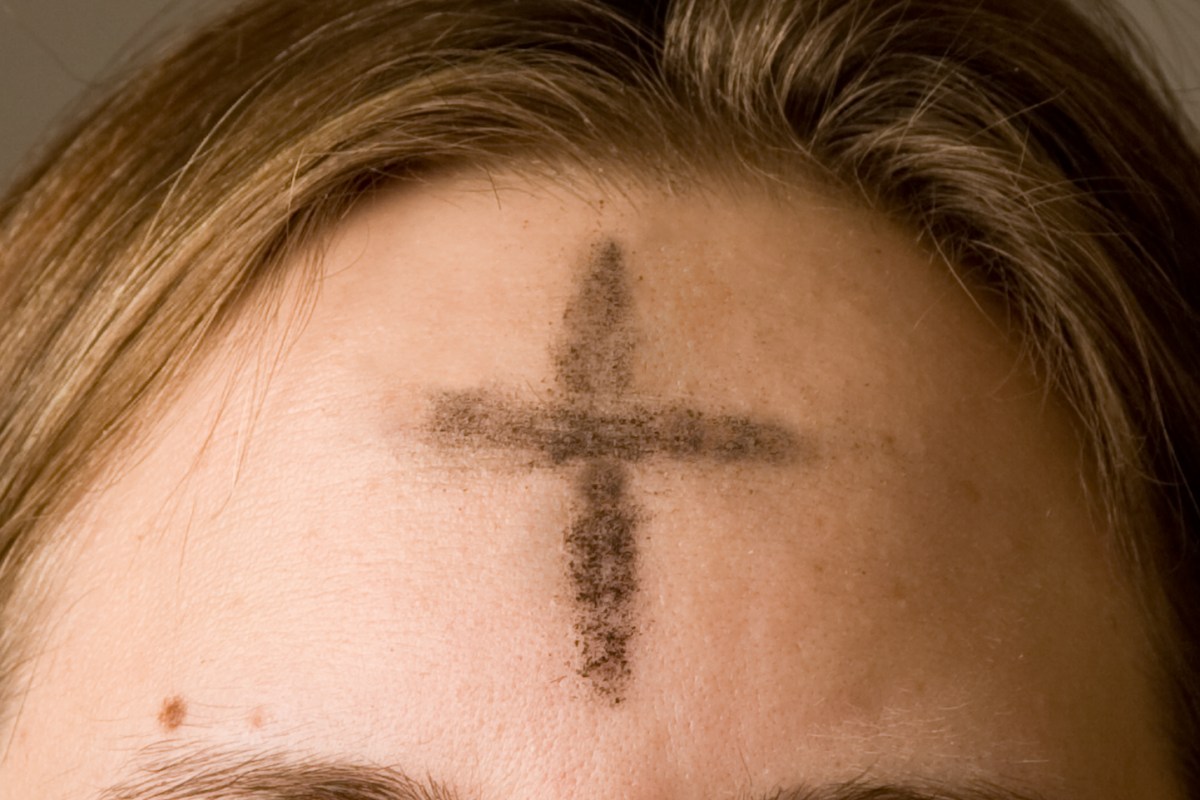
a white person has dark ashes in the shape of a cross on their forehead

Readings here

It’s that time of year again…the time for news websites all over the Internet to share think pieces about Ash Wednesday.

In an article for The Living Church, the Reverend Matthew Olver, a lecturer at Nashotah House, argues AGAINST putting ashes in the form of the cross on the forehead. He says that, in the earliest form of the English prayer book, published in 1549, the imposition of ashes was taken out of the Ash Wednesday service. Instead of ashes, the reformers added prayers and psalms that served as a form of “public confession.”

Ashes were not re-instituted in American practice until the 1979 revision to our Book of Common Prayer. In England, they didn’t start up again until 1986. That wasn’t that long ago, but for many of us in the church today, we never had an Ash Wednesday without ashes.

And Reverend Olver does not suggest that we remove ashes altogether. Instead, he suggests that we should sprinkle dry ashes over the head instead of marking our foreheads with them. That way, he says, we could participate in the symbolic act of recognizing our mortality without drawing attention to ourselves for the rest of the day.

His suggestion is a creative one – most people would just unceremoniously get rid of the ashes. But it stems from the same discomfort that many of us feel on this day…

It is more than a little weird that we mark our foreheads with a dramatic black cross on the very day that we read these words from Jesus:

“Beware of practicing your piety before others in order to be seen by them…and… do not look dismal, like the hypocrites, for they disfigure their faces so as to show others that they are fasting.”

Can we honestly say that we are avoiding that kind of pious vanity project when we go around town with ashes on our faces all day?

Well, lucky for us, Reverend Olver isn’t the only person writing think pieces.

In an article for the New York Times, former atheist Christoper Beha makes an argument FOR the imposition of ashes. Beha, who is Catholic, points out that ashes are one of the few truly public rituals of the church, open to anyone, anywhere. While you’ll probably have to chat with a priest or take a class before getting baptized or taking communion, you can literally get ashes-to-go outside of a Starbucks these days.

Beha says that receiving the ashes was his entryway back into the church. After years spent as a skeptic and atheist, it gave shape to his yearning – to be held and guided by a God – and a faith – that was more than words could express. It helped him accept his own imperfection, and admit that he couldn’t fix himself on his own. And it allowed him to walk humbly toward God even as he continued to ask questions.

For Beha, the fact that the ashes are visible enhances the prayers and psalms we recite today. This “outward and visible sign” is what makes our confession public beyond the church walls. In this way, ashes are not about being showy, or telling everyone that you’re a good person. They are a way to humble yourself, by serving as a reminder that no matter where you go or what you do, you are called to be Christ-like.

As a person who spends much of my life walking around in a clergy collar, I have to say that, in the “think piece” wars, I side with Christopher Beha. While there is always the temptation for a visible symbol of our professed faith to make us feel entitled, I have to say that the second that I walk into an H-E-B with a collar on, the thing I feel isn’t pride – it’s more like discomfort.

Confused stares, averted eyes, existential questions in the checkout line; without fail, the cashier asking me if I’m a nun. It’s enough to overwhelm even the most extroverted extrovert. And all the while I know that, simply by the way I am dressed, I am representing the church in the world – for good or for ill.

Ashes do the same work.

Maybe there was a time in history when sporting a big black cross on your forehead would get you more respect. We are not living in that time now. Whether we leave them on all day or wash them off after the service is over, ashes make visible the invisible commitments of our faith, a faith that has increasingly fallen out of fashion.

First and foremost, they make these commitments visible to the us, the ones who wear the ashes. Because if someone is going to watch us be Christians, we’re going to have to act like Christians, all the time. We are compelled to ask ourselves if our professed beliefs are reflected in our lives: Do I show respect to my colleagues? Do I cuss too much in Austin traffic? Do I really care for my neighbors? Am I too impatient with my family?

If we wear these ashes well, we are at no risk of being called hypocrites by Jesus. What will happen is that we will have to reckon with the hypocrisy of all those days we live without ashes on our foreheads – when we can hide who we are meant to be in Christ, and ignore his calls to grace, mercy, and love.

Throughout this Lenten season, I pray that we will develop practices that align with these ashes on our foreheads. That we will have the courage to admit we can’t fix ourselves on our own. That we will return to God, and that in our returning, we will be able to re-enter our daily lives beaming – not with our own pompous pride – but with the marvelous light of God.

Amen.

Yet all are one in Thee | All Saints’ Sermon

Readings here

O blest communion, fellowship divine!
We feebly struggle, they in glory shine;
yet all are one in Thee, for all are Thine.
Alleluia, Alleluia!

Today we celebrate the Feast of All Saints, also called “All Hallow’s Day.” This is the holiday from which Halloween gets its name since Hallow’e’en, or Hallow’s-evening, is the night before All Hallow’s Day. Hallow just means “holy person,” or saint.

Historical records show that some form of All Saints’ Day has been celebrated among Christians since the fourth century. Originally, it was meant to commemorate the lives of the martyrs, those people who died in service of their faith.

As Christianity spread throughout Europe, All Saints’ celebrations eventually made their way to the British Isles. It was there that the feast was moved to November First. By the ninth century, the Pope declared it a universal holiday, intended to commemorate the growing list of official saints in the church calendar.

Even after the Protestant Reformation and America’s independence from England, the Episcopal Church managed to keep All Saints’ Day in our calendar. But its theology has changed a little bit since the early days. Though we acknowledge many of the saints of the Catholic Church, our tradition doesn’t have a canonization process. Instead, we can make recommendations to a committee that votes on who should be remembered in our calendar…it’s rather bureaucratic.

But part of the reason we do it this way is because we have a broader definition of the saints than the sanctoral calendar might suggest. To be understood as a saint in our tradition, you don’t have to have performed a miracle or died as a martyr, you just have to be a person who tried to follow Jesus the best you knew how. That persistent faithfulness serves as encouragement for others walking the same road, and it is why the church finds it meaningful to remember people in our calendar.

But, the beauty of the whole thing is that anyone can be a saint…to someone. Saints are all around us. Whether named or unnamed, known or unknown, they stretch out in all directions, holding us in our suffering, affirming us in our struggle, blessing us with words of hope, and helping us experience the love of God that knows no bounds.

Our faith teaches us that this “communion of saints” is not merely a nice thought, but a mystical reality. The Body of Christ acts like a tether – holding all the saints together across time and distance, and even death. We are never alone.

As a kid, I was friends with a Catholic girl from Louisiana who always did her Hail Mary prayers before bed, even when she was sleeping over at my house:

Hail, Mary, full of grace,
the Lord is with thee.
Blessed art thou amongst women
and blessed is the fruit of thy womb, Jesus.
Holy Mary, Mother of God,
pray for us sinners,
now and at the hour of our death.
Amen.

One time, when we were about 12 years old, I heard her whispering these prayers in the dark, and told her to stop. I earnestly believed, as my Protestant church had taught me, that you could only pray to Jesus. At best, praying to Mary was fruitless. At worst, it was idolatry.

Of course, I didn’t realize then that prayers like the Hail Mary are not prayed “to” the saints, but “with” them. They are prayers of intercession, not so different from the having an intercessor pray the Prayers of the People on our behalf. They are intended to invite the eternal and ever-present ancestors of our faith to advocate for us before Christ.

More than 20 years after that fateful sleepover, I found myself sitting alone in a hospital chapel in Slidell, Louisiana. I was out of tears, and out of words to pray.

I whispered, “Holy Mary, Mother of God, pray for us. Please…please.”

Only a few weeks earlier, I had accepted a two-year position at an Episcopal Church in Houston, Texas. I graduated from Yale Divinity School and went on a brief pilgrimage to Canterbury Cathedral. Then Daniel (my husband, not the Old Testament prophet!) and I – along with my mother-in-law – packed up our apartment and our two cats to make the 26-hour drive to Texas.

Daniel hadn’t been feeling well for several weeks, and on moving day, he could barely stand up. Two days into our three-day trip, we were staying the night in Slidell, Louisiana, when he woke up in the middle of the night doubled over in pain. My mother-in-law and I rushed him to the little regional hospital.

After hours of waiting, the weary nurse looked at Daniel and said, “You are very sick.”

The surgeon said he would have to have risky surgery with a long recovery time. We were terrified (much like the Old Testament prophet).

And there were other complications…Our Medicaid didn’t work in Louisiana. The hotel we were staying in was mildewed from Hurricane Ida. The cats were stir-crazy. And our past-due U-Haul was sitting in the parking lot.

Weary with many things, I started talking to Mary about three days into Daniel’s hospital stay: “Holy Mary, Mother of God, pray for us. Please, please.”

Meanwhile, friends from all over the country were praying, too. A former associate priest from my sending parish had already sent the local priest to Daniel’s bedside. People were sending cash to help us with expenses. A parishioner and his father-in-law drove ten hours roundtrip to pick up our U-Haul and take it Houston. The rector of my new church met the movers to unpack my stuff. The Diocese figured out insurance.

The saints of God, both living and dead, were praying with us and acting on those prayers. They were holding us steady in the love of God.

Daniel asked the surgeon if we could “wait and see” on surgery. And in that little regional hospital, with no one else to attend to, the surgeon shrugged, and said “sure.”

A few days later, Daniel was healing. And after a week in Slidell, Louisiana, we were back on the road on our way to Texas.

I wasn’t expecting a miracle. I couldn’t find the words to pray for one. I had nothing left to say to God.

But, thank God, the saints were praying: My friend Joe in Maryland; Reverend Elaine in New Jersey; my dad Gary in Florida; and my new parishioner Vyonne in Houston; Mary, the mother of God, of course. And even Misty, the Catholic girl from Louisiana, who taught me about the saints when I was busy telling her she was wrong.

All the saints were holding us in that patchwork without end or beginning, bound in the love of God.

I can’t imagine what life would be like without all those saints. In fact, I can only imagine hope at all, because I have seen it with my own eyes, living and breathing in all the saints, made real by each person who simply tries to follow Jesus the best they know how.

On All Saints, we remember that, in Christ, the veil is always thin between the living and the dead. Across time and distance – and even death – the saints are always praying, moving, acting, and loving hope into the world.

The air is thick with the saints. I pray that you will have the courage to count yourself among them.

A Prayer for Midterm Elections

Photo by Element5 Digital on Pexels.com

“He has told you, O mortal, what is good, 
    and what does the Lord require of you 
but to do justice and to love kindness 
    and to walk humbly with your God?”

Let us pray for God’s kingdom to come, responding: “Your will be done” 

Merciful and loving God, we come to you this evening, on the eve of the midterm elections, carrying anxiety, grief, expectation, and hope. Comfort us with your presence in these tense and uncertain days before us. Your kingdom come,  

Your will be done. 

O Lord, we pray that you guide our elected leaders in discernment and right judgment, that they may be reminded of the weighty task of their vocation and seek to attend to the wellbeing of all their constituents. Your kingdom come, 

Your will be done. 

O Lord, we pray that you make yourself known to all running for office, that they may humbly examine their hearts and their spirits. Turn their will toward justice, kindness, and mercy. Your kingdom come, 

Your will be done. 

O Lord, we pray for all who are eligible to vote, that they may arise tomorrow with enthusiasm for their duty. Remove obstructions, provide for their safety, and help them to understand their immense value. Your kingdom come, 

Your will be done. 

O Lord, we pray for the incarcerated, incapacitated, and disenfranchised. Guard them with your Holy Spirit and let us come together to ensure that all who live in this nation are treated as divine image bearers. Your kingdom come, 

Your will be done. 

O Lord, we pray for those who are suffering because of unjust laws. Make a way, provide for their needs, and bend the arc of history toward your justice. Your kingdom come, 

Your will be done. 

O Lord, we pray for those who are under threat of violence. Protect them, provide for their bodily and spiritual care, and defuse the hatred of those who seek to cause harm. Your kingdom come, 

Your will be done. 

O Lord, we pray that your church repents, turning from the temptation of earthly power. May we be guided by you, O Christ, and only you, formed in your prophetic truth-telling, unwavering love, and unrelenting call. Your kingdom come, 

Your will be done. 

O Lord, we pray that, regardless of outcomes, we may continue to seek the light of Christ in all things. Fill us with hope, lead us to action, and help us live in the freedom you have demonstrated to us through your life, death, and glorious resurrection. Your kingdom come, 

Your will be done. Amen.