Jesus’ Program

Did you know that any service of the Episcopal Church that includes communion is required to have a sermon? The church reformers wanted to make sure that scriptures were not only read in church, but understood among the people of a congregation. 

The preacher’s job was, and is, to “make plain” the words of our scripture texts so that, when we are invited to share in Holy Communion with Christ and one another, we feel fully a part of the Body of Christ, and united in his purpose. 

This call to preach the Gospel has persisted in our tradition for nearly 500 years. But it finds its origin in the very earliest practices of the church, informed by Jewish tradition. Today, in fact, we encounter Jesus delivering his first sermon.  

Couched between his 40-day fast in the wilderness and an attempt by the congregation to throw him off a cliff, this scene is the calm in the middle of “many dangers, toils, and snares” throughout Jesus’ ministry. 

In the story, Jesus reads a bit of scripture, then sits back down, before preaching nine, carefully chosen words: “Today this scripture has been fulfilled in your hearing.” 

In one small scripture text and just nine words, Jesus articulates a comprehensive vision for his ministry. I’ve heard people describe it in various ways: as Jesus’ manifesto, his statement of purpose, his strategic plan, and maybe most apt, his Inaugural Address. 

Biblical scholar Luke Timothy Johnson calls it a “programmatic prophecy.”  Which is to say, here, we get a preview of Jesus’ priorities, the ones that will guide his ministry and inform his tactics going forward. Here, we learn what kind of leader Jesus will be.

It’s important to remember that, in Jesus’ day, many people awaited a Messiah, a person anointed by God to carry out his will for transformation. But most imagined a politician, a king, or a war hero.  And many wanted a rabble rouser who would ignite a political takeover. 

This is why, even at nine words, Jesus’ sermon is provocative. In the same breath, Jesus identifies himself as the Messiah hoped for and outlines a surprising set of tactics for his reign. Instead of building an army to defeat the Roman emperor, Jesus turns his gaze to the downtrodden. 

During his reign, he will bring good news to the marginalized, impoverished, and forgotten ones, proclaim release to those trapped by prisons or circumstances, recognize the dignity of the Disabled, liberate and empower the oppressed, and declare the goodness of God for all time. 

He will reveal his power paradoxically, by ignoring and forsaking the world’s power networks, walking out of the spotlight, and sitting down in the crowd, among the people he has come to save. 

Jesus only needs nine words, because the real sermon isn’t what he says – it’s who he is. The real sermon is his own body. 

Jesus will use his heart and mind, his hands and feet – his very life – as the tools of transformation. He will use his own blood, not poured out on the battlefield, but shared at tables with friends and strangers, offered as sustenance for the world. 

Jesus’ program is not a strategic plan for domination, but a painstakingly personal, relational effort to care for each person according to their need. It is a blatant refusal of common sense, a waste of resources, and a brutally inefficient system. But that is the way of Jesus: Not a pitch, a campaign, or a policy, but a body, putting itself on the line for the salvation, redemption, and liberation of the world. 

Early Christians, understanding themselves as the Body of Christ, took this sermon very literally. 

In the earliest years of the Jesus movement, Christ-followers became known for their intensely, egregiously gracious community values: 

  • Wealthy elites worshipped with enslaved people.  
  • Jews worshipped with Gentiles.  
  • Women and men alike served as community leaders (Ludlow, 17). 
  • Widows were so highly regarded that they became their own order of clergy (Ludlow, 19). 
  • Babies abandoned due to disability or poverty were adopted and raised by church members (Holland, “Charity”). 
  • Landowners sold all their property and gave it to the church (Acts 4:37).  
  • Congregations took up collections for the poor in faraway places, and built housing for them in their hometowns (Pauline epistles, Holland). 

And here’s a really wild one:  Some, according to first-century bishop Clement, even sold themselves into slavery to provide for the destitute (Ludlow, 19). 

In the 4th century, Emperor Julian shared his annoyance with Christians, which he calls Galileans, in a letter to the pagan priest of Galatia: “How apparent to everyone it is and how shameful that our people lack support from us when no Jew ever has to beg and the impious Galileans [Christians] support not only their own poor, but ours as well” (22). 

Early Roman persecutions of Christians are thought to have occurred, in part, because Christians were so bent on ignoring the social order. They were refusing to live according to the “way things had always been done.” They didn’t seem to care about hierarchies, cultural boundaries, and political mandates. They were using their bodies and their lives as tools of transformation, pouring themselves out for the sustenance of the world. 

Many of them died as martyrs, unwilling to forsake the call of Christ. And yet, their communities were characterized by joy. 

How can this be? While early Christians struggled with the same theological disagreements, life circumstances, and wills to power as everyone else, there was a clear goal: Everyone has a place at the table, and everyone is fed. 

Of course they were joyful! The early church was like an open-invite dinner party. 

And how can you be downtrodden at a dinner party? How can you worry when another course is on its way? How can you fear when everyone you love is here with you, with scars and struggles and stories to tell? How can you grieve when each face around you is shining in the glow of candlelight, lit like the glory of Christ? 

How can you be burdened by the risk involved in Christ’s program when you know that this program, his own body, is what got you here? Christ and his followers endured “many dangers, toils, and snares,” putting their bodies on the line for the sustenance of the world. 

And the most incomprehensible part of all of this is that he did it, and they did it, for you. You and I are here today because the early Christians took Jesus literally. And because they took him literally, they weren’t willing to give up on the poor, the oppressed, the marginalized, the disabled, the lost and forgotten ones. 

Because they took him literally, we, “who were lost, are found.” Together, we are one body with many members, trying to figure out how to be Christ’s body for the world. 

In a nine-word sermon shared while seated, Jesus calls to us, not from the stage but among the crowd, to become one body and one blood, poured out for the sustenance of the world. 

So, here’s my own attempt at a nine-word sermon: This is what it means to participate in Communion. 

References:
Luke Timothy Johnson, Sacra Pagina Commentary Series: Luke
Morwenna Ludlow, The Early Church
Tom Holland, Dominion
“Crowd” language courtesy of Willie James Jennings (particularly After Whiteness)
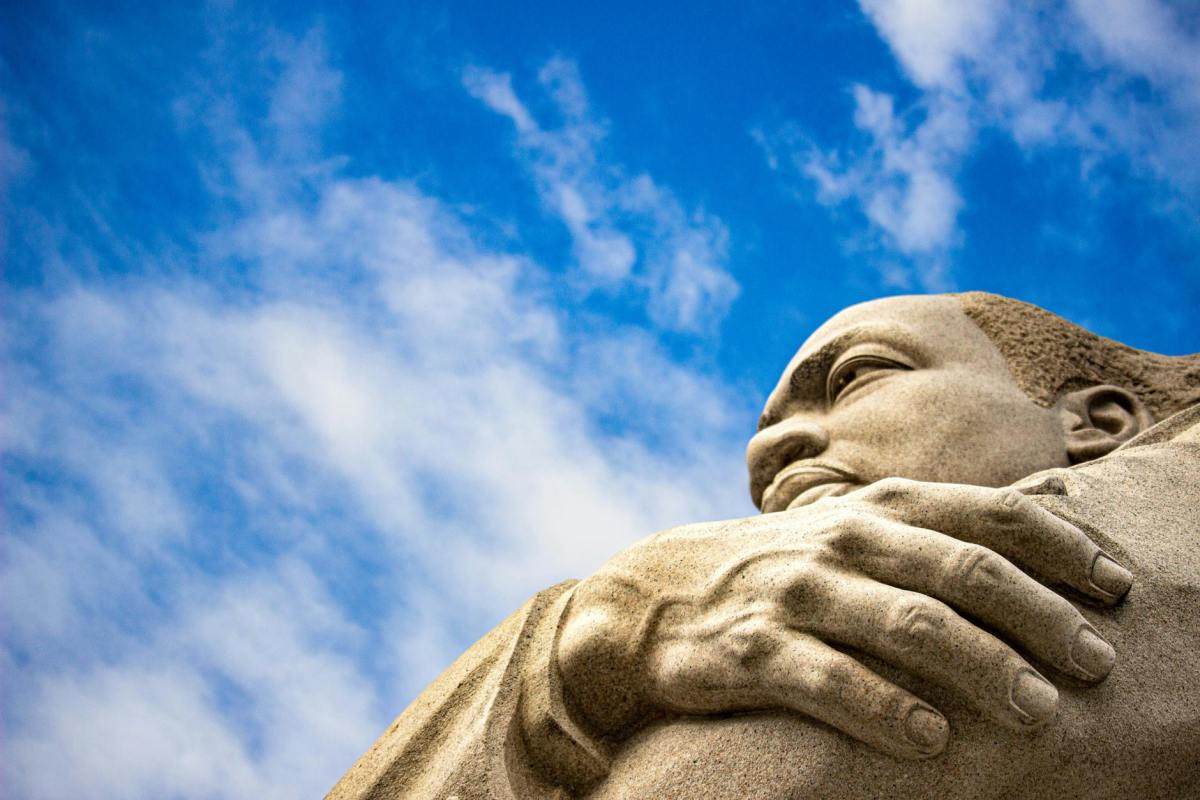
In Your Light, We See Light

Readings here

In our Collect and our Readings, the theme of the day is “illumination.” As I prepared for this service, celebrating the life of Martin Luther King, Jr., I kept coming back to a certain phrase in our Psalm: “in your light we see light.”  

It reminded me of Easter Vigil. At the very beginning of an Easter Vigil service, which occurs at sunset on Holy Saturday, a new Paschal candle is lit. 

The Celebrant says this prayer over the candle: O God, through your Son you have bestowed upon your people the brightness of your light: Sanctify this new fire, and grant that in this Paschal feast we may so burn with heavenly desires, that with pure minds we may attain to the festival of everlasting light; through Jesus Christ our Lord. 

The gist of this candle ritual plays out a little bit later in the darkened church when, at the Easter proclamation, all the lights are turned on, shocking sleepy parishioners into wakefulness, and making the church shine like a beacon in the dark midnight of Easter. People ring bells, greet one another other, and joyfully sing “He is risen.” 

If Christmas is about the light of the world becoming incarnate, then Easter is about the light of the world becoming permanent, refracting endlessly in the world’s dark night until everything is illuminated. Christ’s glory has been revealed for all time, and now the People, illumined by Christ’s Word and Sacraments, carry that light with them, beacons in the dark. 

“In your light we see light.” 

For as long as I can remember, I have loved Martin Luther King, Jr. It was a standard part of elementary school curriculum to talk about the Civil Rights Movement the week leading up to MLK Day. We learned how this one man stood up to bigotry, racism, and injustice with nothing but the strength of his ideals and a whole lot of persistence.  

Of course, as adults, we know that King’s story – and indeed, the reality of the Civil Rights Movement of the mid-20th century – was much more complicated. King was not a perfect saint – we know he had affairs. And, like anyone else, he made choices that didn’t always pan out and claims that weren’t always quite true. But those things can’t negate the power of his ministry, or the movement he was a part of. Because it wasn’t one man – it was a movement.  

Thousands of courageous people took a stand for their own dignity and the dignity of others, at great risk to their lives and livelihoods. They were united in their goals, but they weren’t all the same. Not all of them got along. Not all of them agreed on tactics, or were motivated by the same experiences. But all of them knew the stakes were too high to keep silent. 

Some of them, like Mamie Till, were simply proclaiming their child’s human sacredness in the midst of a culture of violence. 

In 1955, Mamie insisted on an open-casket funeral for her son, Emmet Till, who had been tortured and murdered by white men for allegedly flirting with a white woman. The men received no punishment for their crime. But the horrifying spectacle of Emmet’s funeral forced the world to confront the violence of racism. Mamie’s prophetic belief that injustice could not prevail is often credited as the beginning of the Civil Rights Movement.

The light inside of Mamie lit a match that started a fire of justice. In Mamie’s light we see light. 

Among King’s followers was a young, white Episcopal seminarian named Jonathan Myrick Daniels.  

In 1965, he journeyed to Selma, Alabama to register new voters after the passing of the Voting Rights Act. While walking to a convenience store with a group of young, Black activists, a white man pointed a shot gun at 17-year-old Ruby Sales. Daniels pushed the man down and took the bullet.  He died on the scene.  

When King heard about it, he said, “one of the most heroic Christian deeds of which I have heard in my entire ministry was performed by Jonathan Daniels.” 

The light inside of Jonathan burned so bright it saved someone’s life. In Jonathan’s light we see light. 

And, of course, there is King himself.  

A Christian, pastor, and preacher, King’s engagement in civic life was an extension of his faith and vocation. His commitment to non-violence stemmed from his desire to emulate Christ, who rejected a violent overthrow of the Roman government and insisted that revolution started with good principles and sound theology sustained and negotiated in a “beloved community.” 

King was an intentional movement builder, and he was good at it because he knew how to be a community and congregation builder. Following the example of Jesus, he understood that any movement must be built, first, on unwavering principles regarding the sacredness of human life. There could be no question that human dignity was an intrinsic and God-given right that applied to all people, equally. 

And second, King understood that successful movements require coalitions, of different kinds of people, from all walks of life, doing what they can where they can. United, but not all the same. In his Letter from a Birmingham Jail, King wrote, “injustice anywhere is a threat to justice everywhere.” That meant anyone bogged down by unfairness, want, and oppression could find a reason to join hands, link arms, and do the work. 

On the night before he died, King was giving a speech to striking sanitation workers in Memphis. Now known as the “Mountaintop Speech,” it reads like a sermon, conveying scriptural moments of deliverance and counter-cultural connection, and connecting them to the specific trials of the age. 

At the very end of the speech, it becomes clear that King knows there are credible threats on his life. He knows he might not live to see the end of the movement, or even the end of the strike.  

But he concludes with this: 

“Like anybody, I would like to live a long life. Longevity has its place. But I’m not concerned about that now. I just want to do God’s will. And He’s allowed me to go up to the mountain. And I’ve looked over. And I’ve seen the Promised Land. I may not get there with you. But I want you to know tonight, that we, as a people, will get to the promised land! I’m not worried about anything. And, so, I’m happy, tonight. I’m not fearing any man! Mine eyes have seen the glory of the coming of the Lord!” 

The light inside Martin smoldered like incense. They could kill the body, but they could not kill the soul. In Martin’s light, we see light. 

Martin and Jonathan and Mamie saw the glorious light of God and refracted it out in so many directions, it began to overcome the darkness. Their lives became beacons, interrupting the dark night of the world. 

Two of them were martyred.  

Which forces the question, why does the world hate light so much? 

The glorious light of Christ that illumines his people is persistent, pervasive, and exposing. It eliminates the shadowy places where evil can persist. “It will not keep silent” when injustice rules the day. 

Symptoms of Christ-light include fearlessness, boldness, and an unwavering commitment to principles of human sacredness and dignity. This light insists on honesty above etiquette, inconvenience above order, and love above all else. 

It is agitating and loud and overbearing. It wakes up the sleepers and forces us out of our apathy. It makes us remember that everything God created he declared good, and we must declare it, too. 

Light cannot tolerate injustice – it must act, proclaim, and respond. And this means, the light of Christ is like a pebble in the shoe of injustice: Worldly powers and dominions hate people who challenge them on their ego trips and power grabs. Worldly rulers and their allies will kill to keep the world in darkness. 

But we are not like them. We are light-bearers. In Christ’s light, we see light. And we carry that light as beacons in the dark world.  

It is our task to be honest, and to speak up in the face of injustice. It is our duty to stay the course of our faith: to care for the poor, the orphan, the outcast, and the marginalized, to love our neighbors near and far, no matter who they are, and no matter what other people say about them. No matter the cost to our reputations, livelihoods, and maybe even our lives. And it is our calling to be bold and bright, to refract light until the whole world is covered in it. 

United but not the same, we bring different experiences and different skills for the movement that we might call Christ’s “way of love.” But we all have work to do. We all have light to bear. 

By God’s grace, illumined by Christ’s light, in the way of Martin, we will be able to say that we are not afraid, because we have seen Christ’s glory. And in our light, the world will see light.  

Amen. 

Not ‘Ordinary’ At All

Father in heaven…Grant that all who are baptized into his Name may keep the covenant they have made, and boldly confess him as Lord and Savior; who with you and the Holy Spirit lives and reigns, one God, in glory everlasting. Amen. 

Among the many nerdy theological arguments clergy find themselves engrossed in, is a lively debate about what to call the season we’re currently in

Is it the Season of Epiphany or the Season after the Epiphany? The Feast of the Epiphany was Monday. Every year on January 6, we celebrate the arrival of the Wise Men bearing their gold, frankincense, and myrrh, and announcing Jesus as the “King of the Jews.” 

Epiphany marks the end of the Christmas season and the return to “ordinary time.” While “ordinary,” in this case, means “counted,” in many ways, we are also getting back to “normal” until Lent begins. 

But preachers and scholars can’t quite agree on the thematic details. Some feel like the broader theme of epiphany – meaning “sudden revelation or insight” – invades and permeates the scripture readings set for this season. They insist that we keep looking for signs and wonders of Christ’s action in the world. 

And I take their point. 

But personally, I am inclined to say Epiphany is done, and there’s nothing else to say about it. I think it’s just that I’m over the twinkly lights and the Christmas trees and the heightened sense of optimism, that our secular Christmas and New Year’s celebrations bring. I’m ready to put all that away and sink into my Seasonal Affective Disorder until spring. (Yes, I have been diagnosed.)

But in his weekly newsletter, Dr. Andrew McGowan suggested that we can’t say goodbye to “epiphanies” just yet. Because today, we celebrate the Baptism of Jesus, the descent of the Holy Spirit, and the sudden revelation of Jesus as the Son of God, announced by God himself. 

As a colleague put it, this moment in our Gospels is when the clock starts ticking on Jesus’ earthly ministry. He is baptized here, among the people he has come to save. He will spend the next three years with them, walking slowly toward Jerusalem, the cross, and the resurrection. 

In other words, Jesus’ baptism marks a spiritual, relational, and ritual transformation that will bond Jesus and this burgeoning faith community to one another for eternity. Jesus’ baptism, in a mystical and physical sense, is the beginning of the church. Because it gives form to a new religious movement that will eventually be called Christianity. 

That’s not ordinary at all. That’s an epiphany! 

This is why baptism has been so important to the church since the very beginning. And it is why we call it the “initiation rite” of our church… 

Our Book of Common Prayer describes Holy Baptism as “…the sacrament by which God adopts us as his children and makes us members of Christ’s Body, the Church, and inheritors of the kingdom of God.” It was described by the early church reformers as “the outward and visible sign of an inward and spiritual grace.”  

While Christ can and does speak to us whether we’re baptized or not, our baptism welcomes us into new life, a life dictated not by the finality of death and brokenness, but by the last Word of eternal life, held forever in the hand of God. 

While we usually baptize at a font by pouring water on the person’s forehead, the early church preferred baptizing in a pool of water. These were inground pools built within the walls of the church. The person to be baptized would be brought into the room, descend down several steps into the pool, be immersed face first, and then step up and out of the pool, where they would be clothed in white.i 

The layout was significant to the meaning of baptism: Stepping down into the pool signified stepping into the grave, being immersed in the water signified death (and purification), and stepping back out to be clothed in white signified the resurrection. 

This ritual, an “outward and visible sign,” revealed what baptism actually is: becoming one with the Body of Christ in his death, and his resurrection

Just like those ancient Christians, our baptisms still make us one with Christ and with his Body, the church. Whether water is poured on our foreheads, or we are immersed in a pool, at baptism we participate in our own funeral, and our own homecoming.  

But we don’t do it alone. The Episcopal Church no longer performs private baptisms, because we understand that our faith is not only for ourselves, but for our community, and strengthened by our community. 

This is why infant baptisms are part of our practice. We believe that life in Christ is nurtured in the church, that we learn from one another and, in turn, teach one another what it means to be “born again.”  

Our initiation into the church through baptism prepares us for a lifetime of growing in the faith. And it helps us pay attention to life’s epiphanies that both reveal Christ’s grace and urge us to respond in kind

Baptism, Christ’s and our own, points us to who we are.  

We are “resurrection people.” Life in Christ, and in his church, will not protect us from the trials and horrors of this life – from the fires and floods and griefs. 

But we are a people called to run toward the challenges of this life in service of love, drawing from a deep well of hope in Christ that can’t be moved by the death, destruction, and decay all around us, because we know we are held forever in the hand of God. 

To use a Biblical term, we can “gird our loins” for whatever comes, because we know we belong to Jesus, we are led by the Holy Spirit, and we have one another as mentors on the Way. 

[As we prepare to say together the Baptismal Covenant, I encourage you to take some time to reflect on and pray with the words.  Consider how the Holy Spirit is leading you to more fully embody your baptism. 

Later, as you come up for Communion, I encourage you to place a finger in the font and make the sign of the cross on your forehead, as a physical reminder of your participation in the resurrected life of Christ and his church. 

We will now take a couple minutes of silence for prayer and reflection…]

Kid Jesus in the Temple, A Sermon for Christmas 2

Today, after anticipating the coming of Jesus for four long weeks and celebrating his birth for two, we are suddenly encountering pre-teen Jesus seemingly ignoring his parents. 

After all that talk about “Silent Night,” it’s a real shock to the system! 

How did we manage to miss the last eleven years of Jesus’ life? You might be tempted to blame the sudden jump in the story on the Lectionary – which is the schedule of scripture readings we use in the Episcopal Church. But it’s not the Lectionary’s fault. We’re still only in Chapter 2 of Luke, after all.  

This is simply a consequence of Luke’s story-crafting.  He has a point to make and only so much time to make it. Cuts had to be made! 

If Luke were a movie, all we would have missed was a brief growing-up montage set to gentle string music, with a kindly voice reading verse 40: “The child grew and became strong, filled with wisdom; and the favor of God was upon him.” 

At the end of today’s reading, we actually get the bookend to that verse: “And Jesus increased in wisdom and in years, and in divine and human favor.” Those two, brief summaries signal the swift passing of time.  

In the next verse, we will be propelled nearly 20 years into the future, to the time of Pontius Pilate and the start of John the Baptist’s ministry, which ushers in the final Passover pilgrimage of Jesus, from the Galilean countryside to Jerusalem, where he will die and rise again. This little passage in Luke is the only time kid-Jesus gets any airtime in the whole Bible.  

So, why tell this story at all? What does it tell us: about who Jesus is, about his parents, and about the promise of God? 

First, let’s think about the setting… 

It was the festival of the Passover, a time for commemorating God’s rescue of the Israelites from the tyrannical Pharaoh of the Exodus story. As practicing Jews, Jesus’ family traveled to Jerusalem to make sacrifices in the Temple, and join the community in remembrance and praise to God for their rescue. 

Though Passover was a religious obligation, it was also a family reunion: along with his parents, Jesus was accompanied on the journey by aunts, uncles, cousins, grandparents, and people from his village he wasn’t even related to. They traveled together in a large caravan to share protection and resources on what would have been more than a 30-hour journey on foot. 

Once in Jerusalem, the family was hosted by extended family and friends, with everyone sharing responsibility for making sure the kids and animals didn’t go missing. 

Now, let’s think about what happens in the story… 

The sacrifices have been made, the feasting is over, and Mary and Joseph are packed up and ready to head back home. They can’t find Jesus, but they figure he’s with someone they know, so they walk a whole day before they begin to worry. But, the next day, after no word on Jesus’ whereabouts, they have no choice but to turn around. 

For three whole days, they search family homes, rented rooms, marketplaces, and streets for their son.  After nearly giving up, they go back to the most unlikely place to find a child by himself: the Temple. And there he is, talking like a grown-up and holding his own with the religious scholars.  

Mary is not having it. Now nearly a week behind on their journey home, Mary is not in the mood to ponder the blessing of this holy child, because, the fact is, this little blessing is acting like a brat. 

The parental desperation has been building up over the past 4 days, and has now given way to annoyance: “Child, why have you treated us like this? Look, your father and I have been searching for you in great anxiety.” Jesus, unbothered, replies: “Why were you searching for me? Did you not know that I must be in my Father’s house?” 

What the…excuse me, Jesus? What a weird thing to say. You’re 12 years old.  And your parents were on their way home to Nazareth, to your father Joseph’s house.  

Oh, right. Jesus isn’t a normal kid. It’s all coming back now. 

You see, in spite of God’s repeated proclamations to Mary and Joseph – through angels, shepherds, and relatives – that Jesus isn’t a normal kid, the trials and stresses of daily living have lulled his earthly parents into a false sense of normalcy. 

In those first years of new parenthood – the fear, the anxiety, the annoyance, and the overwhelm – this “miracle baby” simply became a part of the mix of life, with all of its everyday distractions and demands. 

Gabriel’s angelic message and Elizabeth’s blessing were just surreal memories now, hazy and almost unbelievable after years of continued toil under the hardship of first-century life, the always-simmering oppression of Roman rule, and the realities of raising a kid, who was fully divine, but still fully human. 

Mary and Joseph didn’t get any special privileges for raising the Son of God, after all. Just like everyone else, they had family obligations, ailing loved ones, household chores, work obligations, and sacrifices to make at the far-away temple. Their lives were exceedingly, boringly normal. 

It is a harrowing fact of human nature that even a miracle as big as the incarnation could, in some sense, stop resonating, could stop sustaining hope. 

I think this is why Luke tells the story. 

Not only does the story of 12-year-old Jesus do theological work, by confirming Jesus’ divinity throughout every moment of his incarnate life. For his exhausted, distracted parents, it was a disruptive, inconvenient, and necessary reminder that God’s promise was still true after all those years. 

It was a reminder that Jesus isn’t normal, and life with him isn’t normal either. 

This child truly is the Anointed One. This child truly is the Son of the very God who dwells in the Temple, who rescued their ancestors from tyrants, from enslavement and exile and ruin,  who turned their mourning into dancing and their sorrow into joy. 

And this child, in a few more years, will manage to bring about the revolutionary salvation of the world regardless of his parents’ successes or missteps. 

And because of that reminder to his parents, it is also a reminder to us, that Jesus is who he says he is – always, at every point in his eternal life and at every point of our journey with him. He is our rescue and our hope – he is God’s promise come true. 

Even when we are distracted by our exhausting, confusing, dangerous, normal lives, the miracle is still a miracle, and God is still with us. And just as importantly, God’s promises aren’t diminished just because we forgot, or got distracted, or were too tired to say thank you. 

What a gift to have this story. What a gift it is to know that God can use anything, even disruption and inconvenience, to remind us that we are held in a state of grace. 

Our scriptures remind us that even our normal lives aren’t normal, because Jesus is still in the act of inconveniencing us in order to reveal himself to us, transforming hatred into love, sorrow into joy, and death into life. Like Mary, we can treasure all of this in our hearts, even when we don’t fully understand what Jesus is up to.

God Found a Way: A Christmas Sermon

Sometimes God speaks in unlikely places through unlikely people… 

Yesterday morning, I took the rare opportunity to sleep in. When I finally did get around to stirring, I did what many of us do these days: I rolled over in bed, picked up my phone, and clicked into Facebook.  

After scrolling through friends’ pictures of poinsettias and children’s pageants for a few minutes, I happened upon an ABC Science video, hosted by historian and science communicator, Dr. Ann Jones. She was describing a curious case of parthenogenesis. Parthonogenesis, which literally translates to “virgin birth” in Greek, is the process by which some animals reproduce without mating. 

It seems that a crocodile, named Coquita, who had been held in a Costa Rican Zoo by herself for 16 years, had somehow managed to produce eggs that were developing. (Note the irony here: Coquita means flirtatious in Spanish.) 

Now, parthenogenesis isn’t that unusual in the natural world. Many insects can reproduce without the aid of fertilization. And some fish and sharks can, too. But until 2018, there was no evidence that parthenogenesis could occur in crocodiles. I’m sure some people here know a lot more about crocodiles than I do, but this was all news to me. 

So, let me get back to the basics for a minute…The thing about crocodiles is that they often lay eggs without the usual prompting from the mating process. But, these eggs are never fertilized and so they don’t develop…at least, that was the case until Coquita came along. In Coquita’s case, one of the embryos developed to full-term, though unfortunately, the baby – a female – was stillborn.  

When scientists analyzed the baby’s DNA, they found that she shared 99.9% of it with her mother. The evidence was clear. Coquita had a virgin birth.  

Before anyone jumps to conclusions, rest assured that I am not suggesting that Coquita the Crocodile’s reproductive miracle offers irrefutable evidence of the truth of the virgin birth of Jesus Christ. Humans are not crocodiles, after all.  And believing in the virgin birth is more properly assigned to the realm of faith than reptile science. 

The inbreaking of God in our world through the embodiment, or incarnation, of Jesus Christ does not have to find its proof in the biological sciences. Because God is allowed to break the rules. And, in fact, he often does. 

But, I’m sharing the story of Coquita the Crocodile, because I need you to know the background of her story, so that you can hear Dr. Ann Jones’ final sentence the way it rang in my ears on the eve of Christmas Eve. 

Sometimes God speaks in unlikely places through unlikely people… 

And, Dr. Jones, at the very end of the video, inadvertently makes a theological claim: “Parthenogenesis, [virgin birth], is nature’s last-ditch attempt to save a species.” 

You see, virgin births occur because things have gotten dire. They occur in contexts where the chances of survival have become slim to none. Whether due to habitat loss, isolation, disease, or any number of dystopian scenarios, scientists widely agree that virgin births occur to make the future possible, when the population is in jeopardy, and there is no other way forward. 

The survival of just one baby produced by parthenogenesis could make mating possible for the next generation. It is quite literally a matter of life and death. 

And in a way, isn’t this what our scriptures claim, too? 

“Parthenogenesis is nature’s last-ditch attempt to save a species.” In a world of violence, oppression, apathy, and desperation, the virgin birth, of Jesus Christ, was God’s final attempt to save the world. 

And it worked.  In his first, shrill cry out into the cold night in Bethlehem, Jesus Christ used his brand-new lungs to proclaim LIFE in the midst of death. 

Sometimes God speaks in unlikely places through unlikely people… 

In the Christmas story, God speaks in the voice of an infant; in the bafflement of anxious, young parents; in the lowing of livestock; in the song of angels; and in the excited voices of unkempt shepherds. And God-incarnate makes his first appearance in a room that was the last-ditch effort at last-minute shelter, on a cold night in Bethlehem. 

The curious virgin birth, of Jesus Christ, made the future possible for us. And not just any future: An abundant and joyful future, where wrongs are righted,  and peace mends all the broken things. 

It was just as the prophets foretold… 

The people who walked in darkness 
have seen a great light; 
those who lived in a land of deep darkness– 
on them light has shined… 
For a child has been born for us, 
a son given to us; 
authority rests upon his shoulders; 
and he is named 
Wonderful Counselor, Mighty God, 
Everlasting Father, Prince of Peace. 

The baby was born, and so, salvation was born into the world. As the angels announced and the shepherds declared, Jesus had come to bring abundant, loving, expansive, incomprehensible, unending life. 

Finally, God had come down into the thick of it to forge a straight path through the rubble of our lives, and to show us, by word and example, what it means to keep a promise, and what it takes to build and birth an abundant future for the whole world. 

Joy to the world! The Lord is come! 

…against all odds, after so much waiting, just when we thought we couldn’t survive. 

This is the story of Christmas:  A curious virgin birth, a cry piercing the night, a baby in a manger. A message in the sky, the surprising witness of shepherds, the ponderings of a new mother. The salvation of the world. 

And it only took one baby, born in a time and place just as difficult and dystopian as our own. Born to make the future possible.  And it worked. 

Just when humanity thought it couldn’t survive, God found a way.