Merry Christmas

Sermons and Reflections from an Episcopal Priest


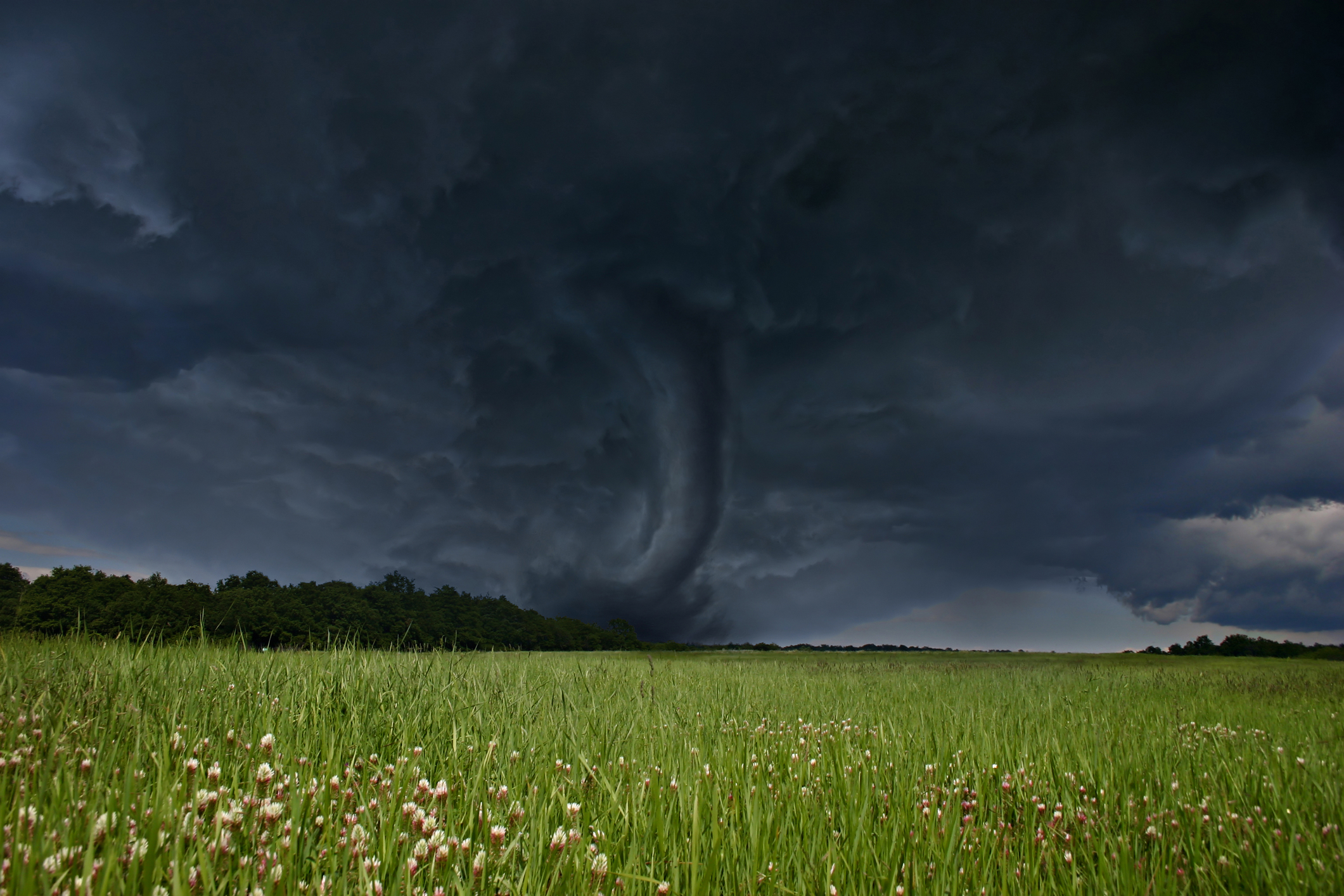
I was warming up for police training at a church recreational center on Virginia’s coast. There were nearly 100 of us there, all dressed in gray and navy, doing jumping jacks and anticipating the events of the day.
The sky was overcast through the large, south-facing windows, built high into the wall of the gymnasium. Someone shouted. The wind picked up in a cacophonous symphony of howls and rustling sand. My eyes grew wide in terror: an enormous tornado was headed toward the building. We sat down, some huddled together, myself apart from the group, knowing that following a safety procedure at this point was futile.
The tornado passed the building then, barring our view of the coastline for a few minutes. From the windows in the northern wall, I saw a girl in a red cape running, but it was too late. She was swept up as the winds racked and swayed the tall grass between our building and the church sanctuary. It tore through the sanctuary, demolishing the eastern wall.
I knew that it was bound to head inland, toward Daniel. I texted him:
“I hope you survive. It’s headed your way. Know that I love you very much.”
As I hit send, the howling I’d endured for close to a half hour stopped suddenly, giving way to eerie silence. The stillness was interrupted only by the sound of my heart beating furiously, high on adrenaline.
And then I woke up, convinced my dream had been prophetic, convinced the end was nigh. After several minutes of lying there, overheated and frozen in fear, I woke up Daniel, told him I was afraid, and snuggled into his side, thankful for him, thankful we were both together and alive.
*photo found here
I first heard Edward Sharpe & the Magnetic Zeros at Daniel’s friend’s house several years ago. We chose Home as our wedding reception entrance song and attended a concert in Savannah, GA the first day of our honeymoon. Their music is joyful and thoughtful. This particular music video is adorable. If the end of the world is still imminent (today isn’t over yet), let’s dwell on what’s important.

 I haven’t really talked about the day to day here lately and that’s really what this blog is all about. Here’s an update on the past couple of weeks:
Things have been a bit dull, but there’s nothing to complain about. I am grateful to live in a place I love near wonderful people, even if the bulk of them are currently out of town.

 I discovered Erzulie while searching for organic skincare options on etsy and have been using their products for several months now. Recently, I purchased the Mineral Cream to Powder Foundation in Light on the seller’s recommendation. I have used it every day for the past few weeks, so I think it’s time to review it.
You should know before I start that I have sensitive, combination, acne-prone skin that gets very dry in patches during the winter months. I turned to organic skin care initially in order to avoid artificial fragrances, but there are so many other benefits (and there are so many great products) that I’ve stuck with it for additional reasons.
My rating: 4/5
Pros:
Cons:
I used Erzulie Liquid foundation before trying this kind. I like the coverage this provides better, but the liquid is a bit easier to use. I use a nice quality thick sponge applicator for this instead of the provided pad. I knocked off a point due to the poor quality provided applicator and the firmness of the product. If it were a bit wetter, I think it would be easier to apply.
In conclusion, I will continue to use Erzulie Cream to Powder Foundation and will likely buy it again once I run out of my current supply.

Hello, my name is Leah Wise and I have a confession to make:
I’m a feminist who took my husband’s last name.
“How could you?!” my feminist sisters cry. Well, because I wanted to.
Let me acknowledge that I’m right there with you when you say that taking on a husband’s name implies an unequal balance of power between the sexes, that it’s part of an archaic patriarchal system, that it arose within a tradition that passes women as property between father and spouse. I agree; that’s why Daniel didn’t ask my father’s permission to marry me. Independent adults can make their own decisions.
I’ll admit that I really didn’t think about not taking Daniel’s last name until after we were married. It took me 6 months to make all the changes to my legal documents, in part due to laziness and in part due to the fear that everything would be different with a new last name (it wasn’t, but more on that later).
I considered (and consider) myself the academic sort and I didn’t want to confuse my professors with a new last name. But, for the most part, my hesitation wasn’t due to the fact that I felt I had built a name for myself as a supreme scholar using my maiden name; I was afraid more that they’d question me for my age. I was 21 when I got married. That’s young by a lot of people’s standards and I didn’t want their condescending judgment. I hadn’t really considered that the name change itself would produce that response.
Back to the point. I acknowledge that patriarchy is bad for women and that the name change developed within that system. But I changed my name because I wanted to have the same last name as my husband. I don’t want to sound like a cliche, young-and-in-love moron, but I was wooed by the idea of creating a family unit with my husband (not the child-bearing family unit necessarily, just being identifiable as a married pair). I like that people call us The Wises. I discussed the subject with a friend and mentor earlier this week and I liked the way she phrased this point: getting married is choosing your next of kin. You tell the world, by marriage, that you have chosen a life partner who is closer to you than your parents or siblings; you have taken them on as your family. Having a uniform last name symbolically represents this bond.
I changed my name because I had the open space – the freedom – to make that choice for myself. I’m sure I was influenced by custom, but I married a man who believes strongly in fairness, equality, and egalitarianism. We both received departmental awards as undergraduates in the same field and graduated summa cum laude. We’re equals and we know it and we’re proud of it. If he had suggested that I had no say in the name change, I more than likely would have broken it off altogether; that’s straight up male chauvinism.
Additionally (this may come as a surprise to some of you), changing my last name had its perks. For one, I felt like I could become something better than I was as a Wells (I should have mentioned that my new last name is very similar to my old last name). Because changing my last name was my choice, I gained a fresh outlook on my identity (it feels similar to moving to a different town or graduating high school). I also symbolically shed the burdens and ideologies of the family I grew up in. College changed me profoundly from an ideological and religious standpoint and I think the superficial move away from my past helped me admit my new identity to myself and my family. It helped me gain the footing to stand behind my beliefs. The family name I took on doesn’t represent a family that is less broken than my own. It represents the pact I made with my husband to stand beside him for the rest of my life.
There are numerous other arguments that neutralize the name change: when you keep your maiden name, you keep your father’s name, thereby re-affirming patriarchy; future children are easily added to the family without name confusion when you take on a uniform last name; a uniform names provides social legitimacy; etc. I agree with those sentiments, but ultimately it comes down to personal choice.
It strikes me that feminism has always been about choice. To paraphrase my friend again, feminism is about equal pay, respect, civil rights, and self governance – all, at their root, about freedom. While I believe that American women are still beaten down by an unjust patriarchal system, while I know women oftentimes don’t reach high enough or stand up for themselves or gives themselves credit, we cannot lose sight of the original heart of feminism. Don’t shame your sisters in this struggle who think differently or choose differently. The beauty of creating an expansive landscape of choice is that we can journey out in an increasing number of directions and still be within our rights. The last thing we need is to restrain those beaten-down women who came to feminism to find room to grow.
I became a Wise because I wanted to. If I felt strongly that I was encouraging patriarchy by doing so, Daniel and I would have made up a new name or co-hyphenated.
We would have resolved it together because we’re in this together. That’s why they call us Wise.



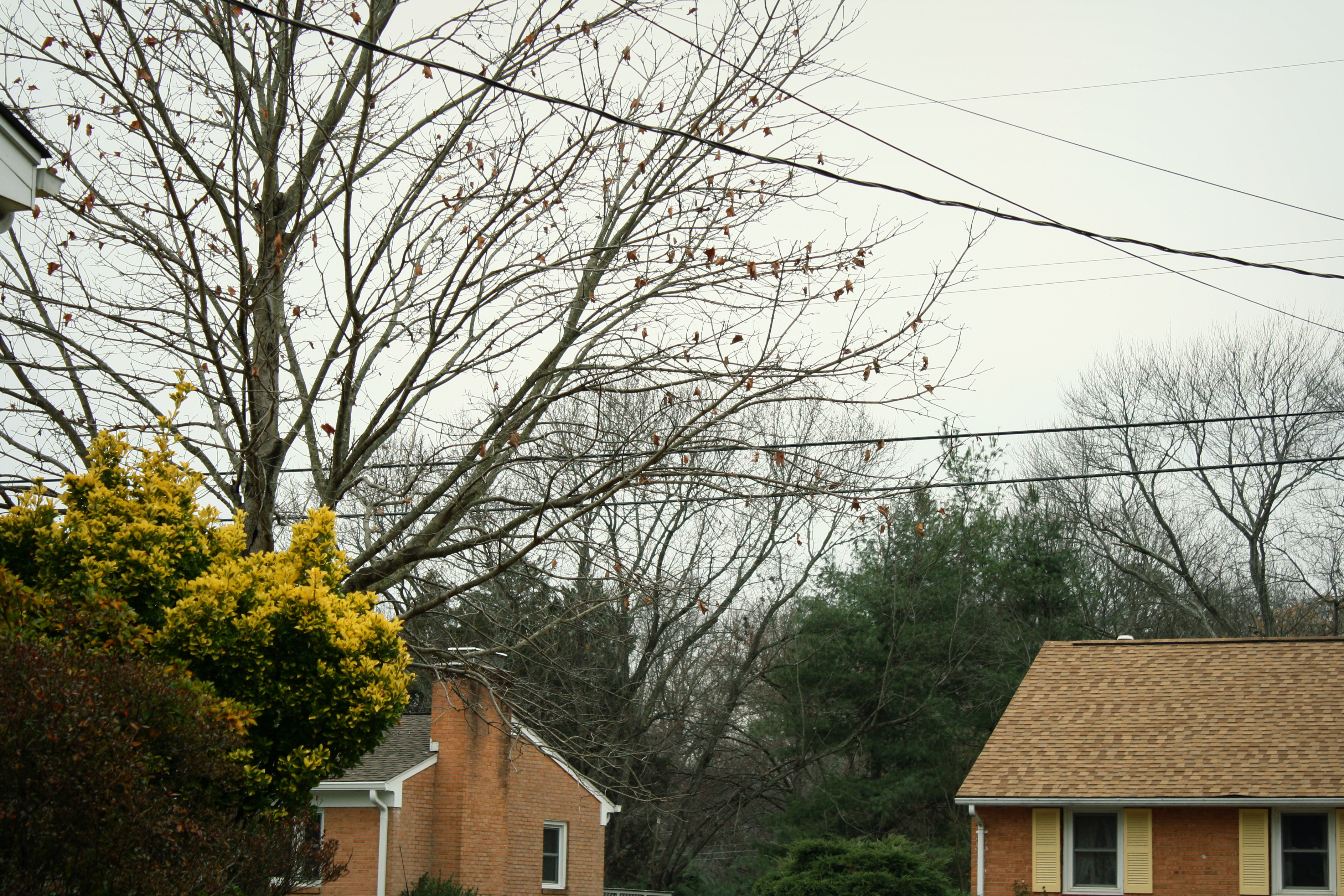


 I haven’t been able to get out much lately. Between being poor, the weather looking like the above every other day, and Daniel being bogged down with schoolwork, we’ve been hesitant to get out there and enjoy the Virginia landscape. But I’m pleased to tell you that even our meager, rented backyard holds treasures: a pebble-encrusted walkway, a rotting pumpkin, mangled vines, and a bit of yellow in the neighbor’s yard.


I stopped going to church for nearly a year for a variety of reasons. I didn’t feel that my academic knowledge was appreciated, I was limited by my gender, I wasn’t at all comfortable with opening up about real struggle, I didn’t fit in. I think Daniel and I feared that we would never really feel at home in any church despite wanting to fellowship with other Christians, despite having chosen our majors because of our faith, despite it being a daily topic of conversation and reflection.
When we got to Charlottesville, we went to a few churches and sat in on a few small groups and just didn’t feel it. I grew up in various evangelical churches, so I know the whole rhetoric about not leeching off the church, about how “feeling” it isn’t enough. But, honestly, after struggling so much to fit into a church in college, I think that mentality covers up a real problem. People in the church, very often, are exclusive in their friendships, judgmental, and afraid to engage issues they deem too controversial. Even for two, born-and-raised Christians, the church began to feel foreign.
But we put in the effort to stick it out somewhere. We started going to an Episcopal Church, a denomination neither one of us grew up in. Known for its progressive/liberal (you choose the connotation) policies, we didn’t really consider it until we sort of fell into it. We found a group of young people who are willing to deal with controversy, doubt, and all the complexities of Christian thought head-on. We found thoughtful, compassionate, loving people who welcomed us in. We found community.
I realized last weekend, as a large group of us sat around the table at a local restaurant sipping drinks and talking about theologians, Russian television, feeling accepted, and avoiding cynicism, that I feel unencumbered – accepted – at last. Really, I laugh without inhibition, I listen, I reply, I learn something new, I think about things in a different light. I feel weightless and unimposing. I become a part of the moment instead of an acutely self-aware bystander. I realize that I’m finally fitting in. I’m at home. I don’t have to fight anymore.
The church needs to stop crossing its collective arms and start opening them to embrace all who enter in. I really believe that there is a place for doubt and skepticism in the church, that it’s a part of everyone’s spiritual journey. Without transition and struggle and stagnancy, there is no incentive to push forward and keep developing as a follower of Christ. I’ve found a group of people who know that, who walk with me in that, who lead me forward to hope and faith again.
I encourage you to seek out a community of followers who love without inhibition.

 Anguish by Malaquias Montoya
It’s not about gun control or letting kids “keep their childhoods” or pointing fingers. It’s about allowing ourselves to grieve – fully – for very real heartbreak, for immense suffering. I’m beginning to think people talk these kinds of things to death to numb themselves. Don’t change the subject. Bathe in it. Take it in. Force yourself to recognize and feel the immeasurable darkness of tragedy.

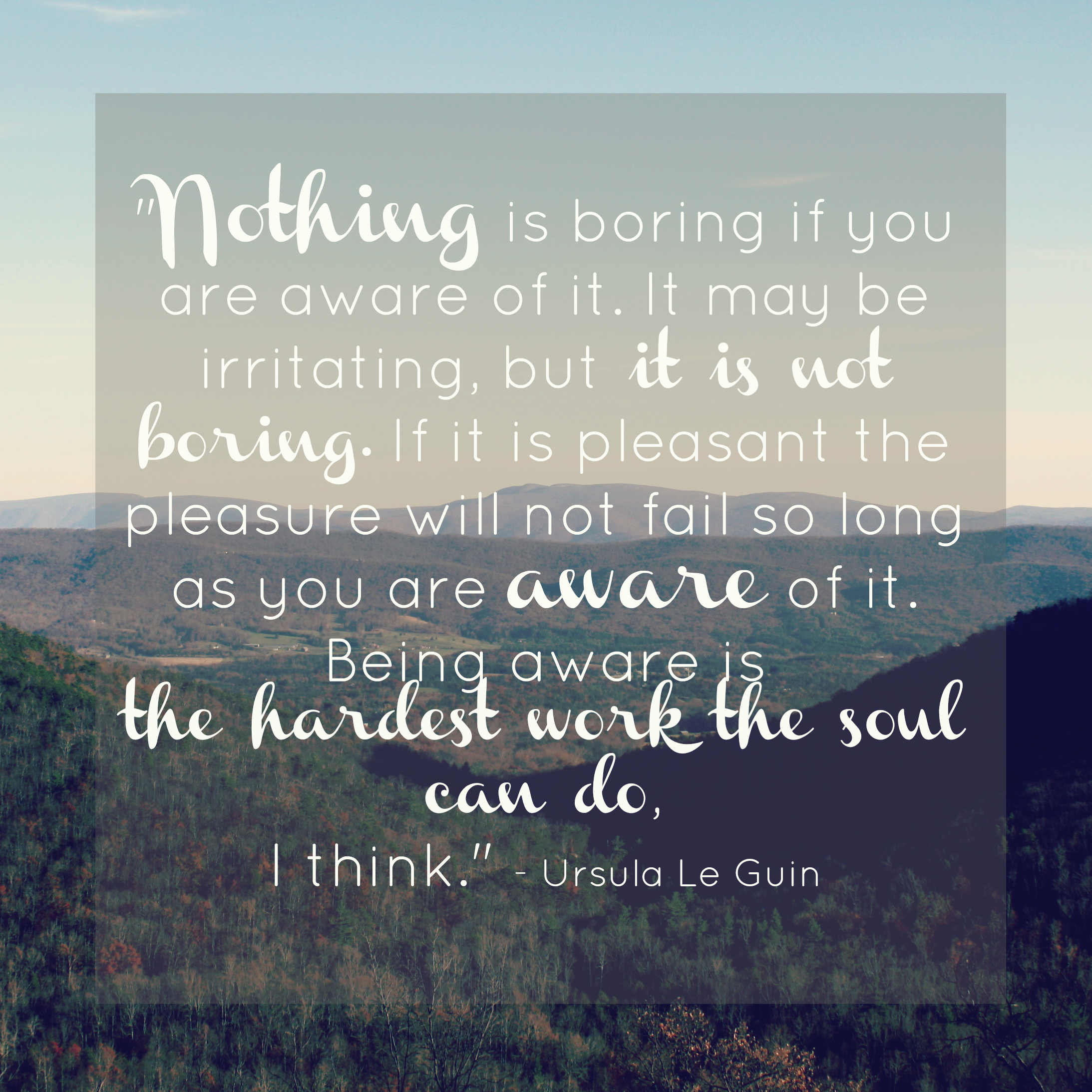 – from “Solitude”
A selection of verses from the Advent hymn, People Look East:
Birds, though you long have ceased to build,
guard the nest that must be filled.
Even the hour when wings are frozen,
God for fledgling time has chosen.
People, look east and sing today,
Love the bird is on the way.
Stars, keep the watch. When night is dim,
one more light the bowl shall brim,
shining beyond the frosty weather,
bright as sun and moon together.
People, look east and sing today,
Love the star is on the way.
Angels, announce with shouts of mirth
Christ who brings new life to earth.
Set every peak and valley humming
with the word, the Lord is coming.
People, look east and sing today,
Love the Lord is on the way.

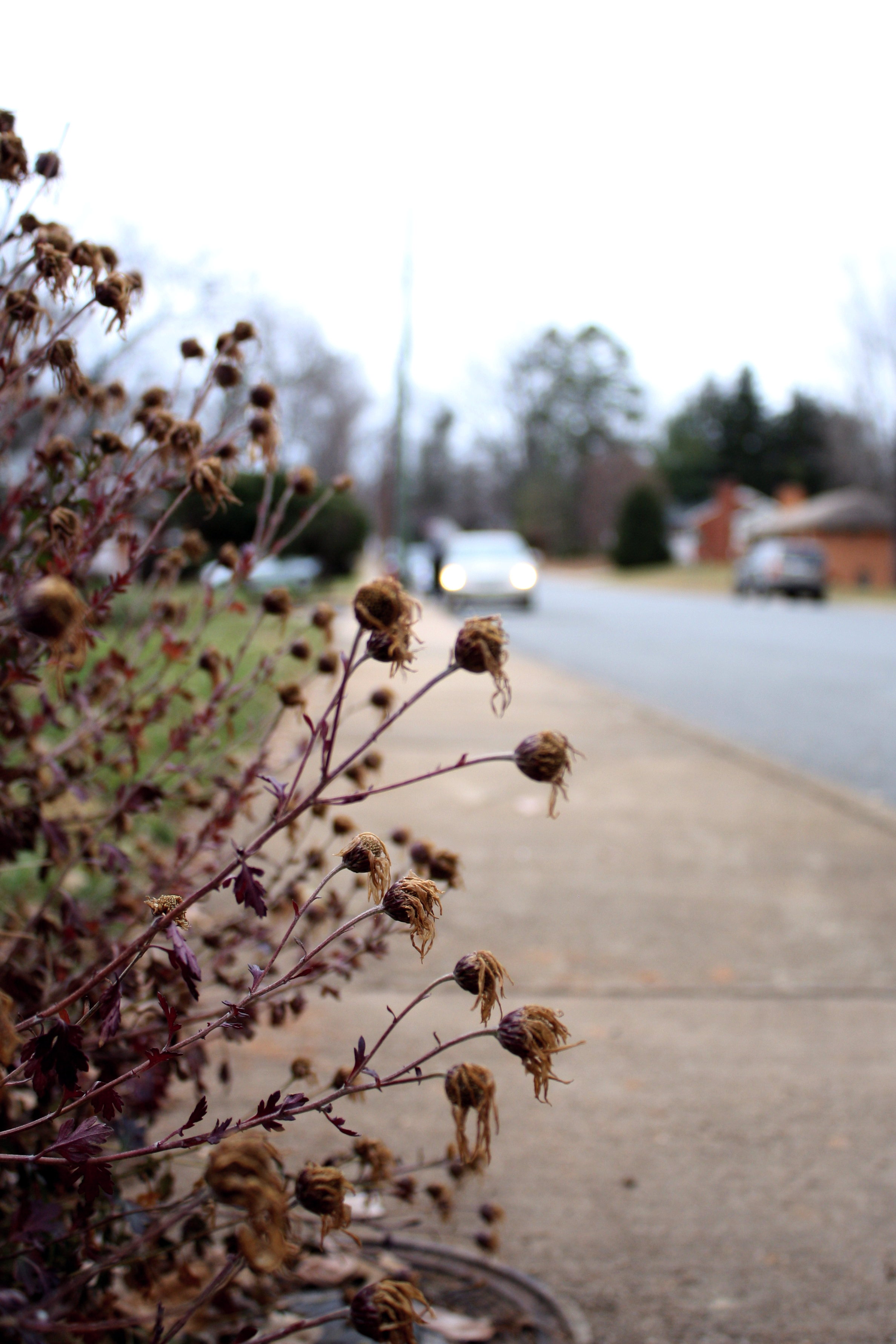
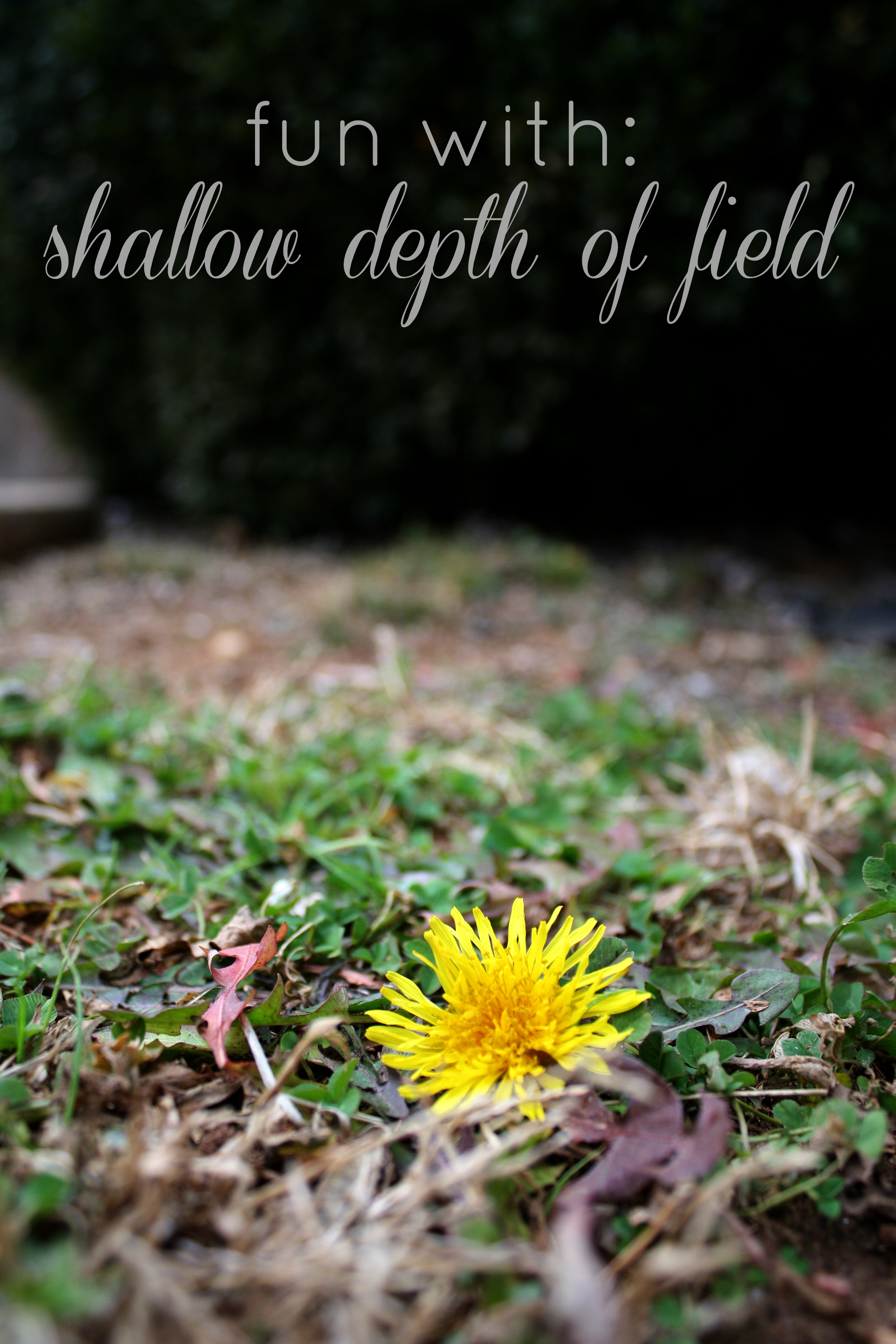 When my sister was in town, I discussed with her how I’d really like to achieve a better bokeh effect by purchasing a 50mm lens. A photography major, she scolded me promptly, telling me that achieving a shallow depth of field had everything to do with knowing how to adjust manual settings, not with buying more equipment. Although I was a bit embarrassed by the chastisement, I knew she meant well. And she was right. Too many wannabe photographers (like myself) think better equipment will automatically equal a better photo. All the while, we fail to take advantage of all the specifications and adjustments our fancy-schmancy cameras already provide. I read up on dof, then tinkered around with my camera outside until it started to rain. I’m pleased with these first attempts at achieving shallow dof.
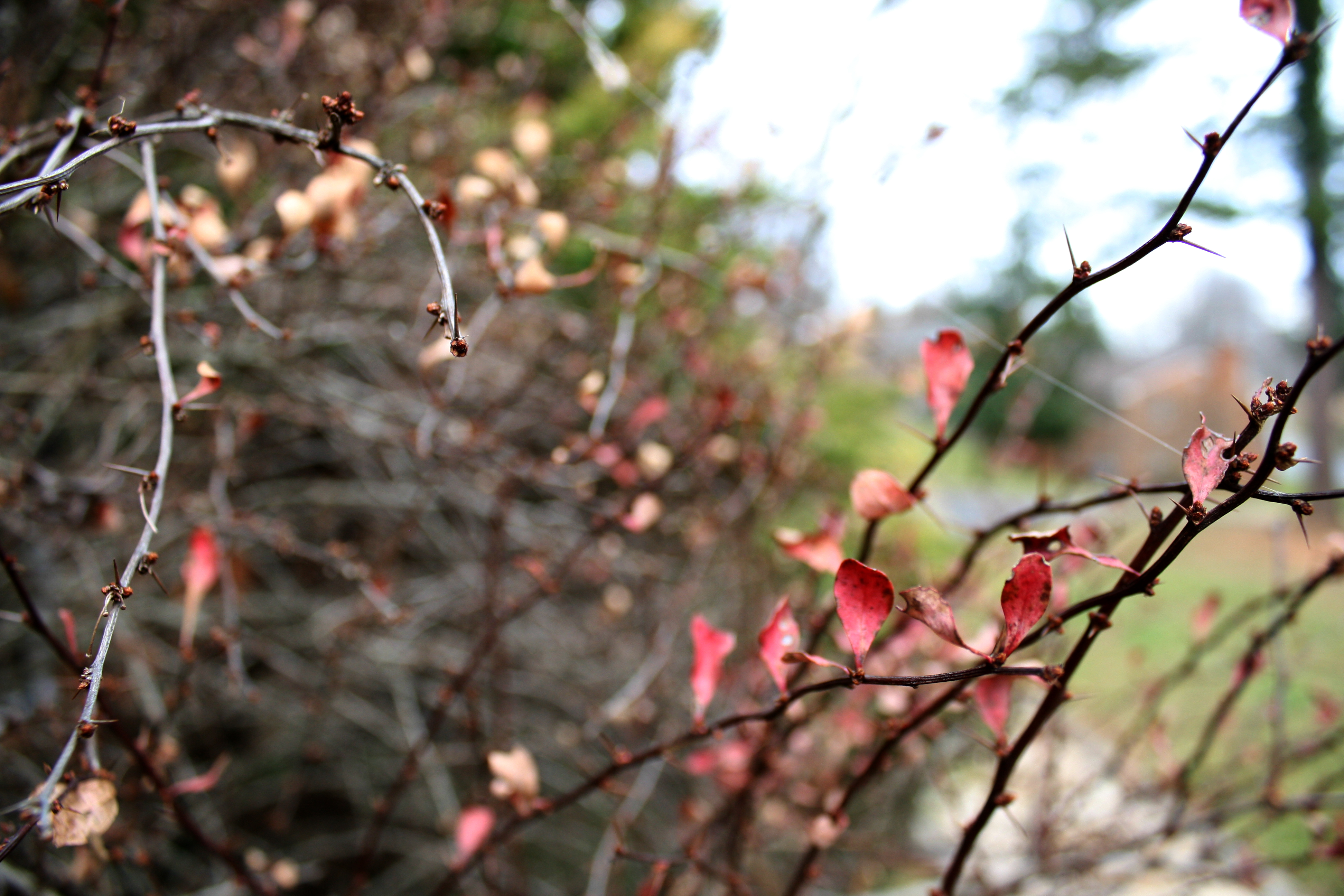
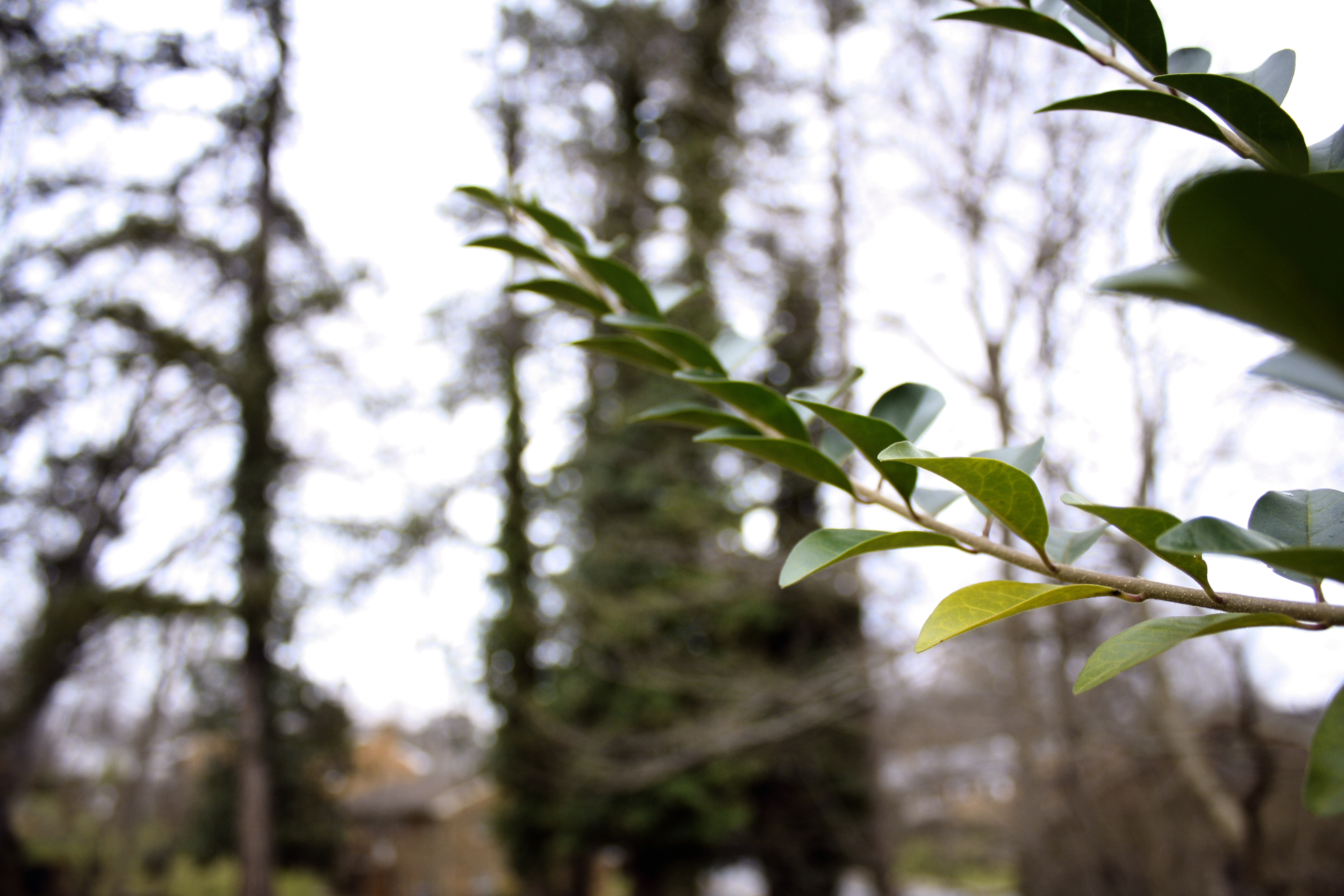

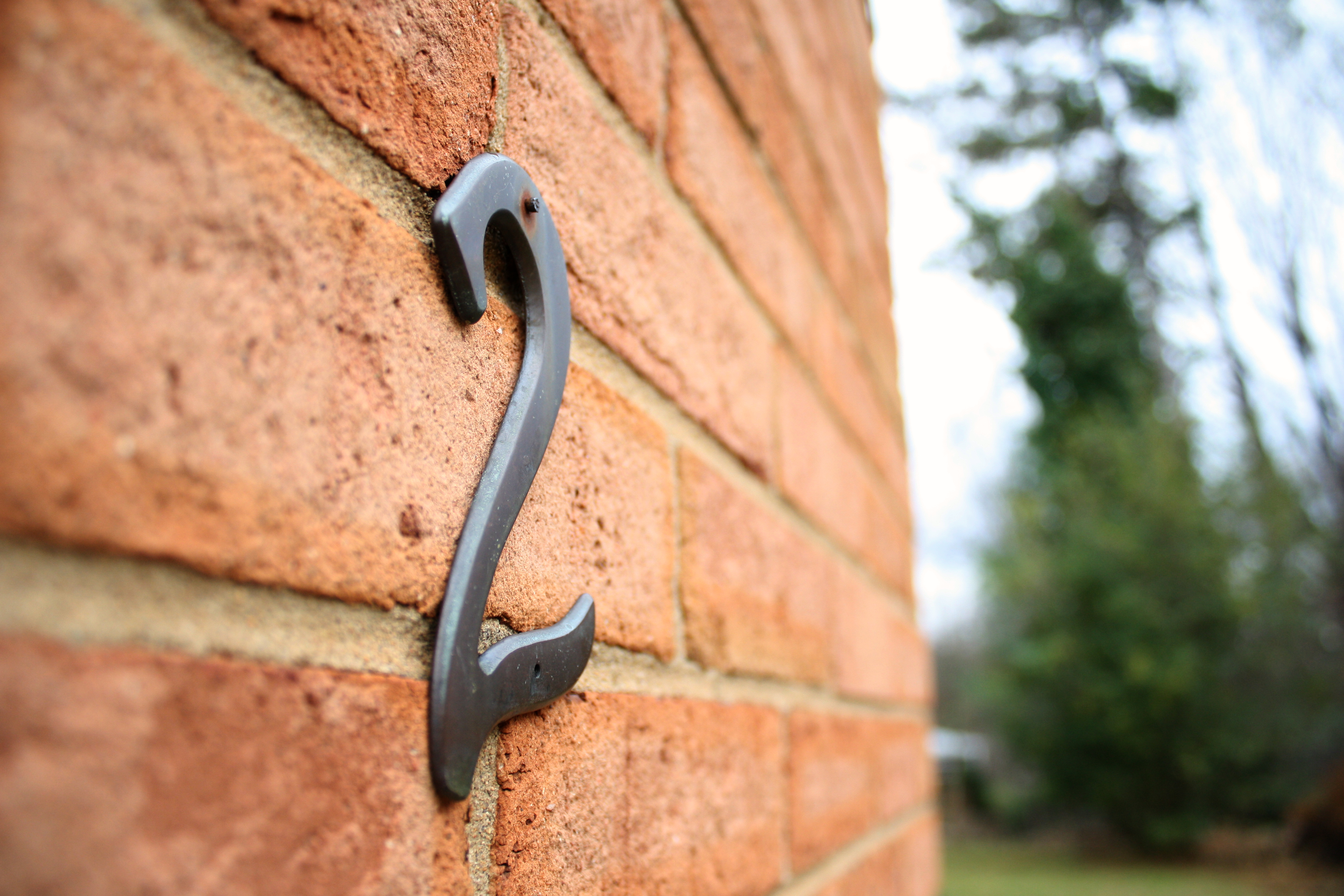

 I leave you with this photograph of my favorite, naked tree.






 Leah Wise