Let Them Sing by Paul Gleason

My friend Paul presented the Palm Sunday homily last weekend at our church. I really enjoyed it and I hope you do, too.

palm sunday

Readings: Isaiah 50:4-7; Luke 19:28-40

He’s finally here. Jesus has finally entered Jerusalem. His whole life has been leading him to this place. And he’s not the only one who knows it. For a year he’s been preaching in the country, gathering a multitude of disciples that’s following him now, into the city. And they have some pretty particular ideas about what this means. Blessed is the king who comes in the name of the Lord. He’s finally here, the king of Israel is finally here. What’s he going to do? Who knows? But we can guess. Chase out the Romans, restore the ancient Kingdom of David, the possibilities seem endless. And the multitudes of his disciples and the people of Jerusalem who are throwing their clothes at his feet and waving their palms in the air are ecstatic. And they began to praise God joyfully with a loud voice. Luke tells us they are saying Blessed is the king, but joyfully with a loud voice? They’re singing. They are so full of joy and hope that they can’t help but sing, because he’s finally here.

It must be said that Jesus doesn’t exactly disabuse the multitudes of this notion they’ve got. That he’s here to kick some Roman keister. Earlier in Luke he told the twelve what’s really going to happen, about how he’s going to suffer and die on the cross. But of course telling a secret to the twelve was like telling it to a brick wall. Huh? Anyway, Jesus sends two of them ahead to find him a colt, so that he can ride into Jerusalem on horseback, like a king. And the people who saw him approaching must have immediately heard the words of the prophet Zechariah ringing in their ears.

Rejoice greatly, O Daughter Zion!
Shout aloud, O Daughter Jerusalem!
Lo, your king comes to you,
triumphant and victorious is he,
humble and riding on a donkey,
on a colt, the foal of a donkey.

He will cut off the chariots from Ephraim
and the warhorse from Jerusalem,
and the battle bow shall be cut off.
And he shall command peace to the nations.
His dominion shall be from sea to sea
and from the River to the ends of the earth.

And there he is at last, riding on a colt. Surely the Roman chariots and warhorses will be routed. The victory of peace is at hand. The prophecy is being fulfilled before their eyes, and so they celebrate in the streets of Jerusalem. They start the party. They sing for joy.

And it’s tempting to say, they’re deluded. They are deluded. Because they have no idea how bad it’s about to get. The ones who do are the Pharisees. So they try to stop the singing, end the party. They say, Teacher, order your disciples to stop. This isn’t just because they’re jealous of all the attention this new rabbi’s been getting. We don’t have to think of these Pharisees as part of that cabal of chief priests, scribes, and political leaders who are already plotting Jesus’ death. They’re worried about what the Roman response to this festival, to this sudden unexpected outpouring of worshipful, joyful song, is going to be. They are worried about what’s going to happen to them, to Jesus, and to all of the people of Israel, disciples of Jesus or not. And they are absolutely right to worry. Within a few days the king, who was finally here, will be gone. The disciples will be scattered. Rome will still stand and, within a few short years it will decide it has had quite enough of these annoying Israelites. Its armies will siege and sack their city. Its armies will burn their temple to the ground. The Pharisees, they can see it coming. And they’re right. They have taken an honest look at the world, they have seen it clearly, and they have concluded that there is nothing here to sing about.

And Jesus, he can see it coming, too. His own death, I’ve already mentioned that he knows about that. And Luke tells us, in the next chapter of his Gospel, that Jesus knows what’s coming for Jerusalem. But what must have been worse, or I think it must have been worse for him, was to know that while all of these people are throwing their clothes at his feet and waving their palms in the air, in a few days, an equal number going to be shouting for his death. He can see Rome and the scheming leaders of his day. He can see into the hearts of everyone around him. He knows how fickle they are, how many of his own disciples will abandon him. If anyone can see the reasons not to sing, it’s him.

And yet he turns to the Pharisees and says, I tell you, if these were silent, the stones would shout for joy. What I take him to be saying is that this feeling, this upswelling of joy in the people’s hearts is so powerful that it seems to be permeating the world around them. Like a failing dam if you stopped it up here it would just burst out over there. So what he says, in effect, is let them sing. Even if Rome won’t like it. Let them sing, in spite of their erring hearts. In spite of the fact that Maundy Thursday and Good Friday are coming, in spite of every good reason I can think of for them to stay silent, let them sing anyway.

Jesus, as Luke presents him in today’s Gospel, wants his disciples to feel joy and share it. And it is Jesus who brings that joy with him to Jerusalem and to all of his disciples wherever they may be. He’s finally here, and in Jerusalem like in Bethlehem he arrives unexpectedly and fills everyone around him with irrepressible joy. And here and now on Palm Sunday we commemorate and we share in that joy they felt in Jerusalem. The party finally begins, and then it is over, too soon. Thursday and Friday always come, so soon.

And it will be tempting to think that we in our joy were deluded, too. Lent after all is the time for reflection on our failures and shortcomings, the time in which we, like those Pharisees, are supposed to make an honest assessment of ourselves and our world. And there are a lot of reasons not to sing. If we’re particularly introspective, we might echo good old John Calvin, who in the second volume of his Institutes lamented that “No one can descend into himself and seriously consider what he is without feeling God’s wrath and hostility toward him. … All of us, therefore, have in ourselves something deserving of God’s hatred.”  If we find it easier to see sin in the world we won’t have to venture too far to find that, either. But the discovery will be no less painful. The German theologian Friedrich Schleiermacher understood original sin not as a sin that we are born with but as a sin that we are born into. He writes “…the sinfulness which is prior to all action operates in every individual through the sin and sinfulness of others … it is transmitted by the voluntary actions of every individual to others and implanted within them.” In other words, the sins we see in our society are our sins, too, transmitted to us, implanted in us, operating through us, even if it looks like they are somebody else’s fault. I don’t mean to frighten you a lot, but I do submit that there will always be good reasons for us not to sing for joy.

And yet we do. Not because we can’t see our broken world or our erring souls clearly. I think we can. But we sing for joy anyway, because as Christians we proclaim that the spirit of Christ is present among us, present at our table. And his presence can act on us like he acted on the people of Jerusalem. It can move us to joy. As Christians we are called to see ourselves and our world rightly. Jesus spends too much time in the Gospels naming the evils he sees for us to doubt that. But we must also be ready to sing for joy. We ought to be known for our joy.

I’m pretty sure I’ve heard sermons that said Palm Sunday was a preview of Easter. And it’s true that Easter is usually the most joyful day of the year, when the fast of Lent is over, and spring is here, and the sun shines through the windows on the pews full of everyone in their brightest clothes. The brass choir plays and the people sing. He’s finally here, and it’s quite a party. Except, in the Gospels, he isn’t there on Easter.  Not like he was on Palm Sunday. He is risen, yes, but he doesn’t process through the streets of Jerusalem again. He appears elsewhere, in the country again, on the road to Emmaus. There was more confusion and awe and fear on that first Easter, if you ask me, than there was joy.

So perhaps on Easter we are actually celebrating like it’s Palm Sunday. Like he’s finally here. Like everyone on that road to Jerusalem we are hoping for that day when the chariots are cut off from Ephraim and the war horse from Jerusalem. We are hoping for the triumph of peace at last, and for the day when his dominion stretches from sea to sea and from the River to the ends of the earth. And whatever our doubts and whatever our failings may be, we are moved to sing with hope and joy. Blessed is the king who comes in the name of the Lord! Peace in heaven, and glory in the highest heaven!

He’s almost here. Amen.

image source here.

week in review

week in review

Haven’t done one of these in awhile. It’s interesting (to me at least) to see how my blog transitions and adapts over time. But I really do want to record my life as it happens, however broad that description of events turns out to be, so that I can look back on it and remember more of the details instead of letting the mood or feeling of the months and years fog the memories as they were actually experienced.

This week, I (and sometimes Daniel):

  • experienced more snow
  • had a few lovely spring days
  • got my new glasses in the mail
  • got my car fixed
  • got fitted for running shoes (that I may buy eventually)
  • went thrift shopping
  • updated Water Lily Thrift
  • celebrated the first day of spring by wearing pastels and floral prints
  • made Brunswick Stew (it was a success)
  • went to a potluck dinner
  • drank too much coffee
  • acknowledged my tendency to buy too much
  • took in two highway scenic views and breathed the cold air
  • started working on a Fair Trade Charlottesville blog

– Reading: Dust Tracks on a Road by Zora Neale Hurston; Sweatshops Still Make Your Clothes by Jake Blumgart for Salon
– Watching: Treme; The Wire
– Listening to: Mates of State
– Anticipating: Spring; starting my new job

radical

Originally published on my fair trade blog, Style Wise:

———

shopping addiction

radical : of, relating to, or proceeding from a root

I started this blog with a specific reader in mind. I wanted to encourage young women – my peers – who were already reading personal style blogs to take an interest in a more thoughtful approach to consumption. Although it wasn’t fully parsed out, I knew that simply buying better wasn’t an end to the moral journey. But it’s a lot more fun to talk about etsy and charity-minded start ups than to talk about frugality or to address the dark, addictive underbelly of shopping.

But the more I think about morality as it pertains to consumption, the more I realize that I need to buy less altogether. 

It’s important, of course, to realize on a superficial level that we bring more to the table than our curated closets and styling capabilities. But it’s immensely difficult to let that sink in, and to actually change our habits.

I assume that my readers come from a place similar to my own. I grew up (upper) middle class and, while my parents emphasized budgeting and saving, I experienced no real financial strain. Influenced by my grandmother’s sales rack obsession, I seemed to intuitively justify buying anything and everything as long as it was on sale. I liked the rush and the hunt of a good deal.

Later in college, just introduced to personal style blogs that emphasized the importance of investment and statement pieces, I replaced my sales-only paradigm with a boring, preppy basics only framework. And then, when I realized everything I owned was boring, I went crazy with prints. And the cycle continues. But the consistent result of each new set of guidelines is that it encourages me to search and spend like the addict that I am until I’m nauseated by my own materialism.

The point is that the real problem is bigger than poor labor regulations. It’s more than carelessness. It’s the addiction to new and better and cheaper. It’s the haul videos and constant self advertising and attempts to be brand ambassadors. It’s the thoughtlessness and vanity of it.

We need to spend less. I have to tell myself that, too: I need to spend less. And I need to focus less on what I can get my grubby, greedy hands on. And it’s at once ridiculous and terrible that it’s so hard for me to do.

Of course, buying ethically is a great idea. And buying things in general is fun and sometimes even necessary. But the mission of this blog is only a little better than its non-fair trade counterparts if it fails to acknowledge that maybe there’s something wrong with the whole system, that maybe buying ethically opens up a can of worms that causes us to reassess our spending habits at their root.

I’m beginning to see this process as a gradual (at times painful) journey to better, more thoughtful living in all areas of my life. The growing pains are in full swing, but I believe I’ll come out better on the other side. The important thing is not to give up – I’ve wanted so badly lately to give it all up. But I see that the fair trade mission is bigger than my aches and moans and will power, and if I can’t will myself to sprint ahead, I can at least resign myself to it – and keep pressing on.

For additional reading on this topic, see my homily here

*image source: by SnowMika leírása

freshly pressed

freshlypressedThank you to all who accessed my blog through WordPress’ Freshly Pressed feature and read, commented, liked, or followed. The homily I posted here was presented in my local congregation last Sunday. Since it was my first time presenting a sermon, I was nervous and emotional, but I made it through and felt moved in a way I didn’t expect by the message presented in the Biblical readings and through the process of speaking the words aloud. Helping the oppressed – especially those suffering within systems we can at least begin to change with minimal effort – is close to my heart; expressing that to an audience made it real to me in a way it hadn’t been before. I’m thankful that WordPress made it accessible to a wider audience.

I thought I’d provide a few resources if you’re interested in poking around the blog or exploring social justice issues further:

  • If you’re interested in social justice and fair trade issues, I encourage you to check out my ethical style blog, Style Wise, for retailers, resources, and inspiration.
  • If you’d like to know more about my journey through Lent, you can read my Lent post
  • For all other explorations, you can navigate by topic using the Categories menu on the left hand sidebar. 
  • If you’re interested in a thorough discussion on the sacredness of life, you may want to read The Sacredness of Human Life by David P. Gushee. I’m reading it now and find it uplifting and thought provoking.

I can’t promise that all my future posts will be as meaningful as the last one, but I’ll continue to keep an account of my life with honesty and (hopefully) a fair amount of reflection.

the time will pass anyway: navigating life in your twenties

Girls

“Never give up on a dream just because of the time it will take to accomplish it. The time will pass anyway.” – Earl Nighingale

This idea as a life framework has been on my mind for the past several weeks. I realized – in the back of my mind at first but now clearly – that it was always a lie that success was waiting just around the corner from graduation day. Success coupled with fulfillment takes time. And it’s always taken time. And the fact that the Mid-Life Crisis is a fixture of our society is proof that people have been telling each other and themselves the lie for decades, and that the delusion eventually wears off.

Life in my twenties, and maybe for its entirety, is about finding the balance between financial survival and personal fulfillment. And they don’t always arrive together, at the same time or as part of the same activity. And being content with that, and knowing I’m ok, and continuing to strive regardless, is the big life lesson.

What I’m still trying to figure out is if we need to rework what we say to kids about following their dreams or if we would cling to that idealism even if we weren’t told it. Maybe we would go through the crap of realizing in our guts that life is hard, that we can’t always get what we want, that life isn’t fair, even if attempts were made to let us down easy in the beginning.

Ultimately, it’s worthwhile to work toward hard, big, important goals. It’s easier to keep going, though, when we don’t put ourselves on a timeline, when we realize we won’t implode if we don’t get from point A to point B by age 25. I don’t think my generation suffers from a case of adultlescence. I think prior generations were simply deferring the hard questions for mid-life. And some within my generation have been intimidated into deferring it, too. But I believe that:

“Contrary to a belief popular among older people, the Quarterlife Crisis is not the idle whining of a coddled, presumptuous post-adolescent. It is the response to reaching the turning point between young adulthood and adulthood; it is the amalgamation of doubt, confusion, and fear that comes with facing an overwhelming set of identity issues and societal expectations at once.” – Alexandra Robbins, It’s a Wonderful Lie

If we do it now, maybe we can avoid it later. And that’s ultimately healthier because we’re less tied down now. We have the space – and the physical health – to move past the false expectations and self doubt and maybe arrive at a place of contentment and self-understanding in a decade or so. And we get a whole, long life to work toward our dreams instead of scrambling for it at age 50, ill-equipped and emotionally shattered.

Know that, as long you’re dreaming and reading and working toward something, you’re fine. You don’t need to have arrived. And you might never arrive. It’s the working toward something with hope and diligence that ultimately makes you a success as a human being. Believe in that and find rest.

“…The pursuit of meaning is what makes human beings uniquely human. By putting aside our selfish interests to serve someone or something larger than ourselves — by devoting our lives to “giving” rather than “taking” — we are not only expressing our fundamental humanity, but are also acknowledging that that there is more to the good life than the pursuit of simple happiness.” – There’s More to Life than Being Happy, The Atlantic

photo source: CNN

tips from a barista

‎”We don’t have flavored creamer because this isn’t a waiting room at JiffyLube.”

latte art

I discovered the site, Bitter Barista, this morning and it had me laughing out loud while I drank my coffee. I agree with almost every statement, but I am happy to say I have a much better attitude about working in a coffee shop than the author. I thought I’d provide some (gently put) insider knowledge to assist you in your next coffee shop order:

  1. A Macchiato, if made correctly, is a shot or two of espresso with a small amount of foam, typically served in a short ceramic cup. It is not, as Starbucks would have you believe, a double shot latte with caramel. It’s not possible to make a real macchiato in a 16 oz cup (unless you add 8+ shots of espresso, which may make you go into cardiac arrest). 
  2. If you order an Extra Hot Soy Latte, you’ll either get scalded soy milk or a regular temperature latte. Soy milk scalds at around 140 degrees. It won’t taste very good, but we’ll do it if you insist.
  3. Soy Milk doesn’t foam well, partly because it can’t be steamed for as long. If you ask for a Soy Milk Cappuccino, you’ll get either a wet cappuccino (less foam) or a latte.
  4. More foam is created as you reach maximum milk temperature (above 150 degrees). If you ask for an Extra Hot, No Foam Latte, know that you’re going against nature.
  5. To make enough foam for a Dry Cappuccino (lots of foam, very little liquid milk), the milk must be steamed first, then tapped against the counter and allowed to sit so that  the foamy air bubbles can rise to the top of the pitcher. Cappuccinos take extra time to complete, but they’re worth it. It pays to be patient.
  6. We don’t offer flavored coffee or flavored creamer because they’re gross. High quality coffee has layers of flavor notes, like wine, that come together to create a delicious, complex taste experience. We can put flavor syrup in your drink, though, so please don’t act too disappointed.
  7. Some customers ask how old the drip coffee is. I understand the concern, but the shop is typically busy enough to go through coffee in an hour or less. If you need your coffee fresh, please ask the question before you pay, then order a different drink if you’re in a hurry. We try our best to keep up with coffee demand, but if we run out or need to make a new batch, it takes almost ten minutes to complete the brewing cycle.

I really do think it’s the job of the barista, and the coffee shop, to accommodate as many specifications as possible while maintaining quality. I’m more amused than annoyed when customers make their drinks incredibly complicated or ask for things that aren’t possible. But it’d help to have basic coffee information dispersed to the wider, coffee-drinking audience. A good barista cares about both quality and efficiency, and sometimes has to strike a balance between the two to keep things running smoothly. I like my job and I like customer interaction (for the most part), so please don’t scowl at me if things don’t go your way. I really want to help you.

I’m not a seasoned veteran of the coffee shop, so if you have more advice (or need to correct some of my statements), please feel free to do so in the comments section. 

*photo source: Coffee Art

Psalm 30:2

It takes some strain
to bow to humility
to ask for Help means:
I’ve really reached my
end.

So when I ask, know I’m
Desperate: I’ve run out of
time, excuses, plans.

I called to you –
Oh God! I called.
I asked for help with:
All the pomp & circumstance
of a General in Battle.

Bring your guns, ready
your forces. I’m
puffed up even in
my weakness. The commander of:
My Circumstances.

You were just reinforcements.

But instead,
Oh God! You laid me down
demanded light activity in
the nearest seaside town.

And the unrest, you
promised, would lose its
un-: I’d find the peace of
a Cicada at its end.

And the chaos would be
music and the nagging thoughts
a rhyme. And the world’d still spin around
us both, but we would dance
in time.

Lord, my God, I called to you for help, and you healed me. – Psalm 30:2

on the ash heap

Job art

I’ve been putting a lot of pressure on myself this month to create meaningful content. But I don’t have much to say.

I rant and discuss and reflect often enough, but my brain is too scattered, too absorbed in the task of figuring out what I’m going to do with my life, to spew out anything coherent or meaningful.

Everything’s been fine. But as I settle into living here – as it becomes less like a vacation – I’m restless to just get on with my life:

To change the world, or at least a small part of it.

To know my path.

To achieve something visible, tangible, momentous.

To feel, each day, that I’m living life right.

And I’m past the point of thinking that there’s one particular right path I was predestined to follow. I recognize the big lie that success is measured by high levels of both stress and income. And I daily stop to remember that I’m young – and I repeat all the cliche phrases that accompany that thought for good measure.

There’s a misplaced, or displaced, drive, I think. I want to Do Something. I’ve gotten used to people telling me what to do and how to plan my time.

The whole point, I guess, is that it’s up to me to create and follow all the steps. The safety wheels and floaties are actually off now. I have to make decisions and follow through. But I also get to be in charge and achieve something and bask in the results.

I’m mostly afraid that I will collapse into the ashes of my bankrupted dreams – that the light will flicker out, that I’ll end up a prisoner to absolute failure.

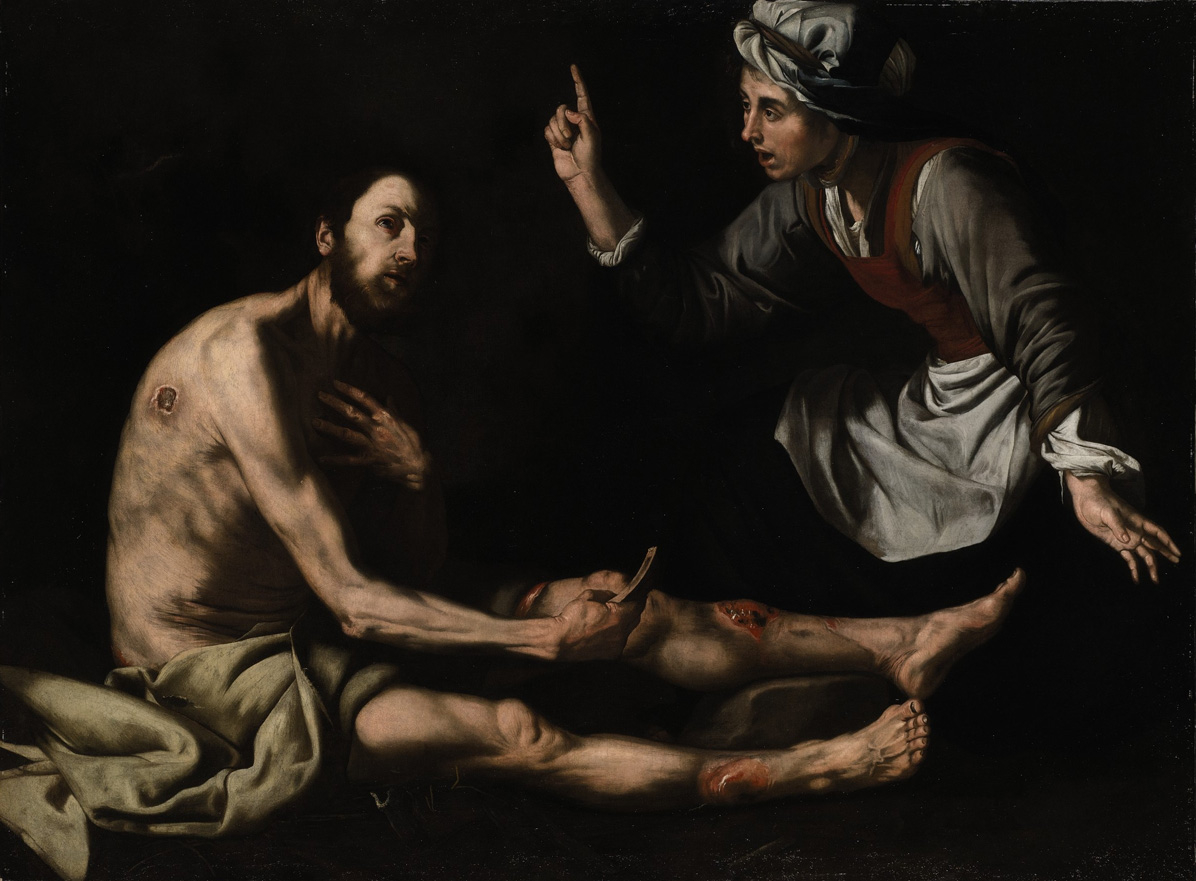
* image source: JOB ON THE ASH HEAP, JUSEPE DE RIBERA

food for thought


“If you do really like what you’re doing…you can eventually become a master of it…and then you’ll be able to get a good fee for whatever it is…it’s absolutely stupid to go on doing things you don’t like…and to teach your children to follow in the same track…to bring up their children to do the same things. It’s all retch and no vomit – it never gets there.” – Alan Watts

Lenten reflections & goals

tulips

I grew up an Evangelical Christian, though thankfully within churches that provided a broader worldview than strict fundamentalism. Although I don’t recall hearing any explicit anti-liturgical speeches from the pulpit, there was a below-the-surface distrust of liturgical traditions as well as a widespread belief that Catholics weren’t really Christians (though I never understood that). The only parts of the church calendar we followed were Christmas (we also tossed around the word Advent occasionally while not actually practicing it) and Easter.

As I learned more about the founding of evangelical movements in the United States, I came to understand that this separateness – this stubborn individualism – developed, in part, to bring Christianity into the hands and hearts of the masses. I think that’s a good thing. But I also think that throughout the complex and tangled history of Christian movements, we’ve had a tendency to throw the baby out with the bathwater. As an adult now with a wider view of Christian tradition, I see value in the familiarity and routine the church calendar provides. As Advent left its restorative mark on the Christmas season for me last year, I anticipate that Lent, too, can provide opportunity for reflection and transformation. I’ve participated in it half-heartedly for several years, but I’m ready to make a commitment to it practically and spiritually.

Lent is a season of repentance and self-denial leading up to the observance of Christ’s death and resurrection. It is intended to remind us of Christ’s grandiose and restorative act of self-sacrifice on the cross juxtaposed against our own human frailty. We reflect somberly on our fallen state to amplify the grace that arrives daily with the knowledge that Christ is risen indeed.

Lent, it seems to me, is not practiced well if one only considers what one is giving up. My  high school friends from liturgical traditions would give up soda or french fries every year, but could never explain to me the significance of the act. I scoffed at their ignorance when I should have scoffed at my own.

Giving something up, it turns out, is about penitence: it’s not just a project in self control but a strict disciplinary action taken against ourselves, a reminder that we are rowdy and undisciplined by nature.

The vital next step is to realize that giving up bad habits clears up space for spiritual reflection. I’m terrible at meditating on the character of God, on seeing myself as someone in relationship to and with the Divine. It wasn’t always that way; I spent a long time wanting my old spiritual awareness back instead of recognizing that I could progress toward a new and better spiritual life. I’m ready for progress.

This Lenten season, I’m giving up rewarding myself with non-essentials (clothes, books, makeup, etc.) and taking on better spiritual practice. I intend to read more theology, pray more, and intentionally seek out ways to practice kindness and self-sacrifice. I’m replacing bad habits with good ones. I’m filling the void instead of wallowing in it. I recognize my shortcomings and repent from them more fully, I think, when I compare them to the vibrant spiritual life I could live instead.

I encourage you to meditate and reflect on your life in relationship with Christ as you trudge through these final days of winter, as you look forward to the rebirth and joy that arrives with spring.

unrelated statements

blue glass and twigs

Sorry for the silence this week. I’ve been stuck inside and haven’t felt particularly inspired to write anything. We had two inches of snow on Friday, but my camera battery died. I ventured out in the evening with my film camera instead. I’m sure I’ll be pleasantly surprised by whatever I captured 6 or 7 months ago on the beginning of the roll when I go get it developed later this week.

I got in a minor car accident last weekend and have been anxiously awaiting the verdict so that I can move past the whole, stupid event.

As I’ve repeated here, I’ve been feeling melancholy for several weeks, likely due to the cold, sometimes dreary, weather. At the women’s small group I attend, one asked why we insist on running our lives at the same, steady rate in the winter months when other mammals take a break. That question and subsequent conversation helped me calm the inner voice that told me I wasn’t trying hard enough. The fact is that I’m cold and I feel under the weather almost every day. I need to give my body a break. As a result of that breakthrough, I’ve experienced a better, more efficient week overall.

I also bought a tea kettle. I’m addicted to its steam whistle and have been having a nice cup of earl grey every afternoon.

We attended our church group’s monthly potluck last night. As always, I found myself inspired and greatly amused by the various conversations in which I partook. Each time I get to know someone a little bit better. I’m glad to have had the opportunity to socialize in a low stress setting. I needed it.

Today I plan on listing several items on ebay and etsy, so keep a lookout.

I hope you have a nice Sunday and a satisfying week.

I am not less

graduate photo

One Saturday night a few weeks ago, Daniel and I were in the car on the way to a potluck dinner where several grad students would be present when he asked me:

“Why do you act embarrassed that you’re not in grad school?”

I replied, “Because I am embarrassed. And I’m embarrassed now that my embarrassment was so obvious that you picked up on it.”

Here’s my confession: I’ve been embarrassed that I’m not pursuing grad school since the semester before I received my undergraduate degree.

That was always the expectation, at first from only myself and later from everyone (at least as I perceived it): peers, family, professors, coworkers, friends. I heard them saying, implicitly or aloud:

Leah is the grad school type. Leah is smart and motivated and needs to use her academic talent to better the humanities. Leah is too good to leave academia. Leah’s job as a nanny/framer/barista is obviously temporary – we know she can do better

But here I am, two years later, not in grad school. And I can’t help feeling like a disappointment to myself and everyone who invested in a dream that may have been more theirs than mine all along. And I have to learn to cope with that. To not be ashamed of myself just because I don’t have a title or prepared statement for that pervasive, incessant question: “What are you doing with your life?”

Do I have to know what I’m doing with my life? Does anyone ever stick to their early-20s response? And if they do, are they satisfied?

I need to work through my feelings of inadequacy. I need to see value in myself as a living human being trying to better myself and be good to others. I need to recognize that I am enough as long as I strive to make life meaningful – by the moment and the hour and the day.

I need others to grant me the space to breathe. I need others to have the self-respect to see themselves as more than their resumes or academic accolades so that they can see me in that light, too.

I’m trying to internalize the truth that I don’t have to – and probably shouldn’t – measure myself by someone else’s standards for success. I’m trying to overcome the pull of the myth that the highest form of human being is the employed scholar. I can be who I want to be, read what I want to read, and discuss in depth what I want to discuss without a piece of paper that tells others I’m an expert, that tells me I have the right to speak. And I can do other things too. And I have the right to respect myself for grand things like my entrepreneurial goals and lowly things like my ability to make a great cappuccino.

And I am not less for the decisions I’ve made or the place I’m in. 

month in review: January ’13

January flew by despite being full of ups and downs. The weather was cold, then hot, then cold again, and my brain chemicals didn’t know how to react. I was really hard on myself for being lazy and depressed, but I came out of it and now I’m on an emotional upswing.

cardinal

This month, I (and sometimes Daniel):

  • attended two concerts at Mockingbird before it closed down
  • reached out to a band about joining them as a vocalist
  • contacted a local photographer to look into assistant opportunities
  • started a Fair Trade blog; I’m really proud of it
  • witnessed a friend’s marriage dissolve
  • went on several walks (one, two, three, four)
  • became obsessed with Trader Joe’s (that’s worn off a bit now)
  • attended a swing dance lesson and Sock Hop
  • took a lot of photos
  • survived a couple snow days
  • attended a game night
  • started modeling for my online shop
  • experienced record sales at my online shop
  • wrote three poems
  • finished decorating the library
  • got the mullet trimmed off my outgrown pixie cut
  • felt insignificant
  • felt proud
  • watched a lot of The Wire
  • wore many layers
  • was almost always cold
  • bought a digital scale for mailing orders from home
  • talked to some llamas
  • visited many thrift stores
  • nurtured new friendships

snow

How’d I do with my 4 Simple Goals?

  1. Grow my online business: things have been looking up. I use new bookkeeping software that helps me keep track of fees, purchases, and revenue.
  2. Put money in savings every month: I should be able to do this as soon as I deposit my paycheck.
  3. Buy fair trade/ second hand as often as possible: I think I’ve stuck to this.
  4. Travel to a new place: we visited an antique mall in Ruckersville; that kind of counts.

Hope you had a fun, productive first month of the year.