New Haven

se4
Our new cat, Li’l Sebastian, adopted from the New Haven Animal Shelter

I moved to New Haven on July 23rd, 2019.

I’ve lived here just over three weeks now – I think – and it’s been a combination of profound stress, sporadic sadness, and excitement.

I think I decided to write today because, 1. it’s been raining since I woke up, so I canceled my plans to walk to a local restaurant to meet up with a fellow seminarian and, 2. my car was towed this morning due to a misunderstanding about the street cleaning schedule and it put me in just the right mood (read: despair-rage) to be introspective.

I completed my discernment committee meetings in early July – about 15 hours in total, if you count training – and since then, I’ve pretty much been wiped out on the introspection front. I enjoyed the committee sessions immensely and, contrary to everyone’s warnings, didn’t find them overwhelming or triggering. Rather, they were a good opportunity to practice saying what I feel about church, my religious and spiritual journey, my sense of calling, and my hesitations about committing to a life of church ministry. At the time, I felt relief, like what’s been a secret tamped down inside me for so long is something I’m now allowed to express in public.

But then I had to say goodbye to my beloved volunteers and customers at the thrift shop where I worked for five years; fight to hold back tears during my last day singing in my church choir; and spend an ungodly number of hours sorting, packing, cleaning, moving, unpacking, sorting out life logistics, and more. It’s left me feeling a bit like a robot rather than a person. I simply haven’t had the emotional energy to think that much about what’s happening, to process the fact that I now live in a completely different state in a completely different region, several hours away from almost everyone I know and love.

It’s ok, though. I’ve been thinking about how I reacted to this move versus how I reacted when we moved from Florida to Virginia. I remember putting on a performative melancholy at the time, and then legitimately struggling with SAD through my first real winter in “the north.” This time around, even though Daniel and I have been in near isolation for almost a month, I have the perspective to keep telling myself: “Your feelings are valid, but they are not permanent.” I’m sad and lonely – and that can make me feel frantic, a bit unhinged – but I know that it’s normal and I know what I need to do to cope.

DSCF0858
We visited friends in Maine during our first weekend in New England

That’s a nice thing about getting older, and the nice thing about having worked with people far outside my peer group for the last several years.  I don’t have to perform introspection or authenticity or melancholy. I can just wait it out.

With our endless free time – both Daniel and I are currently unemployed – we’ve been exploring local restaurants and thrift shops. I found a really good Goodwill in nearby Milford and enjoyed taking a walk to a local market last week. I even walked to church on Sunday – a local Episcopal parish that is mostly lay led – where I heard one of the best sermons of my life and met a few people around my age.

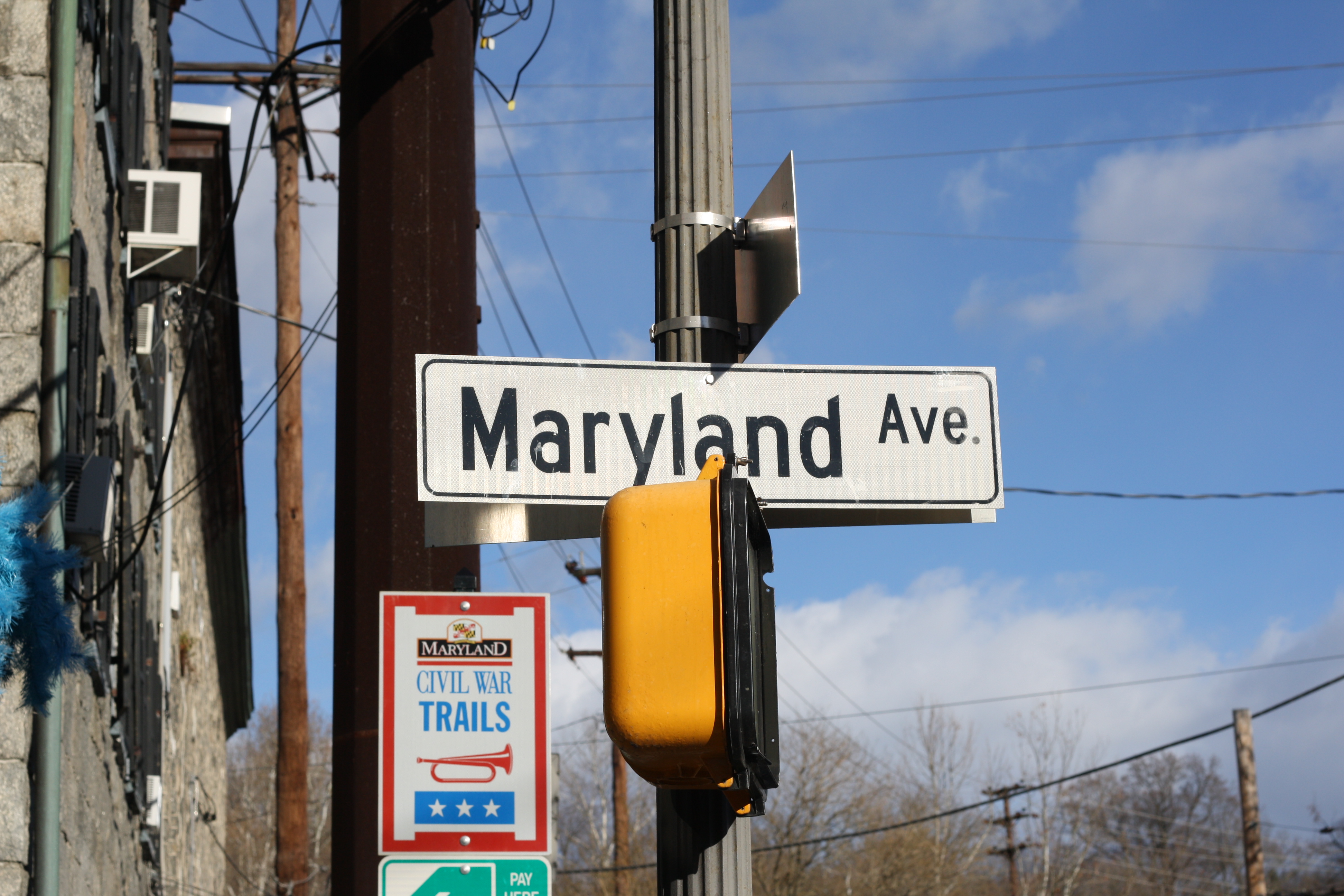
A few photos from around town


We live in New Haven proper, and so our neighborhood is very pedestrian-friendly. Now that the weather is cooling down (it was in the 90s the week we moved here), I plan to walk over the seminary and get a feel for how doable my morning commute will be.

Orientation is next week and school starts a few days after that. In the meantime, I’ll be reading some recommended books, continuing to organize our belongings, and playing with our newly adopted cat, Li’l Sebastian.

review: Rachel Held Evans’ Searching for Sunday

searching for sunday review

Rachel Held Evan’s Searching for Sunday is about church: its triumphs and failings, its hypocrisy and grace. Rachel, like me, grew up in a well-intentioned Evangelical community where the Bible is accepted as fact and the “plain truth” is within easy reach. It’s a culture of black and white morality, where spiritual cliches are a dime a dozen, rolling off the tongue the second something happens that doesn’t jive with the accepted worldview. Naturally, it has its limitations. Suffering is not easily alleviated with a dismissive utterance of “it’s all in God’s plan.” Rachel, like me, was encouraged to have a sense of ownership over her personal relationship with Jesus and, when the questions she wrestled with in the quiet started to gain momentum – when she started to ask them out loud – the church was unequipped to answer in anything but cliches.

Rachel, like me, flailed around, trying out new churches and new denominations, but the questions burned unanswered still, and she left.

Searching for Sunday‘s framework, quite fittingly, is the Sacraments: Baptism, Confession, Holy Orders, Communion, Confirmation, Anointing the Sick, and Marriage. These themes, like the Sacraments themselves, act as a jumping off point for a journey of faith. They encourage exploration and mystery; they don’t operate in spiritual cliches. One begins to realize that sometimes, the best answer to our questions is simply the space to wrestle with them. Rachel deals eloquently with this wrestling, acknowledging that the hurt sometimes makes it impossible to be in community, but always seeking the Truth of Christ’s unconditional love. She never gives up on that, and I think that’s the key to learning from the dark times in our spiritual lives. You may feel directionless, but you are moving forward if you are oriented toward love.

Searching for Sunday is memoir, but it is more than that. It’s theology. Steeped in the Gospel narratives, deeply respectful of those first disciples, and appreciative of the long, tumultuous years of violence perpetrated by and against the institutionalized church, it seeks to explore and understand what it looks like to do church now. It reminds us that Christian community was essential from the very beginning, that we don’t get to do Christian life on our own. 

Searching for Sunday gave me closure. I’d been hurt so badly by the church years ago, and I thought I’d moved on. But the truth is that I needed this reassurance that my pain was real, that my concerns were legitimate, and that the dark path I trudged through in the aftermath of leaving was not in vain. I needed someone to say, simply, “me too.”

As I sit here now with the sunshine streaming through the window and the birds singing and a cool spring breeze hitting my legs, I can tell you that I’m no longer searching for Sunday. I have found home in church community again. I am thankful for the path, and the hands that held me in the darkness, nudging me forward. I am thankful for space for the questions. I am thankful that God gave Rachel Held Evans the voice, and the heart, to tell her story, because it is my story, too.

I received an advance copy ofSearching for Sunday Searching for Sunday for review. Searching for Sunday is available for preorder here. It’ll hit store shelves this Tuesday, April 14.

*Artwork: Baptism by Ruth Catherine Meharg; used with permission.

untitled

Let me die
in the summertime
by a window, with
the warmth, pushing
through the fragile skin
of my eyelids

Let me die
in a quiet
room; with the
tea kettle on
in the kitchen and
the laundry spinning,
pulsing like
blood through beating hearts.

Let me die
with a cat
at my feet and
a hand holding mine and
a smile tracing
my lips
And the sunshine –

Oh, please let me
die in the sunshine.

mansplaining: a definition and how to avoid it

Mansplaining in Four Points

1. Women are often socialized to approach their opinions passively by prefacing them with “I think” or “I feel” to lessen the blow of their words and distance themselves from potential controversy. When a man responds to a woman in the way men are often socialized to do by saying “This is how things are…” many women feel like they’re being bossed around or that the conversation is being hijacked by the man. This is often unintentional, but it’s still worth paying attention to, particularly when the woman is trying to share a personal anecdote rather than have an academic discussion.

2. Mansplaining as a term can only be used to describe a man’s conversational tone and behavior toward a woman or women because it results from the power imbalance between men and women in patriarchal societies.  Women can certainly be demeaning and callous to others, but this behavior does not fall under the category of mansplaining.

A man who mansplains is likely to use a patronizing, instructive tone with women that he doesn’t use with men. Or, as often happens in forums and comments sections of blog posts, he will specifically choose to address the comments made by women and avoid confrontation with any men involved, perhaps because he feels his arguments will hold more weight with women. He will often talk at instead of conversing with and will bring information into the conversation that derails it altogether instead of moving it forward.

(A friend pointed out that some men, rather than engaging with women in a condescending manner, will ignore women’s comments altogether. I’d say this is part of the same problem. In both cases, the woman’s comment is taken less seriously than the man’s.)

3. Mansplaining is a useful term for addressing this problem, but I don’t find it productive to call a man out for mainsplaining when I’m in conversation with him, especially if the incident occurs in a public setting (or on a public post on social media). It’s not helpful (or gracious) to use dismissive language like this because it cuts off the line of communication. It stops the conversation dead in its tracks, which makes it impossible to effectively address the problem. If you know the man involved, it may be best to take it up with him privately and preferably in person. If he is a stranger, just get the heck out of there (and maybe write a blog post about it!).

4. You’re much more likely to get called out for mansplaining if the woman you’re talking to doesn’t know you very well (or if you’re legitimately a jerk). It’s hard to read tone when you can’t envision what it would be like to talk face to face or when the woman has no sense of the assumptions you’re making about her during the conversation. For this reason, it’s important to articulate your point clearly and with kindness, especially if you insist on having the conversation online. Otherwise, try to meet up in person. Treat each other like adults who deserve to live in the world and have opinions and you’ll be okay.

Mansplaining is real, but it doesn’t justify women being jerks. Men and women are both guilty of  interrupting. Sometimes women say dumb things. This isn’t about refusing accountability, it’s about having productive and meaningful conversations that help us understand each other and the world a little bit better. Sometimes – oftentimes – that means checking our privilege. It means hearing each other out, respectfully.

month in review: 10/14

When’s the last time I did a Month in Review post? Why, it was January 2013!

I’ve been reading Brene Brown’s Daring Greatly and in it she cites research that indicates that those who are acutely aware of what they’re grateful for are more contented. That makes a lot of sense to me, but often I’d rather not “waste” time contemplating the good things; I’d rather distract myself with activities or blogs or online shopping. But I’ve been feeling awfully restless and discontent for no real reason, so I think it’s time to give this another try.

fg2

In October, I (often with Daniel in tow):

  • coordinated the thrift shop’s anniversary sale
  • attended a beautiful wedding
  • partied it up at a friend’s birthday party
  • visited with college friends who came to visit
  • picked apples at Carter Mountain Orchard
  • ate delicious, home cooked apple pie thanks to the friends who came to visit
  • sight saw on Skyline Drive on a foggy day
  • sang a solo part in the church choir
  • moved my fair trade blog over to Blogger (and got 1,070 views in the first month!)
  • wrote about lessons learned working at a thrift shop
  • went on my church’s 2nd annual hike
  • helped secure funding for the thrift shop’s maintenance fund
  • watched Fright Night with friends on Halloween
  • started reading Silence by Shusaku Endo

two post it notes

Someday, when the world begins
to darken, I’ll
walk in the silence
of early morning, peering
into empty shops with
cataract gray eyes

And I’ll remember being
young, moving fast, skin
smooth like a new bar of soap,
and wondering when I would
make it.

I’ll know then, there
is no making it.

Child, you’re already home.

At 4:00, I’ll eat my
dinner, just the basics –
salad, potato, tea.

And I’ll look out the window
near the garden and watch
the early robins feast
until my eyelids flicker,
slowly, closed.

The final act, not a drama but a lullaby.

all the noise

ny4

If you walk into the story – if you walk into Christ among us – that releases hope in our midst.

– Sister Simone Campbell

I took a step back from writing longer posts because I got tired of all the opinions flooding the internet. Sure, I’m bound to prefer to tweak a few things here and there with any given argument, but for the most part I’d rather let a few prominent voices with more energy and more resources than me hash it out while the rest of us watch.

We think that because we have platforms for voicing our opinions that we must come up with something to say. But then we’re all mumbling and grumbling and shouting over each other and nothing is resolved. I have opinions, but I tell them to my husband, my sister, a coworker, my mom. I stumble over my thoughts as I let the words pour out. I make a fool of myself, but I do it in relative privacy.

I think it may be better if we use our words for stories rather than opinions about other people’s stories. Think about it. The only truly novel thing we have to offer are our stories.

You can shout with the masses that you loathe [insert societal woe here], but your words will largely go unnoticed. But what if you told a story of overcoming prejudice, or of helping resolve a tense social situation? You have profound object lessons to present and you’re the only one with access to them.

You can jump into the battlefields of the great opinion wars – scrambling for something to add to the cacophony, elbowing and kicking the shins of anyone who dares shout over you – or you can extend your hands and weave a tale that leads the people out of darkness.

Our stories offer clarity. They offer peace. They make sense of nonsense. Your story is a little part of the human story. Tell it and listen to others and you’ll realize that most online arguments are just meaningless blips on the map of human experience, not worth a comment or a blog post or a rant.

Reading Lolita in Tehran: a brief review

lolita

Reading Lolita in Tehran is the best memoir I’ve ever read. It’s intelligent, creative, intimate, and intricately and artfully narrated. I paused several times throughout my reading so that I could participate in author Azar Nafisi’s classroom just a little bit longer.

Her firm grasp of English Literature and Literary Criticism serve as a surprising, but really quite fitting, foundation to a discussion on revolutionary Iran. The memoir is about politics and fundamentalism, but it’s ultimately about the human condition, about how our proclivity for self narration informs the way we see and form ourselves and our societies. Stories can obstruct as much as they reveal, destroy as much as they create. The book, then, can be understood as a literary critique of the story Iran tells about itself at the start of the Iranian Revolution and of the thousands of personal narratives spilled out to counter it. Perhaps in peeling off these wordy layers – narratives piled on top of narratives – we can begin to arrive at something closer to the truth. But the truth we discover is less tangible, though just as moral in its aim as the black and white ethics imposed upon the Iranian people. It is seeing, really seeing, the multifaceted nature of humanity; we are strong, dishonest, cowardly, loving, kind, hateful, and oblivious all at once. We are all capable of evil. We all lean toward apathy.

I can only assume that those who say they “couldn’t really get into it” were expecting the light stuff of Eat, Pray, Love and its equals. But Reading Lolita in Tehran is the pinnacle of what memoir can be. It’s what memoir should be. You should leave with more than a feeling. As Nafisi explains within the book, literature exists to provide context for the individual, to explore the nuances of human interaction and behavior. Reading Lolita in Tehran bridges the gap between literature and autobiography; you should leave it with a better understanding of the other and yourself, and with a great deal more empathy.

baltimore

weekend in baltimorebt2 bt4 bt5 bt7 bt9 bt11 bt12IMG_0914 IMG_0915We last went sightseeing in Baltimore in December 2012. This time around was much different. Daniel’s mom, a Baltimore native, was our chauffeur and tour guide last year, which made getting around simple and fairly stress free. This time, we relied on the hotel shuttle to drop us off at the Inner Harbor (beautiful, but a bit touristy) and walked where we could.

On Friday night, we went to Fridays after Five at the National Aquarium (only $12.00 after 5 pm until March 28!) then sought out a place to eat. On our way to Cheesecake Factory, we spotted a Pizzeria Uno and a wave of nostalgia washed over us both. We ate at one of the original Pizzeria Uno establishments almost every night when we visited Chicago with friends in college. Chicago was the first big city I visited and it will always hold a special place in my heart.

Since we were technically there to attend a Religious Studies conference, we spent most of Saturday at the convention center reading, attending panels, and catching up with friends when we had the chance. I gave myself a tour of the premises while Daniel attended a session and found that the 4th floor offered lovely city views. We joined some friends for crab cake sandwiches at the Rusty Scupper for lunch.

After checking out of the hotel on Sunday, we went to Savers, a delightful thrift emporium, then met up with Daniel’s cousin, Dustin, for lunch and a glimpse of the Ravens game at a local sports bar. He suggested we visit historic (founded in 1772) and affluent (situated in the 3rd wealthiest county in the US) Ellicott City. The antique stores were mostly rubbish, but the coffee shop we visited had good hot chocolate. We finished off the day with a quick trip into the city to check out the Walters Art Museum and visit with the girl I used to babysit and her mom at their hotel (they were there for the conference, as well).

A trip to Baltimore makes for a unique, enjoyable, occasionally alarming experience.

monthly goals: october

I’ve been manic for the past few days. I have this sudden urge to do, make, complete. But it feels unhealthy, because I’m never satisfied and I’m always on edge. Perhaps starting up a Monthly Goals post series will redirect my activity to something a bit more satisfying.

october must list

October Goals:

  • List items for Platinum & Rust every week.
  • Go to Carter Mountain Orchard.
  • Visit Skyline Drive and take lots of photos.
  • Find a nice candle and burn it often.
  • Finish painting bookshelves and get the library back in order.
  • Watch Hocus Pocus while eating homemade popcorn.
  • Cut my bangs.

What are your goals this month? 

prayer

A smile between strangers.
Watching the robin hunt
for insects,
folding three loads of laundry, dropping
boiling water
into the teapot.

Writing in your journal, listening
to your spouse, sharing:
a meal, a ride,
Your load.

A cool breeze that cuts
through humid air.
The clack of boots
on asphalt. Going,
and leaving.
Habit and impulse.

Pray without ceasing –
Let this journey be
Your Prayer.